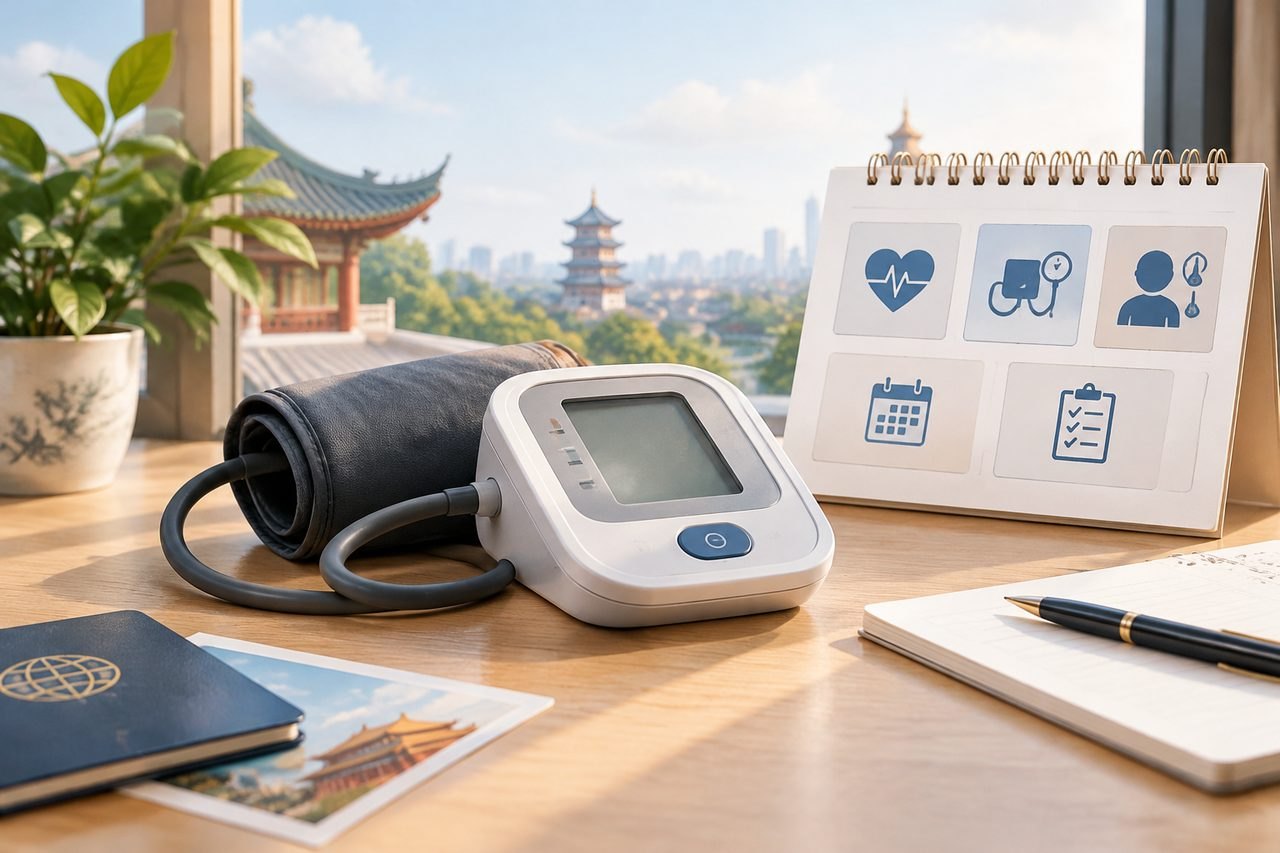
Why the visit count is a provider answer, not a general rule
The practical question behind this guide is simple: if you travel to China for a blood pressure assessment, will one appointment cover it, or will you need to return? There is no single answer that applies to every hospital, city or patient. The number of visits depends on the purpose of the assessment, the provider's own workflow, and whether the clinician needs to see you in person for a particular step.
That is why the useful first move is not to book flights around an assumed schedule. It is to ask the specific provider how it organises a blood pressure assessment and which parts cannot be done remotely. A written reply from the hospital or clinic is more useful than a general expectation, because the provider controls its own appointment structure, its own reporting process and its own decisions about what it needs to see in person.
This article does not tell you which tests you need, how often to check your blood pressure, or how to change any medicine. Those are clinical decisions. What it does is separate the administrative question — how many visits, which steps need you present, what records help — from the clinical question, which belongs to the treating clinician.
Three situations that change the answer
The phrase 'blood pressure assessment' can describe three quite different situations, and they do not lead to the same visit plan.
The first is routine screening in someone with no current symptoms, often as part of a scheduled health review. Here the question is usually about which package or base checkup the provider offers, what it includes, and whether the provider can complete the relevant steps in one visit or needs a separate appointment. The provider decides what is suitable; a package list describes availability, not a recommendation that every listed item is needed.
The second is review of a known condition, where you already have a diagnosis or an existing care plan and want a review, a second opinion or ongoing follow-up in China. In this situation the records you bring matter more, because the clinician is assessing your history rather than starting from nothing. The visit count may depend on whether the provider wants to repeat measurements, review previous results, or discuss a plan after seeing your documents.
The third is assessment of current symptoms. If you have symptoms now, that is a clinical matter and should be assessed promptly by a qualified clinician, locally if that is faster. An overseas enquiry should not delay necessary local care. For this situation, the question for the provider is not 'how many visits does a checkup take' but 'how does your team assess someone with these symptoms, and what do you need from me first'.
Because these three situations differ, a single China-wide answer about visit numbers would be misleading. The provider's reply to your specific situation is the one that matters.
Which steps typically require you present, and which the provider must confirm
Some parts of an assessment are inherently in-person: a clinician examining you, taking measurements directly, or conducting a procedure that requires your physical presence. Other parts, such as reviewing records you send ahead, may be possible before you travel, depending on the provider.
The trap is assuming you know which is which for a particular hospital. Instead, ask the provider to list the steps in its assessment pathway and mark each one as 'requires me present' or 'can be done from my records'. That single question turns a vague plan into a concrete one, and it tells you whether one trip is realistic or whether the provider expects a return visit.
It also helps to ask what happens between visits. If the provider needs time to review results before a follow-up discussion, that affects how you plan your stay. Do not assume a fixed reporting deadline; ask the provider what its own process is and how it communicates results to international patients.
A useful written question set for the provider includes: Which steps require me to be present in person? Which can be started from records I send ahead? If more than one visit is needed, what is the purpose of each visit? How and when will I receive results, and in what language? Who do I contact if my situation changes before the appointment?
These are administrative questions. They do not ask the provider to diagnose you by email, and they do not commit you to treatment.
What to prepare before you ask about visits
You do not need to send a complete medical archive at first contact. A short summary is enough to start: your main question, whether this is screening, review of a known condition, or assessment of current symptoms, and any relevant records you already have.
If you have previous blood pressure readings, a list of current medicines, or recent test results, mention that they exist. The provider can then tell you which documents it wants and in what form. Do not send passport numbers, card details or a full archive through an initial enquiry form.
For a records-based opinion before travel, some patients use a proxy consultation, where a doctor takes records to a relevant specialist while the patient remains at home. That is optional and not a prerequisite for every appointment. An initial enquiry does not require buying a proxy consultation, and a proxy review does not establish final eligibility or hospital acceptance.
If you want help with records, interpretation or requesting a specialist appointment, ChinaSpecialistCare can coordinate that as a non-clinical service. The team does not diagnose, prescribe, decide suitability or promise availability; those belong to the treating hospital and licensed clinicians.
How to read the provider's reply
When the provider replies, look for specifics rather than reassurance. A useful reply names the steps, says which require you present, and states what the provider needs from you. If the reply is general, ask a follow-up that forces a concrete answer: 'For my situation, is this one visit or more, and what is each visit for?'
Be cautious about any reply that promises a fixed number of visits before the provider has seen your information, or that guarantees a particular schedule regardless of your situation. The provider's own assessment of your case should come before a firm visit plan.
Also separate confirmed appointments from provisional stages. A confirmed appointment is a booked slot with a named provider. A provisional stage is a step the provider may recommend after reviewing your records. Mixing the two can lead you to book travel around a plan that has not been agreed.
If the provider says a step can be done from records, ask how those records should be sent and whether translation is needed. If the provider says a step requires you present, ask whether it can be combined with other steps in the same visit. These questions reduce the chance of an unnecessary second trip.
Costs, coordination and the next step
Hospital consultation fees, tests and any treatment are paid to the hospital or relevant provider. Coordination fees, such as specialist appointment coordination or interpretation, are separate. Without an approved figure for your specific case, the practical approach is to ask the named provider what its written quote includes and what it does not.
For a checkup route, published package reference fees exist for one named hospital, but city, hospital, package contents, suitability and the final quote require confirmation. A package list describes availability, not a recommendation that every listed item is needed for you.
The next step is to send a short enquiry with your main question and whether this is screening, review of a known condition, or assessment of current symptoms. An initial enquiry is free. From there, the team can help clarify what the provider needs and how to request an appointment, while the hospital and its clinicians decide suitability and the clinical plan.
Sources & scope of this guide
References and official service information relevant to this guide.
This is general planning information and has not been individually reviewed by a doctor. Medical decisions and personal treatment advice come from your treating clinicians.