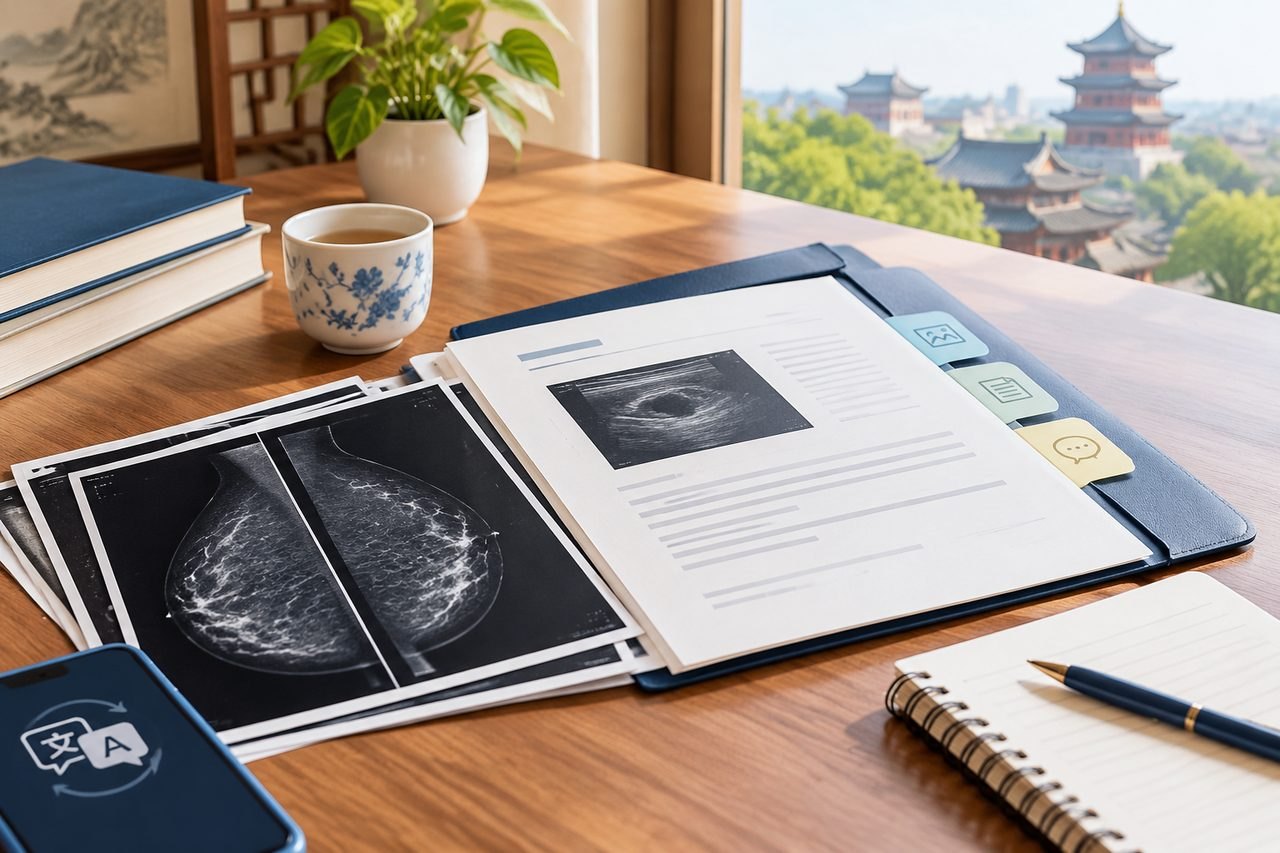
Screening, surveillance and symptoms are three different appointments
The first thing to settle is which of three situations you are actually in, because it changes what you should book and what the report needs to say.
Screening means you have no current breast symptom and no personal history that requires follow-up. You are looking for a routine review, and the value of the trip depends on a clean, readable record that your doctor at home can file or act on.
Surveillance means you already have a diagnosed breast condition, a previous breast procedure or an existing follow-up schedule. Here the Chinese appointment is not a fresh start; it is one point in an ongoing series, and the clinician reading it needs your prior images and reports for comparison. Without the earlier studies, a new scan is much harder to interpret.
Symptoms are different again. A new lump, skin change, nipple discharge, persistent pain or any other current concern is not a screening question. That calls for a specialist consultation and assessment, not a checkup package. If you have symptoms, do not delay local medical assessment while you plan an overseas appointment.
Being clear about which category you are in is the single most useful thing you can do before you contact anyone. It determines whether you are asking for a preventive review, a comparison study or a diagnostic assessment, and those are not interchangeable.
What the handover actually has to contain
A handover is not a summary email. It is the set of documents your own doctor needs in order to make a decision without repeating the examination.
The written report is the core item. Ask whether it will be issued in English, whether it states the technique used, what was found, what the assessment category is and what the reporting clinician recommends next. A report that only says "no abnormality seen" without describing the examination is difficult for another clinician to rely on.
The images matter as much as the report. Ask whether you will receive the actual image files, not only printed films or a photograph of a screen. Ask what format they come in and whether they can be opened on a standard workstation at home. If your doctor cannot open the files, the report is all they have.
Recommendations need to be explicit. If the reporting clinician suggests a repeat interval, an additional view or a further assessment, that should be written down rather than left in conversation. A verbal suggestion is easily lost between two health systems.
Finally, ask what is not included. If a report will be issued only after an internal review, or if images are released only on request, knowing that in advance prevents a rushed departure with an incomplete file.
- Written report: language, technique described, findings, assessment category, next-step recommendation.
- Images: file format, whether they are the original files, and how they will be delivered to you.
- Recommendations: stated in writing, with any suggested interval or further assessment.
- Gaps: what will not be released automatically, and what you must request.
Ask your doctor at home first, not last
Most people arrange the screening first and think about the handover afterwards. Reversing that order is more efficient.
Before you book, ask your own doctor what they would need in order to accept and act on an overseas breast screening result. They may want the images in a particular format, a report in a particular language, or the prior study for comparison. They may tell you they would repeat the examination regardless, which is worth knowing before you pay for it.
This conversation also clarifies who will take responsibility for follow-up. If something needs further assessment, that will happen at home, and the clinician who will manage it should be the one who tells you what the file must contain.
You do not need your doctor's permission to have screening abroad. You do need to know what they can use. A result that cannot be read or acted on at home has limited value, however well the appointment itself went.
Records to bring with you, and records to request afterwards
For a first screening with no history, bring your identification, your contact details and any previous breast imaging you have, even if it was years ago. Older studies are still useful for comparison.
If you have a diagnosed breast condition or previous breast surgery, bring the pathology or operative reports, the most recent imaging and the reports that go with them, and a written list of your current medicines. Ask your treating clinician at home for a short summary letter if one is available.
After the appointment, request the report and the images before you leave the hospital if that is possible. Ask how long each item takes to be released and whether you can collect it in person rather than waiting for it to be sent. If release takes longer than your stay, ask what the delivery method will be and who to contact if it does not arrive.
Keep a copy yourself. Do not rely on a single set travelling with you, and do not send your only copy to anyone.
Language, interpretation and what gets lost in translation
A report written in Chinese and translated informally by a friend is not the same as a report issued in English by the hospital. Ask which one you will receive.
If interpretation is arranged for the appointment itself, that is separate from translating the written report afterwards. Ask whether written translation is available, who provides it and whether it carries any formal status. A translated report that your doctor cannot verify may be treated as background information rather than a clinical document.
If you are discussing results with a clinician in China, make sure you understand what is being recommended before you leave the room. Ask for the recommendation in writing. If you are unsure, say so and ask again rather than nodding along.
Interpretation and companion support during hospital visits is a separate coordination service from clinical care, and it does not replace the treating clinician's judgement. Ask what is included before you agree to it.
Practical planning and the next step
Once you know what your doctor at home needs, the booking questions become straightforward. Ask the hospital or the coordinating team what the appointment includes, what it does not include, what the report will contain and when it will be available. Ask whether a clinician will advise on which examination is suitable for your situation, because suitability is a clinical decision and not something a package list can settle.
Routine preventive checkups are arranged for people planning a scheduled health review, and a clinician should advise the interval and the suitable tests. Current pain, discomfort or other symptoms call for a specialist consultation rather than a screening package. Package contents, availability and pricing vary by city, hospital and package, and the final scope requires confirmation with the particular hospital.
If you want help understanding the options, you can start with a short summary of your situation rather than a complete medical archive. An initial enquiry is free and does not commit you to anything; a proxy consultation is optional and is not a prerequisite for an appointment. The hospital decides whether to accept you and what it recommends.
The practical next step is to ask your own doctor what they need, then send that requirement, together with a brief summary of your situation, so the appointment and the handover can be planned around it.
Sources & scope of this guide
References and official service information relevant to this guide.
This is general planning information and has not been individually reviewed by a doctor. Medical decisions and personal treatment advice come from your treating clinicians.