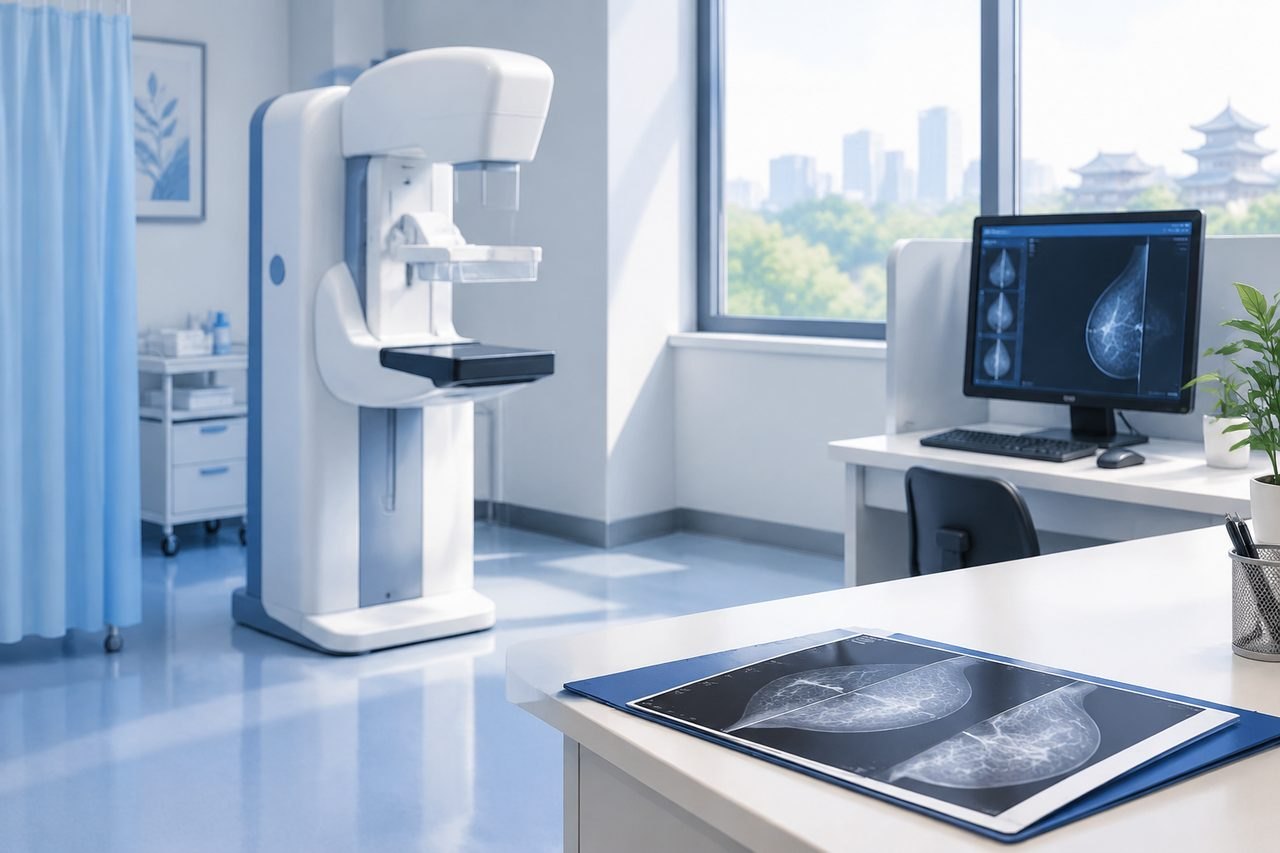
Why an abnormal screening result is not a diagnosis
Screening tests are designed to find possible problems in people without symptoms. They are not designed to give a final answer. A mammogram, ultrasound or other breast screening result that is flagged as abnormal means the clinician needs more information before deciding what, if anything, is wrong. The report may describe a density, a shadow, a cluster of calcifications or a change since a previous image. None of those descriptions alone tells you whether you have cancer or what treatment you need.
This distinction matters for planning care in China. If you arrive expecting a diagnosis and a treatment plan on the same day, you may be disappointed. The first appointment is usually about interpretation: a breast specialist or radiologist reviews the images and the written report, asks about your history and symptoms, and decides whether further imaging, a biopsy or a period of observation is appropriate. That decision belongs to the treating clinician, not to a checkup provider or a coordination service.
If you already have breast symptoms such as a lump you can feel, skin changes, nipple discharge or pain, that is a different situation from routine screening. Symptomatic assessment should not wait for an overseas trip. Seek local medical advice first. A screening package is not a substitute for evaluating symptoms.
What the receiving clinician needs from your screening report
The value of a specialist consultation depends heavily on what records you bring. A one-line summary such as 'abnormal mammogram' is not enough for a clinician to give you a useful opinion. The receiving team will want the original imaging files, not just the written report, because they may need to review the images themselves or compare them with new images taken in China.
Ask your current screening provider for a copy of the images on CD, DVD or a secure digital link, plus the full written report. If you have had previous breast imaging, bring those too. Comparison with earlier images often changes how a finding is interpreted. Also bring a list of any breast procedures, biopsies or surgeries you have had, and a list of medicines you currently take. If you have a family history of breast or ovarian cancer, mention it, because it may affect how the clinician assesses your risk.
You do not need to send a complete medical archive before your first enquiry. A short summary is enough to start. After first contact, the team can tell you how to share records securely. Do not send passport numbers or payment details through an initial enquiry form.
- Original imaging files, not only the written report
- The full radiology report with the date and the name of the facility
- Any previous breast imaging for comparison
- A list of breast biopsies, surgeries or procedures
- A current medicine list and relevant family history
Questions to ask before you travel for breast assessment
The answers to these questions determine whether travelling to China is useful for your situation. Ask the hospital or the coordination team directly, and ask for written answers where possible. Do not assume that a particular test, appointment or report will be available on a fixed schedule.
First, ask who will review your images and report, and whether that person is a breast specialist or a general radiologist. Second, ask what further assessment the clinician is likely to recommend based on the information you provide, and whether that assessment can be done during the same visit or requires a separate appointment. Third, ask what records the hospital needs before it can confirm an appointment, and how those records should be sent.
Fourth, ask how the hospital communicates results and whether interpretation is available in your language. Fifth, ask what the hospital's written estimate covers and what it does not cover, so you understand the scope before you commit. Finally, ask what happens if the assessment shows that you need treatment, and whether the hospital can provide that treatment or would refer you elsewhere. These are administrative and planning questions. The clinical decisions remain with the treating team.
Screening, surveillance and symptoms are not the same pathway
Overseas patients sometimes arrive in China with a screening result and expect the same process they would have at home. It helps to separate three situations. The first is routine screening in someone with no symptoms and no known breast disease. The second is surveillance in someone who has had breast cancer or a high-risk breast condition and needs regular follow-up. The third is assessment of current symptoms. Each pathway involves different questions, different records and different clinical priorities.
For routine screening, the main planning question is usually which checkup package or imaging appointment is appropriate and whether the hospital can provide it on your dates. For surveillance, the key question is whether the hospital can access your previous imaging and treatment records so the new assessment is comparable. For symptoms, the priority is timely local assessment, not travel planning. If you are unsure which situation applies to you, describe your situation plainly in your enquiry and let the clinical team advise.
A checkup package is a starting point, not a treatment plan. The hospital decides which examinations are suitable for you. A listed test in a package does not mean you need it, and a test that is not listed may still be appropriate if a clinician orders it. Ask the hospital how its package works and whether add-ons are possible.
What coordination can and cannot cover
ChinaSpecialistCare provides information and non-clinical coordination for international patients planning care in China. For a breast screening finding, that can include helping you identify a suitable hospital or specialist, explaining what records to prepare, and coordinating appointment registration and interpretation. The team can also help you understand the difference between a routine checkup route and a specialist consultation route.
The service does not diagnose, interpret your imaging or decide whether you need a biopsy. Those decisions belong to licensed clinicians at the treating hospital. Hospital consultation fees, imaging, procedures and medicines are paid to the hospital or the relevant provider. Coordination fees are separate and are agreed in advance. An initial enquiry is free and does not require you to purchase a proxy consultation. A proxy consultation is optional and is not a prerequisite for every appointment.
If your case is complex or involves more than one specialty, a multidisciplinary review may be arranged. The scope and fee are agreed first. If you need help with practical arrangements such as airport pickup, hotel booking or a hospital companion, those can be discussed separately. No visa outcome, appointment time or hospital acceptance is guaranteed.
Preparing your enquiry and the next step
A useful first enquiry is short. Include your age, the date and type of your screening test, the main wording of the report, whether you have symptoms, and what you want to know. Attach the report if you have it, but do not send a complete archive or sensitive payment details at this stage. The team will tell you what else is needed.
If you are considering care in China, the practical next step is to send that brief summary through the enquiry form, email or WhatsApp. The team will check the available information, identify what is missing and suggest a relevant next step. That may be a specialist appointment, a records-based opinion or simply a recommendation to seek local care first. You can then decide whether to proceed.
Do not delay urgent local assessment because you are planning an overseas consultation. If your symptoms are worsening, seek medical care where you are. An overseas enquiry can continue in parallel, but it does not replace timely local evaluation.
Sources & scope of this guide
References and official service information relevant to this guide.
This is general planning information and has not been individually reviewed by a doctor. Medical decisions and personal treatment advice come from your treating clinicians.