What the diagnostic question actually means
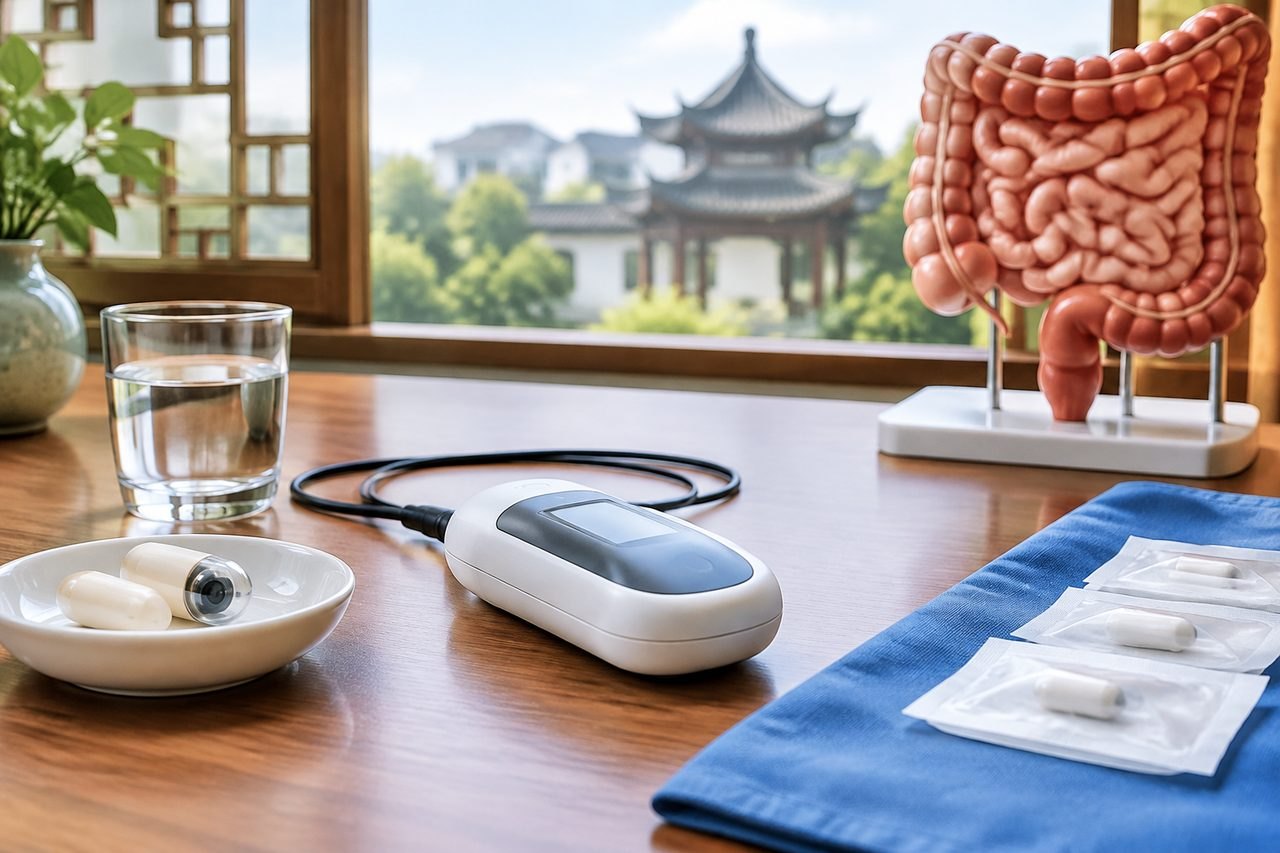
Small-bowel capsule endoscopy involves swallowing a small camera that records images as it passes through the digestive tract. It is a way of looking at part of the bowel that standard upper endoscopy and colonoscopy may not fully reach. The test is not a general screen for stomach or colon problems; it is chosen when the clinician has a defined question about the small bowel.
That question might be why a patient has ongoing bleeding, unexplained anaemia, suspected Crohn's disease or another inflammatory condition, or a lesion seen on imaging that needs closer visualisation. The exact wording matters because it determines whether capsule endoscopy is the right test at all, whether another examination would answer the question better, and what the images will be compared against.
For an overseas patient considering care in China, the practical first step is not booking a test. It is being able to state, in one or two sentences, what your current clinician is trying to find out and what has already been done. A records-based review can then check whether the question is clear enough to act on.
Why previous investigations change the decision
Capsule endoscopy is rarely a first test. Clinicians assess it in the context of what has already been found. Previous gastroscopy, colonoscopy, imaging such as CT or MRI enterography, blood tests and pathology results all shape whether the small bowel is genuinely the unanswered area.
This is not administrative box-ticking. If a prior colonoscopy already explained the bleeding, or if imaging has shown a stricture, the diagnostic question may have changed. A clinician reviewing your file needs to see the actual reports, not just a summary, because the wording of findings, the date of the test and the quality of the preparation can all affect interpretation.
For a China enquiry, gather the reports you already have: endoscopy and colonoscopy reports, imaging reports and discs if available, relevant blood results, pathology reports, and a short list of current medicines and allergies. You do not need to send a complete lifetime archive at first contact. A brief summary is enough to start, and the team can tell you what else is useful.
Bowel narrowing and capsule retention: the safety review
The main structural concern before small-bowel capsule endoscopy is whether the bowel is narrowed. If it is, the capsule may not pass through and can become retained. This is why the clinician assesses suitability rather than simply accepting a request for the test.
The assessment draws on your history and previous investigations. A clinician may ask about known Crohn's disease, previous abdominal surgery, prior obstruction, or imaging that suggests a stricture. Depending on the individual case, they may recommend a patency capsule or another approach before deciding. Whether that is needed, and how it is arranged, is a clinical judgement for the treating team.
This is also the point where patients sometimes misunderstand the purpose of an overseas enquiry. Sending records does not establish that you are suitable for capsule endoscopy, and it does not confirm that the test will go ahead. It allows a clinician to review the question and the safety considerations, and to explain what remains uncertain.
Retention is not the only risk the team weighs. The capsule can also fail to record useful images if the bowel is not cleared, if transit is unusually slow, or if the battery life ends before the capsule reaches the area of interest. Those are technical limits of the test itself, not administrative problems, and they belong in the same conversation as the narrowing question.
A clinician may also explain what the test cannot show. Capsule endoscopy images the inside lining of the small bowel; it does not take tissue samples and does not treat anything it finds. If the diagnostic question needs a biopsy or an intervention, a different procedure may be more appropriate. That is a clinical judgement, and it is reasonable to ask the team to explain the alternatives they considered.
For an overseas patient, this matters because the safety review depends on information you may not have to hand. If you have had abdominal imaging abroad, the reports and images help the clinician judge whether the small bowel is likely to be passable. If you do not have them, say so rather than guessing, and ask what the team needs before it can give a view.
It is also worth asking how the team would manage a retained capsule. The answer depends on the individual case and the resources of the treating hospital, so it is a question to put to the named provider rather than something to assume from a general description. A clear answer tells you whether the safety planning is specific to you.
Preparation, the procedure and what to confirm
Preparation for capsule endoscopy typically involves dietary restrictions and sometimes bowel preparation, but the exact instructions depend on the protocol of the unit performing the test. Do not assume that instructions from a previous test, or from another hospital, will be repeated unchanged.
Ask the treating team directly about the preparation they require, whether any medicines need to be adjusted, and what you should do if you have diabetes or take blood-thinning medication. Those are prescribing decisions, and they belong to the clinicians who know your history. A coordinator cannot make them for you.
The test itself involves swallowing the capsule, usually in the clinic, and then going about your day while it records. You will be given instructions about eating, drinking and activity, and about returning the recorder. Ask how and when you will receive the results, who will explain them, and whether a follow-up appointment is included in the plan. These are reasonable questions for any provider, in China or elsewhere.
What a China clinical review can and cannot tell you
A records-based review can help clarify whether your diagnostic question is well defined, whether the previous work-up is complete enough to assess, and what a specialist would want to know before recommending capsule endoscopy. It can also identify gaps, such as a missing imaging report or an unclear description of prior bleeding.
It cannot confirm that you are a suitable candidate, that the test will be scheduled, or that a particular hospital will accept your case. Those decisions rest with the treating hospital and its clinicians after they review your records. An initial enquiry is free and non-clinical; it is a way to understand the next practical step, not a diagnosis or a promise of acceptance.
If you are considering travelling to China for this assessment, ask the provider how it handles records in your language, whether an interpreter is available for the consultation, and how results and follow-up will be communicated if you return home. Confirm these details in writing before making travel plans.
Questions to ask before you commit
A useful conversation with any provider starts with the diagnostic question. Ask the clinician to explain, in plain terms, what they are looking for and why capsule endoscopy is being considered instead of, or after, other tests. If that is not clear, the decision is not ready.
Then ask about the safety review: what in your history or previous imaging affects the risk of retention, and what the plan is if the capsule does not pass. Ask who will review the images, when you will hear the findings, and what further appointments might follow. Ask what the written estimate covers and what remains to be confirmed, rather than assuming a single figure includes everything.
Finally, ask what would make the team decide not to proceed. A clear answer to that question tells you more about the quality of the assessment than any general reassurance. If your symptoms are worsening, or you have bleeding, severe pain or vomiting, seek local medical care promptly rather than waiting for an overseas enquiry to progress.
When you are ready, you can send a brief summary of your situation and your main question through the enquiry form. The team will explain what information is useful next and whether a specialist review is appropriate. You do not need to purchase a proxy consultation to make an initial enquiry.
Sources & scope of this guide
References and official service information relevant to this guide.
This is general planning information and has not been individually reviewed by a doctor. Medical decisions and personal treatment advice come from your treating clinicians.