Why previous results change the capsule endoscopy decision
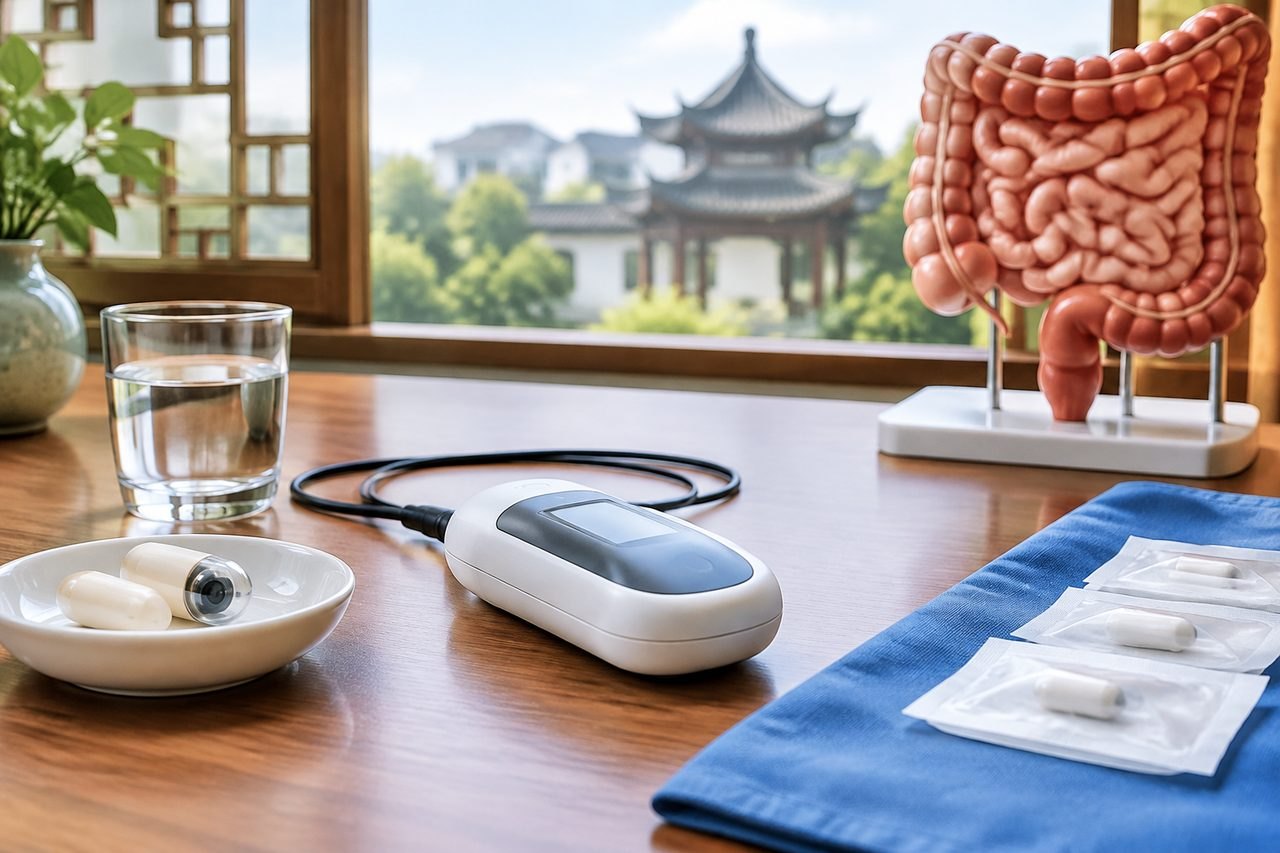
Capsule endoscopy is not a first-line test for every digestive symptom. It is a swallowed camera that records images as it passes through the small bowel, and the clinician needs to know what earlier tests have already shown before deciding whether it adds useful information.
The key safety question is whether the small bowel may be narrowed or obstructed. A capsule that cannot pass through a stricture can become stuck, which is called capsule retention. Previous imaging, surgery history and known inflammatory bowel disease can all be relevant to that assessment. The treating team must confirm how they will evaluate this risk in your case.
A second question is whether the unresolved problem is actually in the small bowel. If a recent high-quality gastroscopy and colonoscopy have already examined the upper and lower gut, the clinician may still consider capsule endoscopy for the middle section. If those tests are incomplete or outdated, the next step may be different.
- Dated gastroscopy report, including whether the examination was complete
- Dated colonoscopy report, including whether the caecum was reached and whether bowel preparation was adequate
- Any biopsy or histopathology results from those procedures
- Imaging reports such as CT enterography, MRI enterography or small-bowel follow-through
- A short symptom timeline: what happens, when it started, how often, and what has already been tried
A records gap example: what one missing report can change
Planning example, not a patient story: a patient sends a colonoscopy report that says the procedure was incomplete because of poor preparation. The report is dated two years ago. The patient also sends a normal CT scan of the abdomen from the same year and asks whether capsule endoscopy is the right next step in China.
In that situation, the clinician may not be able to tell whether the colon was adequately assessed. The missing information is not simply an old file; it changes the diagnostic question. The team may ask whether a repeat colonoscopy or a different small-bowel study is more appropriate before considering a capsule. Alternatively, if the CT already showed a possible stricture, the retention-risk discussion becomes more important.
This is why a short cover summary is useful. It should state the main unresolved question, list the tests already done with dates, and note any known narrowing, surgery or inflammatory bowel disease. The clinician can then see what is known and what is missing without reading an entire archive.
- State the main question in one or two sentences
- List each relevant test with its date and result
- Flag any known bowel narrowing, obstruction, surgery or inflammatory bowel disease
- Note current medicines, especially any blood thinners, and allergies
- Say whether you are currently unwell or having worsening symptoms
Questions that change the next step
The answers to a few practical questions determine whether a capsule endoscopy enquiry can move forward or whether another assessment is needed first.
Ask the hospital whether they need the original images or whether reports are sufficient for an initial review. Ask whether they require a patency capsule or other test before capsule endoscopy in your situation. Ask who will review the images and how the results will be communicated. Ask what happens if the capsule does not pass naturally, and what follow-up is arranged.
These are not administrative details. A patency assessment, for example, may be recommended when narrowing is suspected, and that recommendation depends on your history and prior imaging. The treating clinician must decide whether it is needed.
- Does the hospital need original imaging files or are reports enough for review?
- Is a patency capsule or other pre-capsule assessment likely to be required in my case?
- Who reviews the capsule images, and how are results returned?
- What is the plan if the capsule is retained?
- What symptoms should prompt urgent local care rather than waiting for an overseas reply?
What not to assume about capsule endoscopy in China
Capsule endoscopy does not replace gastroscopy, colonoscopy or imaging. It examines the small bowel, and it may not be suitable if there is a suspected narrowing or if the clinical question can be answered by another test. Do not assume that sending records guarantees acceptance or that a capsule will be offered.
Do not delay local assessment of severe or worsening symptoms while preparing an overseas enquiry. If you have significant abdominal pain, vomiting, bleeding or inability to pass stool, seek local medical care first. An overseas planning enquiry is not emergency care.
Availability, appointment timing, preparation instructions and report delivery are hospital-specific. Ask the hospital to confirm these points rather than relying on general assumptions about care in China.
- Capsule endoscopy is a small-bowel test, not a general replacement for endoscopy or colonoscopy
- Suitability and retention risk are clinical decisions for the treating hospital
- Records review does not establish final eligibility or appointment acceptance
- Urgent symptoms need local care, not an overseas enquiry
A practical way to prepare your records
Organise your records into a short, dated summary rather than a large unlabelled file. Put the symptom timeline first, then the procedure reports in date order, then imaging and pathology. Label each document clearly and note whether the original images are available.
If you are missing a report, say so in the summary. The hospital can then tell you whether it needs the document before review or whether it can proceed with what you have. This is more useful than sending an incomplete file without explanation.
You can begin with a free initial enquiry that includes a brief summary of your situation and main question. The team checks what is available, identifies missing information and suggests a relevant next step. A proxy consultation is optional and is not required to make an initial enquiry.
- One-page symptom timeline with dates
- Procedure reports in date order, with completeness noted
- Imaging and pathology reports clearly labelled
- A note on any missing records and whether original images exist
- Your main question stated in one or two sentences
Sources & scope of this guide
References and official service information relevant to this guide.
This is general planning information and has not been individually reviewed by a doctor. Medical decisions and personal treatment advice come from your treating clinicians.