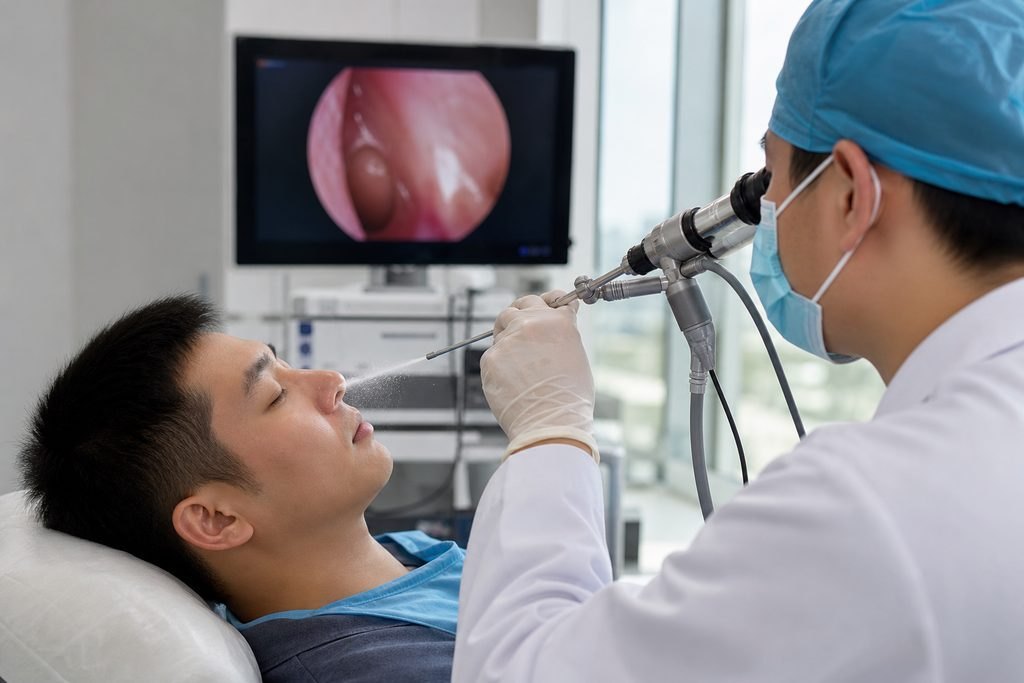
Why earlier nasal treatment matters more than a new first-visit summary
Chronic rhinosinusitis is a long-term inflammatory condition, and many patients arrive at a specialist appointment after months or years of nasal sprays, saline rinses, antihistamines, short antibiotic courses or other treatments. A generic first-visit guide tells you how to describe the nose and sinuses. This article assumes that step is behind you. The decision now is different: can a specialist tell whether your earlier nasal treatment was appropriate, whether it was continued long enough, and whether the remaining symptoms point toward surgery or toward a different medical plan?
That distinction changes what you prepare. Instead of a broad symptom story, you need a treatment history with dates, product names, doses, duration and response. You also need to separate what improved from what did not. A specialist cannot judge the adequacy of earlier treatment from a list of symptoms alone, and you cannot expect a remote review to confirm surgical suitability without the relevant records.
The practical reason is that chronic rhinosinusitis care is not a single decision. It involves confirming the diagnosis, reviewing whether medical treatment was optimised, and then considering whether surgery is appropriate. Endoscopic sinus surgery treats sinus problems through the nose, but the proposed extent, alternatives and individual risks require discussion with the surgeon. Your earlier nasal treatment is part of that discussion, not a separate administrative detail.
What to record about earlier nasal treatment
The most useful record is a simple table or timeline. For each treatment, note the name, the form, the dose or frequency, the start and stop dates, and what happened. If you used a steroid nasal spray, record whether you used it daily or intermittently, whether you aimed it toward the sinus openings, and whether you stopped because of side effects, cost, pregnancy plans or simply because it seemed not to help. If you used saline irrigation, note the method and frequency. If you took antibiotics, record who prescribed them, for how long, and whether symptoms returned after finishing.
Then add the response in plain terms. Did nasal blockage improve, partially improve or not change? Did facial pressure, smell, discharge or sleep change? Did you need rescue treatment, oral steroids or repeated antibiotic courses? A specialist uses these details to judge whether the earlier treatment was adequate and whether the current symptoms are residual inflammation, a structural problem, or both.
Do not edit the history to make it sound more consistent. If you stopped a spray after a few days because it caused nosebleeds, say so. If you used a traditional remedy alongside prescribed treatment, include it. The treating clinician needs the real sequence, not a polished version.
- Treatment name, form, dose or frequency, and exact start and stop dates.
- Who prescribed it and in what setting, including over-the-counter or traditional remedies.
- Reason for stopping: completed course, no benefit, side effect, cost, pregnancy plan or other.
- Response by symptom: blockage, discharge, facial pressure, smell, sleep and daily function.
- Any rescue treatment, oral steroid course, antibiotic course or emergency visit.
Sinus imaging and symptoms: what a specialist needs to see together
Symptoms and imaging answer different questions. Your symptom record shows the burden and pattern over time. Sinus imaging shows anatomy, mucosal change and whether the sinus drainage pathways are blocked. A specialist reviewing your case in China will want both, because an image without a symptom history can overstate or understate the problem, and a symptom history without imaging may miss a structural cause.
If you have had a CT scan of the sinuses, bring the original images, not only the report. If you have had nasal endoscopy, bring the report and any images. If you have had allergy testing, note the results and whether allergy treatment was part of your earlier nasal treatment. If you have not had recent imaging, do not assume you need a new scan before enquiry. The receiving specialist decides what imaging is needed, and a remote review may be able to comment on existing records while stating what remains uncertain.
When you write your summary, keep symptoms and imaging separate. For symptoms, describe the pattern over the last several months. For imaging, state the date, the type of scan and the main findings in the report. Then state the question you want answered: whether earlier treatment was adequate, whether surgery is being considered, or what the proposed surgical extent would be.
Surgical extent: what the earlier treatment history changes
Endoscopic sinus surgery is not one uniform operation. The surgeon may propose opening specific sinuses, removing polyps, correcting a deviated septum or addressing other structures. The extent depends on the disease pattern, the imaging, the response to earlier treatment and the patient's goals. That is why a history of earlier nasal treatment is not background information. It helps the surgeon decide whether a limited procedure or a more extensive one is being considered, and what alternatives remain.
If you have already been told that surgery is an option, ask what the proposed extent is and why. Ask what would be left untreated, what the alternatives are, and what the individual risks are for your case. These are questions for the surgeon, not for a coordination service. A records-based opinion can help you prepare those questions, but it does not replace the surgeon's assessment or establish final surgical suitability.
If you have not been told that surgery is an option, do not assume that travelling to China will produce a surgical recommendation. The hospital decides suitability after reviewing your records and, where needed, examining you. Your earlier nasal treatment history is one part of that decision.
How to present this for a China-based specialist review
Start with a short summary, not a complete archive. State that you have chronic rhinosinusitis, that you have already tried nasal treatment, and that you want a specialist to review whether that treatment was adequate and what the next options are. Then list the treatment history, the symptom pattern, the imaging you have, and the specific question you want answered. Keep the first message brief; detailed records can follow after the initial contact.
If you are considering an in-person visit in China, the same summary helps the hospital route your enquiry to the right ENT specialist. If you are considering a records-based opinion while remaining at home, the summary helps the reviewing clinician understand what has already been tried. A proxy consultation is optional, not a prerequisite for every appointment or operation. An initial enquiry is free and does not require buying a proxy consultation.
For practical preparation, ask the hospital or coordination team what records they want, how to send imaging, and whether an interpreter is needed for the consultation. Do not send passport numbers, card details or a complete medical archive in the first message. If your symptoms are worsening, causing breathing difficulty, severe pain, vision changes or fever, seek local urgent care rather than waiting for an overseas enquiry.
What remains uncertain and what to confirm
A remote review of records can clarify the treatment history and the imaging findings, but it cannot confirm final surgical suitability, the exact extent of surgery or the outcome. Those require the treating surgeon's assessment, which may include an examination and additional tests. The hospital decides whether to accept your case and what treatment to recommend.
Before you travel or commit to a plan, confirm the scope of any written estimate or treatment plan with the named provider. Ask what is included, what is excluded and what remains undecided. Ask how many visits are expected, how reports are delivered and what follow-up is arranged. These are provider-specific questions, not China-wide facts.
The useful next step is to prepare a one-page summary of your earlier nasal treatment, symptoms and imaging, then send it through the enquiry form, email or WhatsApp. The team can check what is missing and suggest the relevant next step. That initial enquiry is free, and it does not commit you to any treatment or service.
Sources & scope of this guide
References and official service information relevant to this guide.
This is general planning information and has not been individually reviewed by a doctor. Medical decisions and personal treatment advice come from your treating clinicians.