What the first in-person discussion is actually for
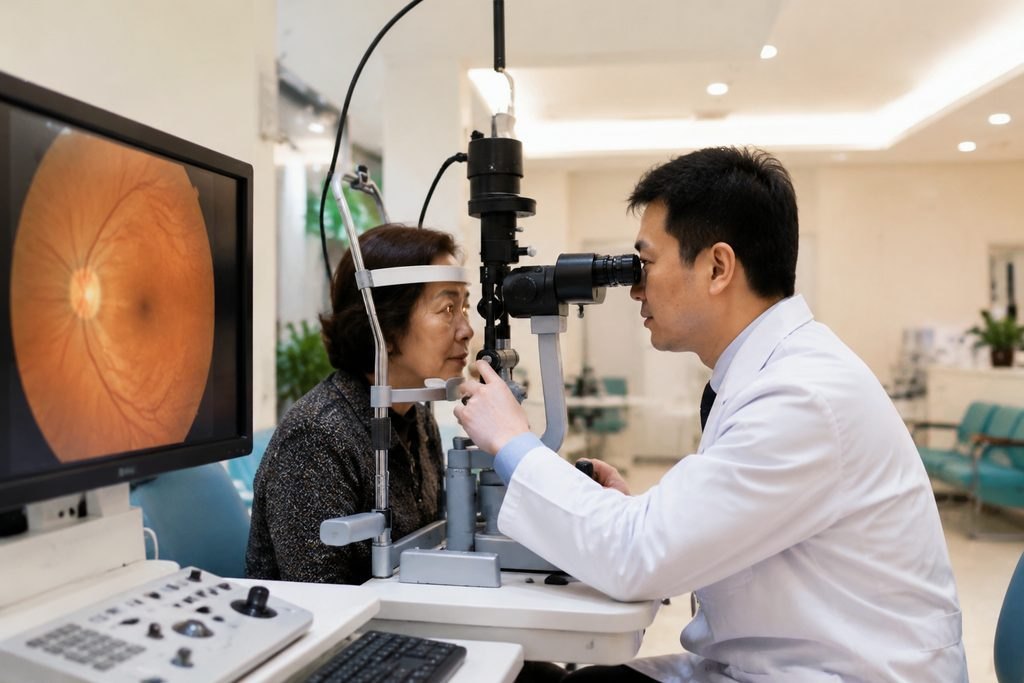
A first in-person eye appointment for diabetic retinopathy is an assessment and planning conversation. The clinician examines the retina, reviews your existing records and explains what the findings mean for you. Diabetic retinopathy affects the retina, and treatment options can include injections, laser or surgery, depending on that assessment. Not every patient needs a procedure.
That distinction matters when you are travelling to China for care. You are not attending to confirm a treatment you have already chosen. You are attending so a clinician who can examine you directly can decide whether treatment is appropriate, which option fits your eye, and what monitoring interval makes sense. If you arrive expecting a specific procedure to be scheduled, you may leave with a different plan, or with a plan to continue observation.
The practical goal of the visit is therefore to leave with three things: a clear statement of what was found, a clear statement of what is recommended and why, and a clear statement of what happens next, including who is responsible for each part of your ongoing care.
The records that make the discussion specific
A retinal assessment is far more useful when the clinician can compare your current retina with what it looked like before. Bring whatever you already have, in whatever format you have it. If your eye clinic can export images and reports, ask for those files before you travel rather than relying on a verbal summary.
The most useful items are recent retinal imaging and any report describing it, notes from previous eye treatment including injections, laser or surgery, your current diabetes medication list with doses, recent blood test results relevant to diabetes control, and a list of your other medicines and allergies. If you have records in a language other than English or Chinese, ask whether a translation is needed and arrange it in advance.
You do not need to assemble a complete archive before making an enquiry. A short summary of your diagnosis, your main question and the records you can provide is enough to start. The fuller file can follow once you know which clinician will review it and what they specifically want to see.
- Recent retinal images or scans, plus the written report that interprets them
- Notes from any previous eye injections, laser treatment or eye surgery, with dates
- Current diabetes medicines and doses, and recent diabetes-related blood results
- Other medicines, allergies and relevant medical conditions
- Your main question in one or two sentences, written down before the visit
Questions that turn a short visit into a useful one
In-person specialist time is limited, and it is easy to leave without asking the thing you most wanted to know. Write your questions down and take them in with you. The aim is not to challenge the clinician but to make sure the plan you leave with is one you actually understand.
Start with the finding. Ask what is seen in your retina now and whether it has changed compared with your previous records. Then ask about the recommendation: what is being proposed, what is the reason for it, and what would happen if you chose to wait or to have it managed closer to home. Ask what alternatives exist and what the clinician would consider if the first option does not suit you.
Then move to coordination, which is the part that can be left unresolved if you do not raise it. Ask how the proposed eye treatment and repeat reviews would be coordinated with your existing diabetes and eye care. Specifically: who monitors your diabetes control during and after eye treatment, how often the eye reviews would happen, whether those reviews can be done by your local eye clinic, and what findings should prompt you to seek care sooner. Ask who to contact if a problem develops after you return home.
Finally, ask about uncertainty. It is reasonable to ask the clinician what is known about the likely course of your condition and what remains uncertain in your case. A clinician can discuss evidence-based risks and outcomes without guaranteeing an individual result. If you want numbers, ask for the range and the reasoning behind it, and accept that your own situation may differ.
What to confirm before you treat the visit as settled
A first consultation is a clinical assessment, not a confirmed treatment slot. Several things may still be open after the appointment, and knowing which ones they are prevents confusion later.
Ask whether the recommendation is final or provisional. Some plans depend on further imaging, a repeat examination at a later date, or the response to an initial step. Ask whether any additional tests are needed before a decision, and whether those can be done on the same trip or would require a return visit. Ask whether the clinician expects to see you again before starting treatment.
Ask about the practical side of the plan in writing. What does the proposed treatment involve, how many visits does it require, and what does the provider's written estimate include and exclude? Ask what is still undecided at this stage. If you are comparing options in more than one place, ask for the same scope of information from each so the comparison is meaningful.
If you are considering care in China as an overseas patient, also confirm the administrative questions directly with the hospital or coordinating service: how appointments are booked, what language support is available, what records they need in advance, and how results and follow-up instructions will be given to you. These are provider-specific arrangements, not universal rules, so ask rather than assume.
Coordinating eye treatment with your diabetes care
Diabetic retinopathy does not sit in isolation from the rest of your diabetes care. The eye clinician treats the retina; someone still needs to manage your blood pressure, blood glucose and other risk factors. Before you agree to a treatment plan abroad, establish who that someone is.
Ask the eye clinician what they need from your diabetes team, and ask your diabetes team what they need to know about the eye plan. If your diabetes care stays with your home clinician, confirm that they are willing to receive updates and to act on them. If you are considering transferring part of your diabetes care as well, that is a separate conversation with a separate clinician, and it should be planned deliberately rather than assumed.
Ask how repeat eye reviews would be arranged once you return home. Some reviews may be possible locally with results shared; others may require you to return. Ask which is which in your case, and get the answer in writing if you can. Also ask what symptoms or changes should prompt you to seek urgent eye care rather than waiting for the next scheduled review.
This is also where a coordination service can be useful without making clinical decisions. ChinaSpecialistCare can help with records, interpretation and specialist appointment requests for diabetic retinopathy care, while the treating hospital and licensed clinicians decide suitability, treatment and follow-up. An initial enquiry is free and does not require buying a proxy consultation.
Your next step
Before the visit, write down your main question and the three or four things you most want answered. Gather the retinal records and diabetes information you already have, and note what is missing. Then send a brief summary through the enquiry form, email or WhatsApp; you do not need to send a complete medical archive at first contact.
At the appointment, work through your written questions, confirm what is recommended and why, and confirm how eye treatment and repeat reviews would be coordinated with your existing diabetes and eye care. Leave with a written plan and a named point of contact. If anything is still unclear, ask before you travel home.
Sources & scope of this guide
References and official service information relevant to this guide.
This is general planning information and has not been individually reviewed by a doctor. Medical decisions and personal treatment advice come from your treating clinicians.