Start with the assessment, not the treatment name
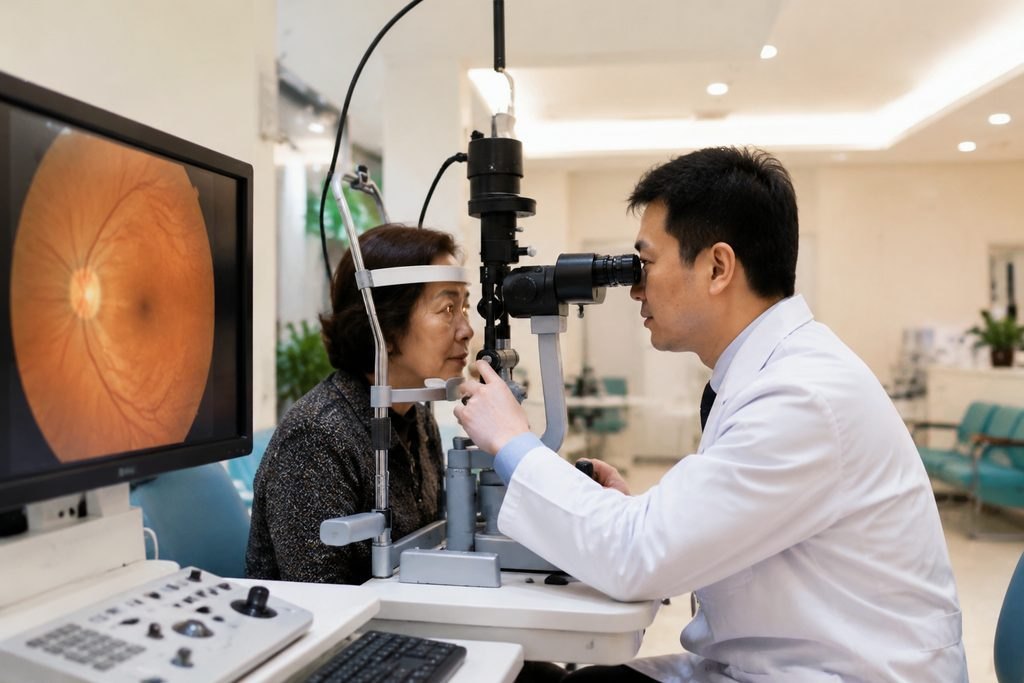
Diabetic retinopathy affects the retina, and treatment options can include injections, laser or surgery, depending on assessment. That sentence matters because it tells you the first decision is not which procedure to book. The first decision is whether the assessment supports any procedure at all, and if so, which one.
Overseas patients often arrive with a diagnosis and a request for a specific treatment. A China eye team still needs to examine the retina and review your retinal reports, previous eye treatment and current diabetes context before it can discuss risks and alternatives meaningfully. If you ask about risks before the assessment is complete, the answer may be generic rather than specific to your eye.
A useful question is: "Based on my current retinal findings, what are the treatment options, and what would each option aim to achieve?" This keeps the conversation on assessment and intent rather than on a preselected procedure.
You should also ask whether any recommended treatment is urgent, elective or something that can be reviewed again after more information is available. That answer belongs to the treating ophthalmologist, not to a coordination service.
Ask what the proposed eye treatment is meant to do
Risks are easier to understand when you know the goal. Ask the ophthalmologist to state the intended aim in plain language: for example, whether the proposed treatment is intended to reduce the risk of further retinal damage, to treat a specific finding, or to address a complication that has already developed. The answer should relate to your retinal images and examination, not to diabetic retinopathy in general.
Then ask what happens if you choose not to proceed, or if you choose to wait. This is not a challenge to the doctor. It is a request for the natural course of the specific problem being discussed, so you can weigh the option against the alternative of continued observation or another approach.
Ask how success would be judged. Would it be a change on retinal imaging, a change in vision, or prevention of a future event? Without a defined aim, you cannot compare risks and benefits in any meaningful way.
Finally, ask whether the proposed treatment is intended as a single episode or as part of a longer review schedule. Diabetic eye care often involves repeat assessment, and the plan for review is part of the treatment decision, not an administrative afterthought.
Ask about alternatives without asking for a personal recommendation
You can ask about alternatives without asking the doctor to choose for you. A neutral way to phrase it is: "What are the reasonable alternatives to the treatment you are proposing, and what are the trade-offs of each?" This allows the ophthalmologist to describe options such as continued monitoring, a different treatment approach, or a staged plan, depending on your assessment.
The reason to frame the question this way is practical. If you ask "what would you do if you were me?", you may receive a general preference rather than reasoning tied to your retinal findings. If you ask what the alternatives are and how each one is weighed, you can compare them against your own priorities: travel, work, family responsibilities, and how you feel about watching and waiting versus proceeding.
Ask whether any alternative would be more suitable if your circumstances changed, for example if travel were delayed or if another health issue needed attention first. You are not asking for a promise. You are asking what the team would consider in a different scenario.
Ask what information would change the recommendation. If the answer is "new retinal imaging" or "a clearer diabetes history," then you know what to gather before making a decision. If the answer is that nothing would change it, ask why the recommendation is stable across those scenarios.
Ask how each alternative would be reviewed over time. Continued monitoring is not the absence of a plan; it has its own review interval and its own triggers for changing course. Ask what those triggers would be, so that choosing to wait is an active decision rather than an open-ended delay.
It is reasonable to say that you are not asking for a personal recommendation, but you want to understand the reasoning. Most clinicians will explain their thinking when the question is framed that way. If you receive a list of options without any explanation of how they differ for your eye, ask a follow-up: "For my retinal findings, what makes one of these more or less suitable than another?"
You can also ask whether the alternatives differ in what they require from you. Some options may involve repeat visits, others a single episode with later review. Ask what each option would mean for your time in China and for follow-up after you return home, so that the practical burden is part of the comparison rather than a separate conversation.
Finally, write down the alternatives as the doctor describes them, in your own words, and read them back. This is not a test of the clinician. It is a way to confirm that you have understood the trade-offs correctly before you decide, and it gives you a record to discuss with your local eye and diabetes clinicians.
Coordinate the eye plan with your existing diabetes and eye care
Treatment in China does not replace the care you already receive at home. Ask how the proposed eye treatment and repeat reviews would be coordinated with your existing diabetes and eye care. This is a practical question about communication, not a request for the China team to take over your long-term management.
Ask what information the China team would send back to your local ophthalmologist or diabetes clinician, and in what form. Ask whether they can provide a written summary of findings, treatment performed and recommended follow-up. Ask what they would need from your local team before or after the visit.
Ask how repeat reviews would be scheduled if you return home. Would the China team provide a review interval for your local ophthalmologist to follow? Would they expect you to return to China for specific checks? The answers depend on the treating team and on your eye condition, so they must be confirmed individually.
If you have retinal reports, previous eye treatment records and recent diabetes information, ask whether those are sufficient for the first assessment or whether something else is needed. Do not send a complete medical archive at first contact; a brief summary and the key eye records are enough to begin.
Prepare your questions and confirm the next step
Before you travel or commit to a treatment plan, write down the questions that matter to you. Bring them to the appointment. A short written list is more useful than trying to remember everything in a consultation.
Useful questions include: What is the assessment finding? What is the proposed treatment intended to achieve? What are the specific risks for my eye? What are the reasonable alternatives? What would happen if I chose to wait? How will this be coordinated with my diabetes and eye care at home? What follow-up would you recommend, and who would provide it?
You can also ask what the written plan or quote would include and exclude, so that you understand the scope of what is being proposed. Ask the named provider about its actual arrangements rather than assuming a standard process.
If you are considering care in China, you can start with a brief summary of your eye diagnosis, retinal reports and main question. An initial enquiry is free and does not require buying a proxy consultation. The hospital decides suitability after reviewing your information. You can begin through the diabetic retinopathy care page or the main care-review route.
Sources & scope of this guide
References and official service information relevant to this guide.
This is general planning information and has not been individually reviewed by a doctor. Medical decisions and personal treatment advice come from your treating clinicians.