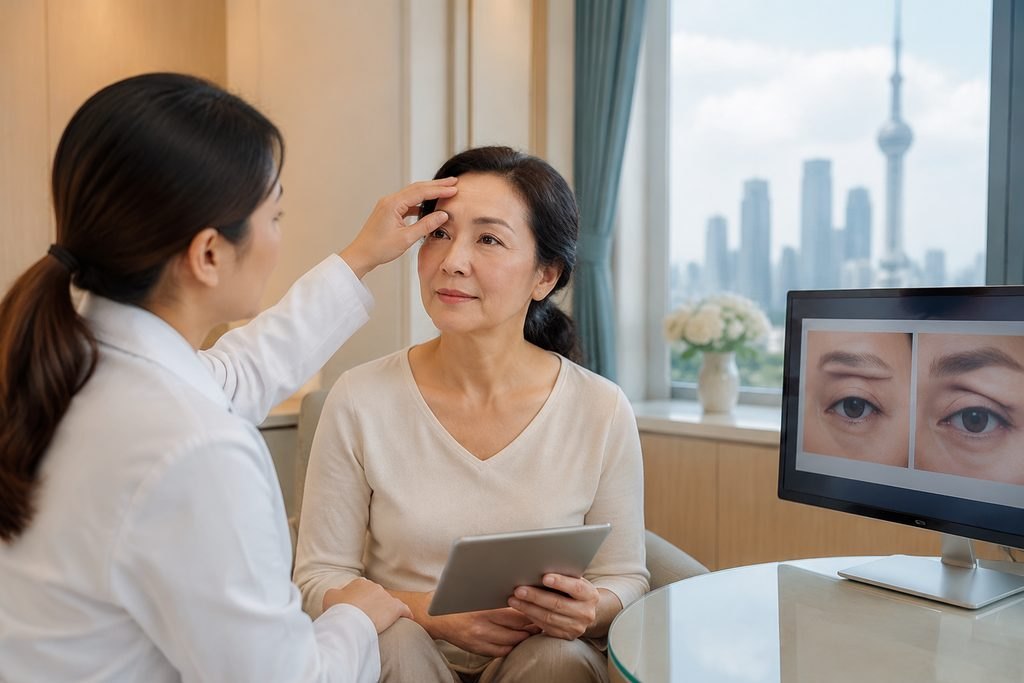
What a real record exchange actually contains
A record exchange is not a forwarded email saying you want eyelid surgery. It is a set of documents and a set of questions that let a receiving clinician understand your eyelids, your eye health and why you are considering surgery. Blepharoplasty removes excess eyelid tissue, and assessment considers the eyelids, eye health and the reason for surgery. If any of those three elements is missing, the receiving team is working with an incomplete picture.
Start by listing what you already have. A home ophthalmologist or oculoplastic surgeon may have examined your eyelids, checked your visual field, measured eyelid position or photographed your eyes. A general practitioner may have notes about dry eye, thyroid history or medications. A previous surgeon may have an operative note. These are the documents that travel well because they describe findings rather than opinions.
Then write the questions you want answered. Keep them concrete. For example: does the proposed procedure address the upper lid, lower lid or both; is the goal functional or cosmetic; what follow-up visits are expected; and does the plan include a separate eye assessment before surgery. Send the same questions to your home team so you can compare answers rather than collect two unrelated opinions.
One practical caution: a photograph taken on a phone is not a substitute for a clinical examination. It can help a coordinator understand your concern, but it does not let a remote clinician measure eyelid function or assess the ocular surface. Ask what specific examination or imaging the receiving team needs, rather than assuming a photo is enough.
Why the reason for surgery changes the questions
Eyelid surgery is requested for different reasons, and the reason shapes what your home team should send. If the concern is excess upper eyelid skin affecting your field of vision, your home clinician may have documented visual field testing or eyelid measurements. If the concern is cosmetic, the records may focus on photographs, asymmetry and your goals. If the concern is a drooping lid, the assessment may need to distinguish eyelid skin surgery from ptosis repair, which is a different procedure.
This distinction matters because eyelid skin surgery is not automatically ptosis repair. A receiving team needs to know whether the problem is excess tissue, a weak eyelid muscle, or both. If your home records do not clarify this, ask your home clinician to state it in writing. That single sentence can prevent a plan that removes skin but does not address the underlying lid position.
The same logic applies to eye health. Dry eye, glaucoma, previous eye surgery and thyroid eye disease can all change how a surgeon approaches the eyelids. Your home team may have this history. Sending it is more useful than sending a general letter that says you are fit for surgery.
When you write to a Chinese team, describe your goal in plain language and ask whether the proposed procedure matches it. Do not ask for a guarantee of symmetry or visual improvement. No responsible team can promise that, and a request framed that way may get a cautious reply that does not help you decide.
How to ask your home team for a usable summary
Your home clinician does not need to write a long report. A short structured summary is more useful. Ask for the date of examination, the findings on eyelid position and skin, any eye health diagnoses, current medications relevant to surgery, and a clear statement of the reason for considering eyelid surgery. If a visual field test or eyelid photograph exists, ask for a copy.
If your home clinician is unsure what the Chinese team needs, you can share the specific questions you plan to ask. This is not asking your home doctor to approve a plan in China. It is asking for the factual record that any surgeon would want. A clinician who understands the request is more likely to provide a focused summary than a generic referral letter.
Keep a simple index of what you send. List each document, its date and its source. When a Chinese coordinator or clinician asks a follow-up question, you can point to the exact record rather than resending everything. This also helps you notice if a key item, such as an operative note from a previous eyelid procedure, is missing.
Do not send passport numbers, payment details or a complete lifetime medical archive at first contact. A brief summary and your main question are enough to begin. The receiving team can tell you what else it needs.
What to confirm before you treat a reply as a plan
A preliminary reply is not the same as a confirmed surgical plan. A Chinese hospital may review your records and indicate that an appointment or further assessment is possible, but suitability is decided by the treating hospital and licensed clinicians after they have the information they need. Ask what remains undecided and what would change the recommendation.
Specific items to confirm include: whether the proposed procedure is functional or cosmetic; whether a separate eye assessment is required before surgery; what follow-up visits are expected and where they would take place; and what the written plan includes and excludes. If a quote is provided, ask the named provider how its written estimate is structured and which items are still undecided. Do not assume that a figure covers every part of the episode.
It also helps to ask how the two teams will communicate. Will your home clinician receive a copy of the operative note? Who is responsible for sending it? If you return home after surgery, your home team may need to manage follow-up. Clarifying this handover early is more useful than discovering a gap later.
If your home clinician has concerns about the proposed approach, send those concerns to the Chinese team as questions rather than as a veto. A useful exchange allows both sides to explain their reasoning. The final decision remains with you and the treating clinicians.
Practical preparation for the exchange
Set up a single folder, digital or paper, with your eyelid and eye records, your medication list, your questions and the replies you receive. Label documents by date and source. If you use email, keep the subject line consistent so you can find the thread later.
Write your main question in one sentence at the top of your enquiry. For example: I am considering upper eyelid surgery for excess skin affecting my vision, and I want to know whether the proposed procedure addresses that goal and what follow-up is expected. A clear question gets a clearer answer than a long narrative.
If you need help with interpretation or with requesting a specialist appointment, that can be arranged separately. ChinaSpecialistCare can help with records, interpretation and specialist appointment requests for eyelid surgery, but clinical decisions, suitability and hospital acceptance remain with the treating hospital and licensed clinicians. An initial enquiry is free and does not require buying a proxy consultation.
Do not delay necessary local care while you pursue an overseas enquiry. If your vision changes suddenly, you have eye pain or another urgent symptom, seek local medical assessment first.
Next step
Send a short summary of your eyelid concern, your main question and the records you already have. Ask the receiving team what else it needs and which points remain undecided. Then share the same questions with your home clinician so both sides are working from the same facts. You can start with a free initial enquiry; a proxy consultation is optional and not a prerequisite.
Sources & scope of this guide
References and official service information relevant to this guide.
This is general planning information and has not been individually reviewed by a doctor. Medical decisions and personal treatment advice come from your treating clinicians.