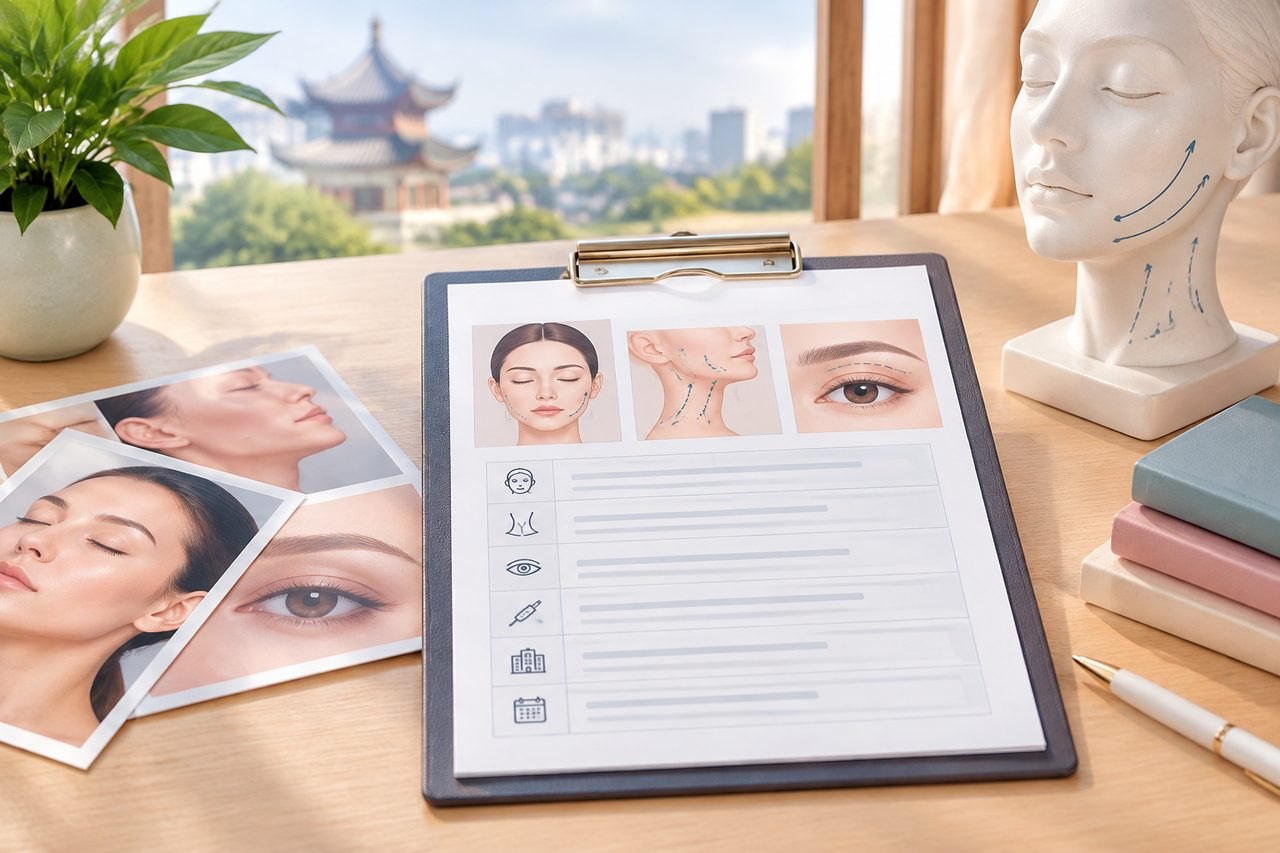
Why one facelift quote may not include the neck or eyelids
Facelift surgery addresses loose facial skin, and its extent and expected result require an individual discussion with the treating surgeon. That single sentence hides an important planning fact: the operation is not a fixed package. A surgeon may lift the mid-face, the jawline, the neck, or a combination, and each added area changes the surgical time, the anaesthesia plan and the facility resources involved.
The neck is a separate anatomical region. Loose neck skin, banding of the platysma muscle and submental fullness are assessed on their own. A surgeon may treat the neck during the same operating session as a facelift, or may recommend a separate neck lift, or may judge that the neck does not need surgery at all. None of those decisions can be read from a headline price.
Eyelid surgery is a different procedure again. Upper eyelid skin excision, lower eyelid tightening and fat repositioning are planned by reference to the eye, not the cheek. A facelift does not address eyelid skin. When a patient asks about both, the realistic answer is that two procedures are being discussed, even if they are performed under one anaesthetic.
This is why a single figure described as 'facelift cost' is ambiguous until you know what the surgeon intends to do. The quote question is not only how much, but for which operation, on which areas, in which facility, with which follow-up.
The comparison fields that decide whether quotes are comparable
Two hospitals can both send a number for 'facelift' and mean different things. Before comparing, ask each provider to state the same fields in writing. The first is the named procedure or procedures: face only, face and neck, neck only, upper eyelids, lower eyelids, or a combination. The second is the surgical approach, because a superficial skin lift and a deeper plane lift are different operations with different operating times.
The third field is anaesthesia: local with sedation, or general anaesthesia, and who provides it. The fourth is the facility: which hospital or clinic, which type of operating room, and whether an overnight stay is planned. The fifth is the follow-up schedule the surgeon intends, including dressing changes, suture removal and review appointments.
The sixth field is what the figure is not. Ask directly whether the number covers surgeon fees, anaesthetist fees, operating room and facility charges, implants or consumables if any, medicines, garments, pathology if a specimen is sent, and the follow-up visits listed. Ask whether a revision or a touch-up procedure within a defined period is addressed in the written terms, and under what conditions.
Only when these fields match can two quotes be compared. A lower figure that covers face only is not a cheaper version of a quote that covers face, neck and eyelids; it is a quote for less surgery. Conversely, a higher figure may reflect a longer operation, a different anaesthesia plan or a longer follow-up schedule.
What each missing answer changes about your plan
If the quote does not name the areas, you cannot tell whether the neck is included. That changes the operation you are consenting to, and it changes what you should expect to see afterwards. If the quote does not state the anaesthesia plan, you cannot judge the recovery arrangements or the escort and supervision you will need on the day.
If the quote does not state the facility, you cannot compare the setting in which the surgery happens, or whether an overnight stay is part of the plan. If it does not state the follow-up schedule, you cannot plan how long you need to remain in the city, or when it is reasonable to discuss travelling home. Those are clinical and practical questions for the treating surgeon, not assumptions you should make from a price.
If the quote does not separate surgeon, anaesthesia and facility components, you cannot see which part changes when the plan changes. Adding a neck lift or eyelid surgery may alter several components at once. A quote that hides the structure makes that impossible to follow.
If the quote does not address what happens if a further procedure is considered later, you do not know how that would be handled. Ask the provider to state its written terms rather than relying on a verbal impression.
Records and photographs that make an estimate meaningful
A records-based estimate is only as good as the information reviewed. For facial surgery, standardised photographs matter as much as text. Ask the receiving clinician what views and lighting they want, and whether they prefer images taken by a photographer or by a trained clinic. Front, oblique and profile views, with the neck visible and the hair clear of the face, are commonly requested, but confirm the specific set with the provider.
A short medical history helps the surgeon assess fitness for anaesthesia and healing. Relevant items may include previous facial surgery or injectables, current medicines and allergies, smoking, and any condition affecting wound healing or clotting. Do not stop or change any medicine on your own; that decision belongs to the prescribing clinician.
Dental and eye history can matter when eyelid surgery is discussed, because dry eye, previous eye surgery and thyroid conditions may influence the assessment. Mention them rather than deciding they are irrelevant.
You do not need to send a complete archive at first contact. A brief summary and a clear question are enough to start. The team can then explain which additional records or images the surgeon wants to see.
Questions that separate a face-only quote from a combined plan
Bring the same short list to every provider so the answers line up. Ask which areas the surgeon proposes to treat, and why. Ask whether the neck is being addressed within the same operation, in a separate stage, or not at all. Ask the same about upper and lower eyelids.
Ask what the quoted figure includes and excludes, in writing. Ask who provides the anaesthesia and in what setting. Ask how many follow-up visits are planned and where they take place. Ask what the written terms say about further surgery, and what would be decided by the treating team rather than assumed in advance.
Ask what the surgeon needs from you before giving a firmer estimate: photographs, records, a video consultation, or an in-person examination. Ask whether the estimate is provisional until that assessment happens. A responsible answer will distinguish a planning figure from a confirmed surgical plan.
Ask how the hospital handles the practical side: admission preparation, interpretation, and what a companion may need to arrange. These are coordination questions, not clinical ones, and they can be answered separately from the surgical plan.
How to move from an ambiguous figure to a usable plan
Start by writing down your own question in one sentence: for example, 'I want to know whether a facelift quote for my face would also cover neck tightening and upper eyelid surgery, and what the written estimate would include.' That sentence keeps the conversation focused.
Then send a brief summary with your main concern and any relevant history. An initial enquiry is free and does not commit you to buying a proxy consultation. The team checks the available information, identifies what is missing, and suggests the relevant next step. A proxy consultation is optional, and hospital acceptance and surgical suitability are decided by the treating hospital and its clinicians.
When you receive a quote, compare it field by field rather than by the final number. If a field is blank, ask for it in writing. If the provider cannot state what the figure covers, treat the figure as incomplete rather than as a bargain.
For procedure context, see the facelift surgery reference page. It explains the operation itself; the quote conversation above is what turns that into a plan you can compare.
Sources & scope of this guide
References and official service information relevant to this guide.
This is general planning information and has not been individually reviewed by a doctor. Medical decisions and personal treatment advice come from your treating clinicians.