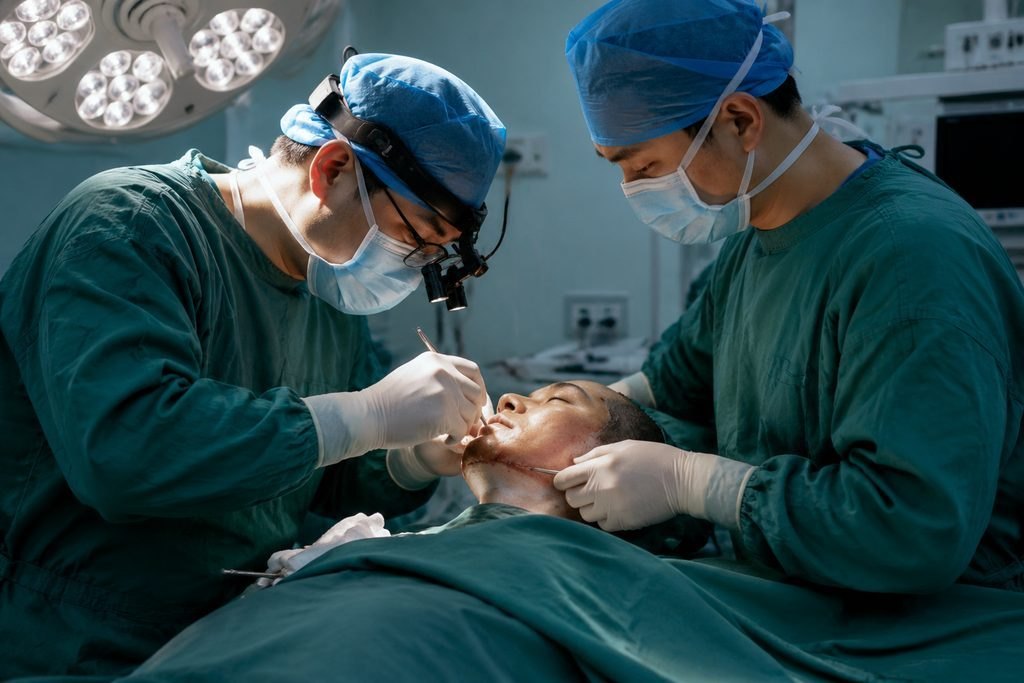
What a facelift is designed to change
A facelift is a surgical procedure that addresses loose facial skin. The operation typically involves lifting and repositioning facial tissues to create a firmer contour. The exact technique, incision placement and depth of dissection vary between surgical approaches and between patients.
What a facelift can address is therefore not a single fixed list. It depends on your facial anatomy, the quality and elasticity of your skin, the areas you want improved, and the surgical plan the team proposes. A facelift may be combined with other procedures, such as eyelid surgery or neck treatment, but whether that combination is appropriate for you is a clinical decision.
The important distinction is between what the operation is designed to do and what it can realistically achieve for your face. Loose skin can be repositioned. Volume loss, skin texture, pigment changes and underlying bone structure are different concerns that a facelift alone may not address. If your main concern is volume, for example, a surgical lift may not deliver the change you expect.
This is why the first useful step is not choosing a hospital or comparing prices. It is defining, in plain language, which areas bother you and what outcome you are hoping for. That description becomes the basis for a surgical discussion.
What a facelift cannot reliably address
A facelift cannot reverse all signs of ageing. It cannot change your underlying facial structure, and it cannot guarantee a specific appearance or perfect symmetry. Scars are part of any surgical incision, and how they heal varies between individuals. No surgical team can promise that scars will be invisible.
A facelift also cannot substitute for other treatments. If your concern is primarily skin quality, pigmentation or fine lines, a surgical lift may not be the right tool. If your concern is volume loss, fat grafting or fillers may be discussed, but those are separate procedures with their own risks and suitability criteria.
It is equally important to understand that a facelift is not a permanent solution. The face continues to age after surgery. The result changes over time, and further surgery may or may not be appropriate later. A surgical team should explain this honestly rather than implying a fixed lifespan for the result.
Finally, a facelift cannot address medical or psychological concerns that fall outside its scope. If you have a bleeding disorder, uncontrolled blood pressure, a history of poor wound healing or significant body image concerns, those need to be assessed before any surgical plan is confirmed. The treating team decides whether surgery is suitable.
How individual differences change the plan
Two patients of the same age with the same complaint can receive very different surgical plans. Skin thickness, elasticity, underlying fat distribution, bone structure, previous procedures and general health all influence what a surgeon can safely and realistically achieve.
Previous facial surgery matters. Scar tissue from earlier operations can change how tissues move and heal. If you have had fillers, implants or other facial procedures, the surgical team needs to know the details, including what was used and when. This information affects both planning and risk assessment.
Medical history also changes the picture. Smoking, diabetes, autoimmune conditions, blood-thinning medication and a history of keloid scarring are examples of factors that may affect healing or suitability. Do not stop or change any prescribed medication on your own. Ask the treating clinician what is relevant for your situation.
Because these variables are individual, no article can tell you whether a facelift is right for you. The purpose of a consultation is to gather your history, examine your face and discuss what is achievable. That discussion is the only reliable basis for a decision.
Questions to ask before agreeing to surgery in China
When you contact a hospital or coordination service, ask specific questions rather than general ones. Which areas of my face will the procedure address? Which techniques are being proposed, and why? Is any other procedure included in the plan, and if so, how does that change the risks and the recovery?
Ask how the team assesses your goals. Will there be a consultation with the operating surgeon before surgery? Can you discuss your expectations and hear a realistic assessment of what surgery can and cannot achieve? Ask what happens if your goals and the surgical assessment do not align.
Ask about the surgical team's experience with the specific approach proposed for you, and ask who will perform the operation. Ask what the plan includes and what it does not include, in writing. This is not about finding the cheapest option. It is about understanding the scope of what you are agreeing to.
Ask what reviews are needed before you return home. Wound checks, suture removal and early follow-up are part of surgical care, and the timing and location need to be confirmed with the treating team. Do not assume that a single postoperative visit is sufficient or that remote review can replace in-person assessment.
Planning the practical side without assuming fixed rules
Overseas surgical care involves logistics as well as clinical decisions. You will need to confirm how long the hospital expects you to stay, when follow-up appointments are scheduled, and whether any reviews must happen in person before you travel home. These details are specific to the provider and the procedure, so ask for them in writing rather than relying on general assumptions.
Language and communication matter. If you do not speak Chinese, confirm whether interpretation is available for consultations, consent discussions and postoperative instructions. Understanding the consent process is essential. You should know what you are agreeing to, including the risks and the alternatives.
Payment arrangements also need clarity. Ask the hospital how its estimate is structured, what is included, what is excluded and what remains undecided until after assessment. Coordination services, if you use them, are separate from hospital fees. Ask each party what they charge and what their fee covers.
Travel timing should follow clinical advice, not the other way around. Do not book flights or make irreversible commitments before the surgical team confirms your plan and the follow-up schedule. If you have symptoms that need urgent attention, seek local care first rather than delaying for an overseas enquiry.
Next step: define your question before you enquire
The most useful thing you can do now is write a short summary of your situation. Describe which areas of your face concern you, what outcome you hope for, any previous facial procedures, your relevant medical history and any medication you take. This is not a complete medical archive. It is enough for an initial review.
You can then ask a hospital or coordination service whether a facelift is likely to be relevant to your goals and what information they need to assess your case. An initial enquiry is free and does not commit you to treatment. A proxy consultation is optional and is not a prerequisite for every appointment.
The hospital decides whether surgery is suitable. No coordination service can promise acceptance, a specific surgeon or a clinical outcome. What you can do is prepare a clear question, ask for written scope, and make sure you understand the plan before you travel.
For more detail on the procedure itself, see the facelift surgery reference page.
Sources & scope of this guide
References and official service information relevant to this guide.
This is general planning information and has not been individually reviewed by a doctor. Medical decisions and personal treatment advice come from your treating clinicians.