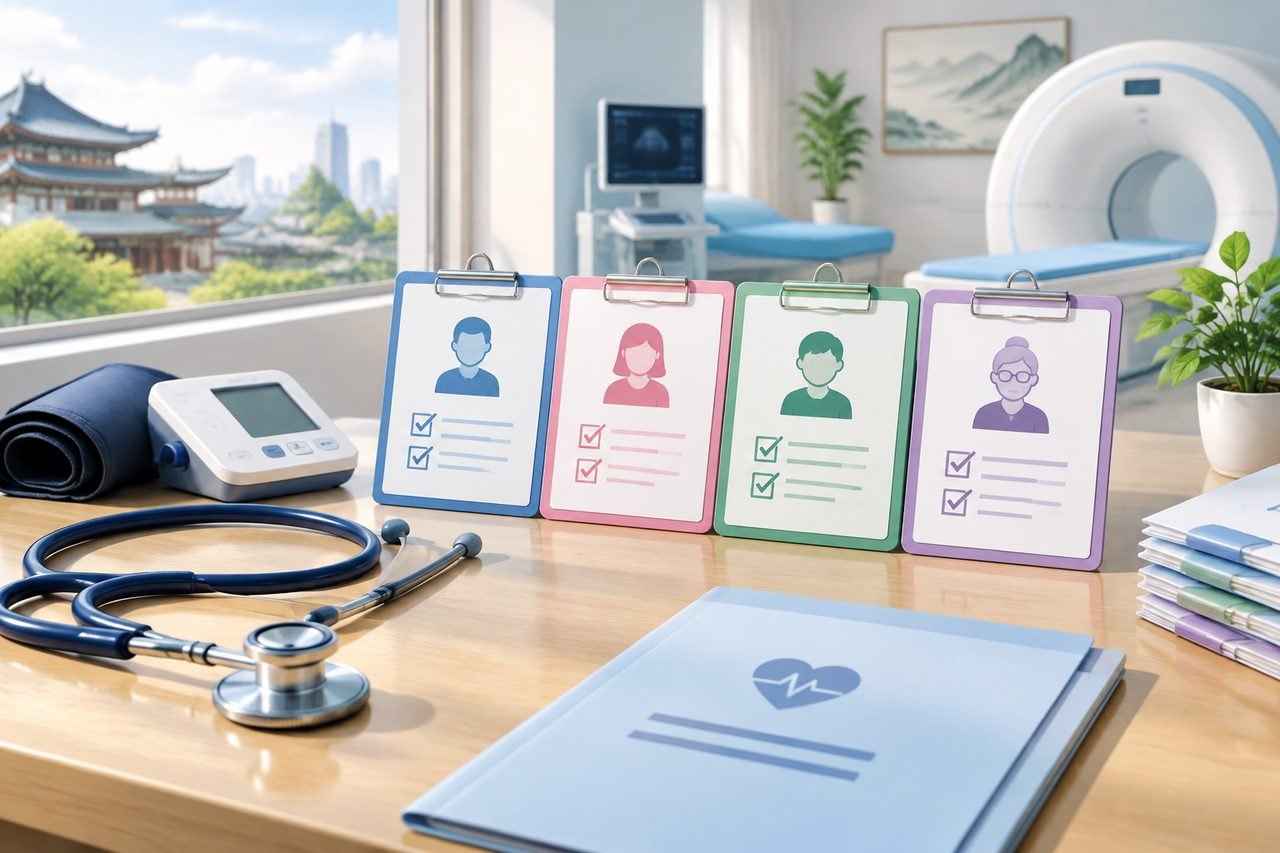
Why one booking does not mean one consent
Ask the hospital whether it can offer one appointment block for your family, or whether each person needs a separately confirmed visit. Even if appointments can be grouped, keep each person's enquiry separate: the examination, the results and the decision to proceed belong to that individual. An adult family member cannot consent on behalf of another competent adult, and a parent or guardian usually handles consent for a minor child according to the hospital's own process.
This matters before you travel, not after you arrive. If one family member assumes they can sign for everyone, or expects to receive everyone's results in one envelope, the visit can stall at registration. The practical question is not whether family checkups are allowed in China, but how the specific hospital documents consent for each participant and who is authorised to receive each person's report.
Ask the hospital directly: does each adult complete a separate consent form, and can results be released to a nominated family member? The answer may differ between a private international hospital and a public tertiary hospital. Treat it as a question to confirm with the named provider, not an assumption based on how checkups work in your home country.
Separating routine screening from symptom assessment
A routine preventive checkup is designed for people who feel well and want a scheduled health review. A clinician should advise the interval and the suitable tests. That is a different situation from a family member who currently has pain, discomfort or another symptom. Current symptoms call for a specialist consultation rather than buying a screening package.
This distinction changes what you should book. If one adult in the group has an ongoing complaint, placing them into a standard package may not address their actual question, and the package may not include the assessment they need. A stand-alone diagnostic test normally needs a specialist's order, so the checkup route and the consultation route are not interchangeable.
Before booking, list each participant's status honestly: no current symptoms and seeking a scheduled review, or an existing condition that needs follow-up, or a new symptom that needs assessment. Then ask the hospital whether the intended package is appropriate for each person. Suitability is a clinical decision, and the treating clinician must confirm it.
For a family member with a known condition, ask whether the checkup should be combined with a specialist appointment or handled separately. Do not assume that adding tests to a package replaces a proper consultation. The hospital decides what is suitable for that individual.
What a base package covers and what it does not
Checkup packages are usually built around a base set of examinations, with optional additions. The base package is the starting point; add-ons are chosen separately. This structure matters for consent because each participant should understand what they are agreeing to, not simply accept a bundled list.
Published package lists describe availability, not a recommendation that every listed screening test is needed. A test appearing in a brochure does not mean it is appropriate for every family member. The clinician should advise which items are suitable for each person based on their age, history and goals.
Ask the hospital to provide the written package contents before you confirm. Then ask which items are included in the base price, which are optional additions, and which would require a separate specialist order. If the hospital cannot confirm the scope in writing, that is useful information before you commit.
For a family group, compare the package contents against each person's situation rather than assuming one package fits all. A package designed for a general adult review may not suit an older participant with an existing condition or a younger adult with different needs.
Consent for sharing results within a family
Families often want one person to collect and hold all reports. That is a practical arrangement, but it involves a consent question: who is authorised to receive each participant's results? A hospital may require each adult to nominate who can receive their report, and may not release one adult's results to another without that authorisation.
Ask the hospital how it handles report release for a family group. Can each adult nominate a family member to collect results? Does the hospital require written authorisation? Are reports issued individually or as a combined summary? These are administrative questions with hospital-specific answers.
If a participant wants to keep their results private from the rest of the family, that preference should be respected and confirmed with the hospital. A shared appointment should not override an individual's choice about who sees their information.
For minor children, the parent or guardian usually manages consent and results according to the hospital's process. Confirm the hospital's requirements for children before booking, including whether a guardian must be present and what identification is needed.
Language, interpretation and understanding consent
Consent is only meaningful if the person understands what they are agreeing to. For an overseas family, language arrangements affect this directly. If a participant does not understand the consent form or the explanation of a test, they cannot give informed consent in a practical sense.
Ask the hospital what language arrangements are available for the consent discussion and the report. Some private international hospitals may offer English communication and report interpretation, subject to confirmation with the particular hospital. Do not assume a universal English report or a fixed reporting deadline.
If interpretation is needed, clarify who provides it and whether it is part of the hospital's service or a separately arranged coordination service. A bilingual companion or interpreter can support hospital navigation and understanding, but that is a coordination service, not clinical care.
Before the visit, prepare a short list of questions in writing for each participant. This helps ensure that consent discussions cover what each person actually wants to know, rather than relying on a rushed conversation at registration.
Practical preparation for a family checkup in China
Start with a short summary for each participant: name, age, whether they have current symptoms, any existing conditions, and the main question they want the checkup to address. This is not a complete medical archive; it is enough for the provider to understand the group and suggest the relevant next step.
Choose a base package before considering add-ons. Ask the hospital to confirm the package contents, the consent process for each adult, the report release arrangements, and the language support available. City, hospital, package and price can vary, so confirm the specifics with the named provider rather than relying on general expectations.
For participants with current symptoms or existing conditions, ask whether a specialist consultation is more appropriate than a screening package. Do not delay necessary local care while planning an overseas checkup. Urgent or worsening symptoms should be assessed locally first.
If you want help understanding the options, ChinaSpecialistCare can review a short summary and suggest the relevant next step. An initial enquiry is free and does not require buying a proxy consultation. The hospital decides suitability, and no outcome is guaranteed.
A useful next step is to contact the hospital or ChinaSpecialistCare with each participant's basic situation and the specific consent and scope questions you need answered. That keeps the planning concrete and avoids assumptions about how a family checkup will work for your group.
Sources & scope of this guide
References and official service information relevant to this guide.
This is general planning information and has not been individually reviewed by a doctor. Medical decisions and personal treatment advice come from your treating clinicians.