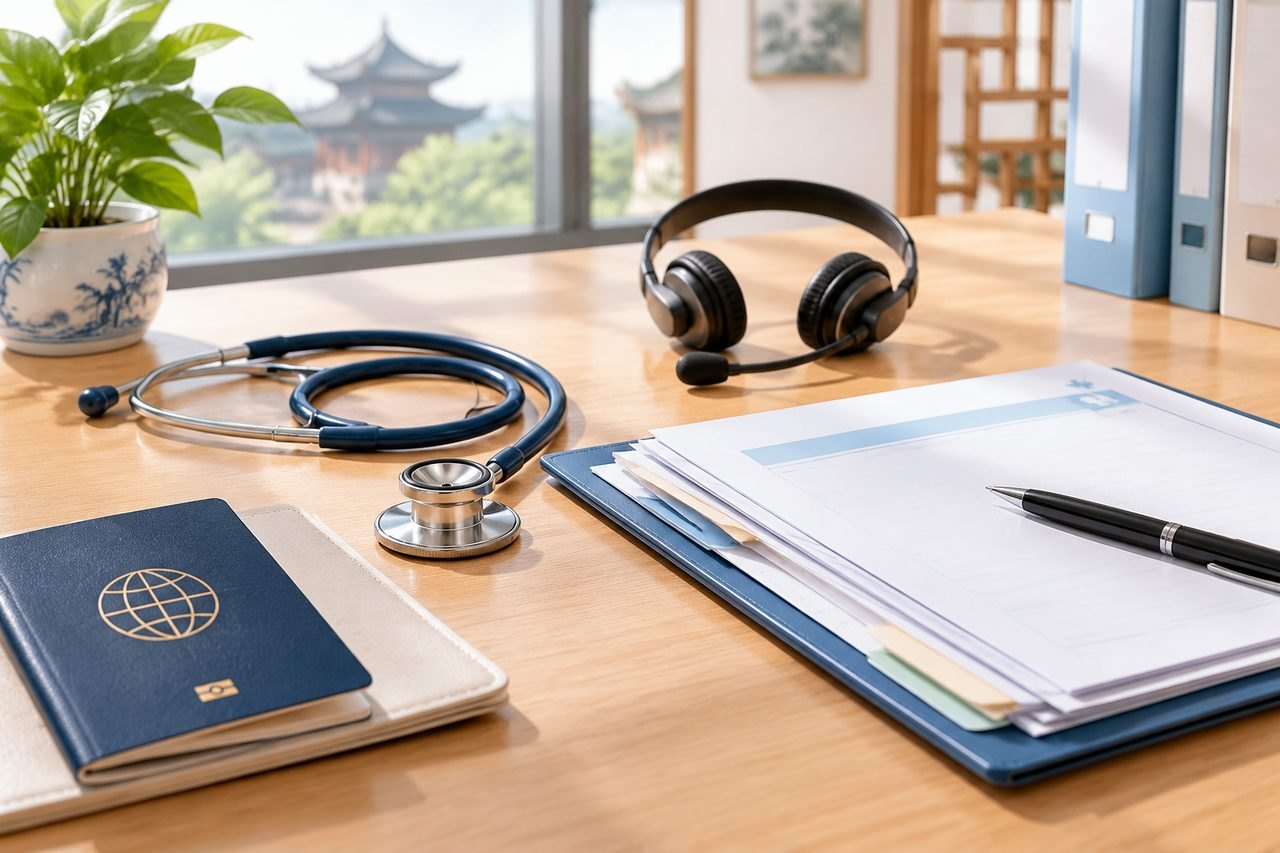
What English interpretation covers during a family checkup
Interpretation during a family health checkup in China is a practical communication service, not a clinical opinion. It helps each family member understand instructions at reception, the sequence of stations, what a technician is about to do, and when a clinician is explaining a finding. It also helps the family ask questions in the moment rather than saving everything for the end.
The scope matters because a checkup is usually a series of short encounters rather than one long consultation. A parent may need help with a questionnaire, a teenager may need to understand a preparation instruction, and an older relative may need help describing an existing condition that is being followed up. Interpretation should cover the whole visit, not only the final conversation.
ChinaSpecialistCare provides hospital companion and interpretation as a separately agreed coordination service. It is not clinical care, and it does not replace the hospital's own staff. The interpreter helps with navigation, language and practical support so that the family can follow what is happening.
One point to confirm with the hospital is who will interpret any clinical explanation. Some private international hospitals may have English-speaking clinicians or staff; others may not. Ask the hospital directly whether English communication is available for the specific appointment, and whether an external interpreter is permitted to accompany the family.
Written reports: what to ask before you book
A written report is a separate question from spoken interpretation. A hospital may provide results in Chinese, in English, or in a combination, and the format can vary. Do not assume that a universal English report is available. Ask the hospital what language the report will be in, whether a translated version can be requested, and how the report will be delivered.
For a family checkup, it also helps to ask whether each family member receives an individual report or whether results are combined. If one family member has an existing condition being reviewed, ask whether that information will be reflected in the report or kept in a separate clinical record.
If the hospital provides a Chinese report, ChinaSpecialistCare can help with report interpretation as part of the coordination service, subject to confirmation with the particular hospital. This is practical language support. It does not change the report's content, and it does not replace a clinician's explanation of what the findings mean.
Ask the hospital these questions in writing before the visit: What language will the written report use? Is an English version available? How and when will it be provided? Who should the family contact if a result needs clarification? The answers will shape how you plan the visit and what follow-up you may need.
Routine screening, existing-condition review and symptom care are different routes
A family health checkup is designed for people who are planning a scheduled health review and do not have current symptoms that need assessment. That is the routine preventive route. A clinician should advise the interval and suitable tests for each person.
If a family member has an existing condition that needs monitoring, that is a review of known disease rather than routine screening. The records and the questions are different, and the hospital may route that person to a specialist rather than a checkup package.
If a family member has current pain, discomfort or another symptom, that calls for a specialist consultation rather than buying a screening package. A checkup is not the right route for assessing an active problem, and delaying assessment of symptoms is not advisable.
This distinction affects interpretation and reports too. A routine checkup may produce a package report, while a specialist review may produce a clinic note and separate test results. Ask the hospital which route applies to each family member before you book, so that the interpretation and report expectations match the actual service.
Choosing a base package and add-ons for a family
Checkup packages are usually built from a base package plus optional add-ons. The base package gives a defined starting scope, and add-ons can be discussed if a clinician considers them suitable. Published package lists describe availability, not a recommendation that every listed test is needed.
For a family, the practical task is to match each person to a suitable base package rather than buying the same package for everyone. Age, sex, existing conditions and family history may all be relevant, but the decision belongs to the clinician advising the checkup.
A stand-alone diagnostic test normally needs a specialist's order. If a family member wants a specific test that is not part of the base package, ask the hospital whether it can be added and whether a specialist order is required.
ChinaSpecialistCare generally suggests private international hospitals for a comfortable environment, pre-arranged dates and examinations, English communication and report interpretation, subject to confirmation with the particular hospital. City, hospital, package and price can vary, so the family should confirm the actual scope with the chosen provider.
How to prepare records and questions for a family checkup
Preparation is mostly about giving the hospital enough context to plan the visit and interpret results sensibly. For each family member, note the main reason for the checkup, any existing conditions, current medicines, allergies and previous test results that may be relevant. A brief summary is enough for an initial enquiry; more detailed records can be shared after first contact.
It also helps to write down the questions the family wants answered. For example: Does this hospital provide English interpretation during the visit? Is a written English report available? Which base package is suitable for each person? Are there add-ons the clinician may consider? How will results be communicated, and to whom?
If a family member is being reviewed for an existing condition, ask whether the checkup route is appropriate or whether a specialist appointment is more suitable. If anyone has current symptoms, ask for a specialist consultation rather than a screening package.
Keep the initial enquiry short. Do not send passport numbers, card details or a complete medical archive at the first contact. ChinaSpecialistCare's free initial case review checks the available information and the main question, identifies missing information and suggests the relevant next step. It is not a diagnosis or a promise of acceptance.
What to confirm with the hospital and how to start
Before booking, confirm the practical points that affect the family's experience: whether English interpretation is available for the appointment, whether an external interpreter may accompany the family, what language the written report will use, how the report will be delivered, and who to contact with follow-up questions. These are hospital-specific arrangements, so ask the named provider rather than relying on general assumptions.
Also confirm the package scope in writing. Ask what the base package includes, what add-ons are available, and whether any specific test requires a specialist order. If a family member has an existing condition or current symptoms, ask which route the hospital recommends.
ChinaSpecialistCare can help with checkup planning, hospital companion and interpretation, and report interpretation as separately agreed coordination services. Hospital consultation fees, tests and other provider charges are paid to the hospital or relevant provider; coordination fees are separate.
A practical next step is to send a brief enquiry with the number of family members, the general reason for the checkup, any existing conditions being reviewed, and the language and report questions you want answered. You can start with the free initial case review, and the team will suggest the relevant next step. An initial enquiry does not require buying a proxy consultation, and the hospital decides suitability.
Sources & scope of this guide
References and official service information relevant to this guide.
This is general planning information and has not been individually reviewed by a doctor. Medical decisions and personal treatment advice come from your treating clinicians.