Why the results review needs confirming before you book
A general health screening produces a set of measurements and reports. The part international patients often leave unresolved is what happens after those reports exist: who reads them together, who explains them to you in English, and who decides whether anything needs follow-up. If that is not settled in advance, you can finish the tests and still not know who is accountable for the review.
The practical risk is not that a hospital refuses to review results. It is that you assumed a review was part of what you bought, and the written scope says something narrower. Screening packages vary by city, hospital and package level, so the contents of one package are not a reliable guide to another. The safe approach is to treat the review as a separate item to confirm, even when you expect it to be included.
This is an administrative question, not a clinical one. You are not asking anyone to predict your results. You are asking who will look at them, in what form, and by when, so that you can plan whether to stay in China for the explanation or arrange a remote discussion.
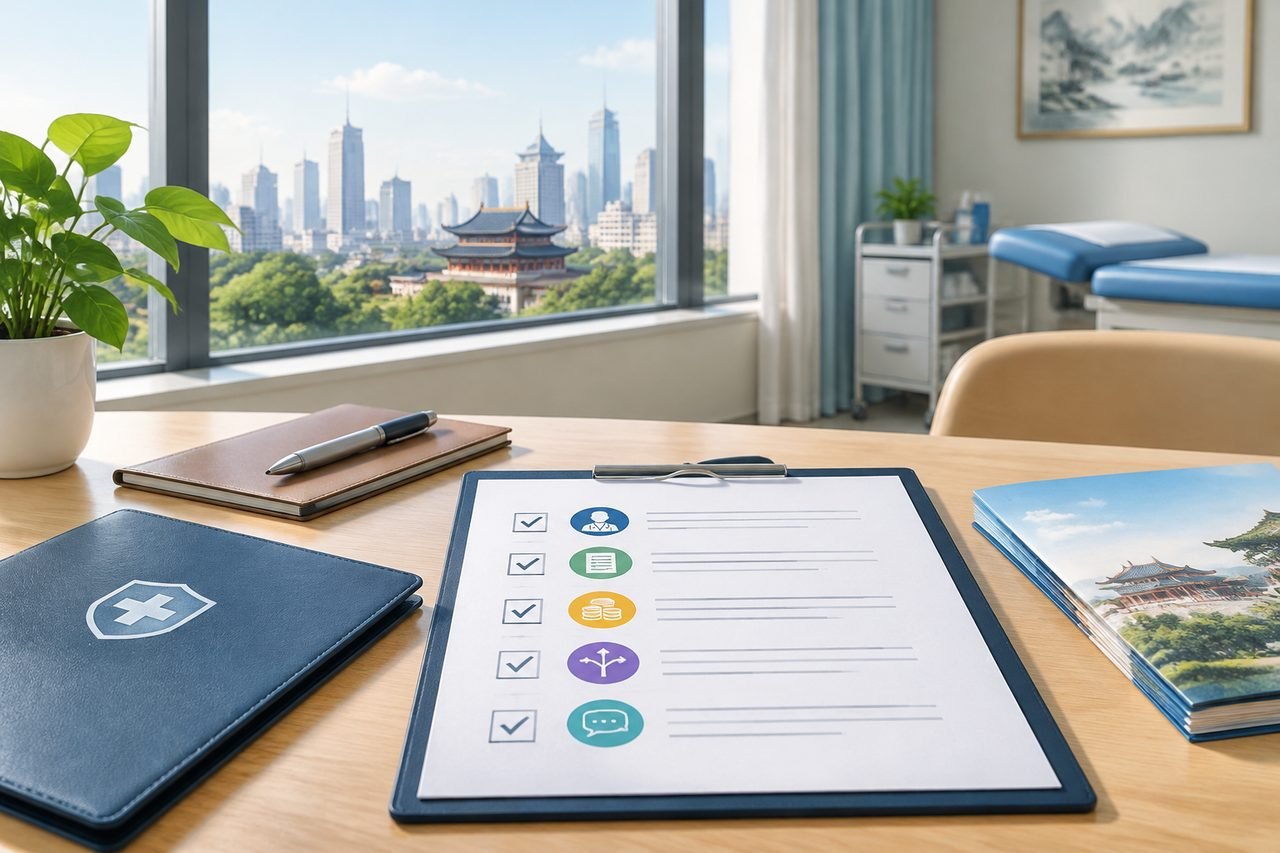
The four things to get in writing
When you request a checkup, ask for a written summary that answers four questions. First, which clinician or department reviews the completed results. Second, whether that review is inside the package price or handled as a separate consultation. Third, how the review is delivered: an in-person appointment, a written report, a remote call, or a combination. Fourth, what happens if a result needs further assessment, and who tells you.
Ask for the answer in the hospital's own words rather than accepting a verbal assurance. A short email or message thread is enough. If the reply is vague, that is useful information: it tells you the review process is not yet defined for your booking, and you can ask again before paying.
You do not need to send a complete medical archive at this stage. A brief summary of why you want screening, any current symptoms, and your main question is enough for the hospital to tell you what it can offer. Records can follow once the route is agreed.
- Which named clinician or department reviews the results.
- Whether the review sits inside the package price or is a separate consultation.
- How and where the review is delivered, and in which language.
- Who contacts you if a finding needs further assessment.
What a package price may and may not cover
Published checkup packages describe what tests are available at a given hospital. They are not a statement that every listed test is right for you, and they are not a guarantee about what happens after the tests. The reviewing clinician decides which findings matter for your situation.
Because package contents differ between hospitals, compare the written scope rather than the package name. Two packages called premium at different hospitals can include different items and different review arrangements. Ask each hospital what its package includes, what it excludes, and what remains undecided until your records are seen.
If you are comparing more than one hospital, ask the same four questions of each and put the answers side by side. This is more useful than comparing headline package descriptions, which are written for a general audience rather than for your specific situation.
Symptoms change the route, not just the package
General health screening is for people planning a scheduled preventive review. If you currently have pain, discomfort or another active symptom, that calls for a specialist consultation rather than a screening package. Screening is not a substitute for assessing a symptom you already have, and the two routes end differently. A screening review summarises findings and flags anything that needs attention. A specialist consultation starts from your symptom and works toward an assessment. If you are unsure which applies to you, describe your situation in the enquiry and let the hospital advise.
This distinction changes what you should confirm about the results review. When you buy a screening package, the review you are confirming is a summary of completed measurements and reports, with a named person responsible for explaining them and flagging anything that needs attention. When you book a specialist consultation, the review is an assessment of a specific problem, and the clinician may want records or tests that a screening package would not include. Asking the hospital to treat these as the same thing can leave you with a report that answers a different question than the one you brought.
The practical consequence is that you should state your situation plainly in the first message. Say whether you are booking a routine preventive review or seeking assessment of something you already notice. If you have a symptom, say what it is and how long you have had it, without trying to interpret it yourself. The hospital can then tell you whether a screening package is appropriate or whether a specialist appointment is the correct route, and who would carry out the review in each case.
There is also a responsibility question that differs between the two routes. For a screening package, ask which clinician or department signs off the summary and who contacts you if a finding needs further assessment. For a specialist consultation, ask which specialty reviews your records and whether that clinician will see you in person or review the file remotely. Getting a named responsibility now means you are not left holding a report with no one accountable for explaining it.
Do not delay necessary local care in order to arrange an overseas screening. If something is worsening, have it assessed where you are first. A screening enquiry can wait; an active problem should not. Once your local clinician has assessed the situation, you can return to the China planning question with clearer information about what you actually need reviewed.
If you are still unsure which route fits, keep the first message short and factual. Describe your main concern, note whether you have any current symptoms, and ask the hospital to advise on the appropriate route and the review arrangements that come with it. That single question often resolves the ambiguity before any payment or travel planning begins.
Language, timing and who explains the findings
Ask directly whether the results review is conducted in English, whether an interpreter is present, and whether the written report is issued in English. Do not assume a universal English report or a fixed reporting deadline; both depend on the particular hospital and should be confirmed for your booking.
If your Chinese is limited, decide in advance how the explanation will be handled. Options include a hospital that provides English communication, an arranged interpreter, or a written report you take to your own doctor at home. Each has a different cost and a different level of detail, so choose before you travel rather than after the tests.
Also ask who owns the follow-up conversation. If a finding needs further assessment, is that arranged by the screening department, by a specialist, or by you? Getting a named responsibility now avoids a gap later, when you may already have left the country.
How to phrase the enquiry and what happens next
A useful first message is short. State that you are planning a general health screening in China, name the city or hospital if you have a preference, and ask the four scope questions: who reviews the results, whether the review is included, how it is delivered, and who handles follow-up. Add one line about your main concern and whether you have any current symptoms.
You do not need to buy a proxy consultation to ask these questions. An initial enquiry is free, and the hospital decides whether it can offer you a suitable package. If you want help organising records, requesting a specialist appointment, or arranging interpretation, that can be discussed separately once the hospital route is clear.
ChinaSpecialistCare can help with checkup enquiries, record organisation and appointment requests for international patients, and can point you to the confirmed checkup packages page for reference. The clinical review itself, and any decision about what your results mean, belongs to the treating hospital and its licensed clinicians.
Send your brief summary through the enquiry form, email or WhatsApp. Keep the first message short; detailed records can follow after the hospital confirms the route and the review arrangements.
Sources & scope of this guide
References and official service information relevant to this guide.
This is general planning information and has not been individually reviewed by a doctor. Medical decisions and personal treatment advice come from your treating clinicians.