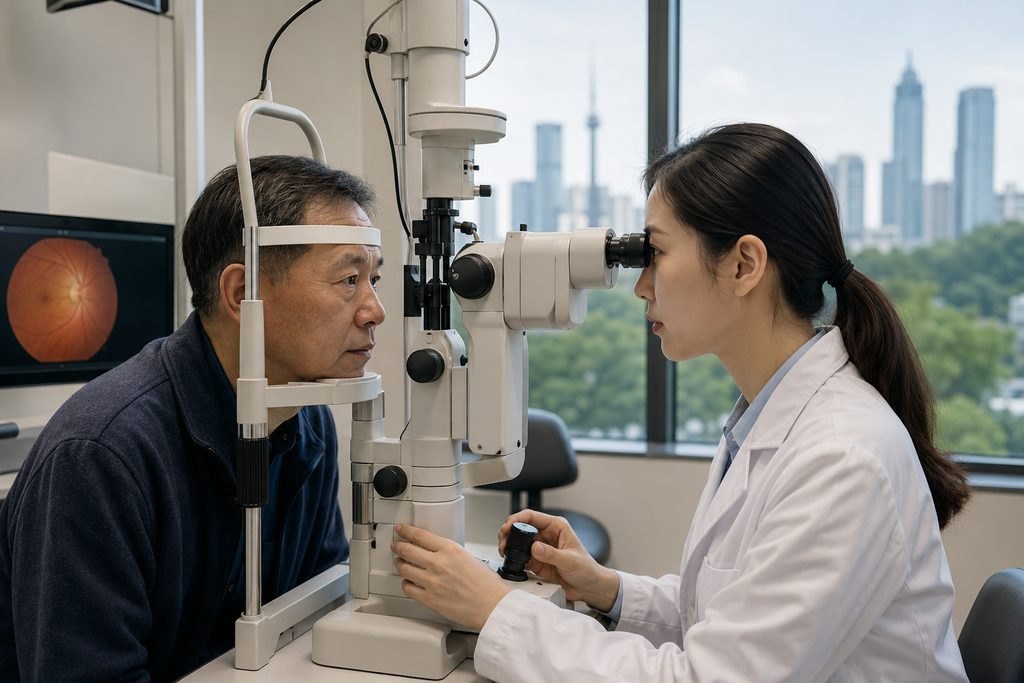
What a records review can and cannot settle
A records-based glaucoma review in China is a second reading of information you already have. It can comment on the pattern of your intraocular pressure readings, how your visual fields have changed over time, which eye medicines you are using and what a surgical or laser option might aim to achieve. It cannot measure your pressure, examine your optic nerve or decide whether you are a candidate for a specific operation. Those steps need an in-person assessment by the treating clinician.
This distinction matters because glaucoma care is monitored over time. NHS guidance notes that treatment can involve drops, laser treatment or surgery, and that follow-up checks monitor the condition and response. A single set of records sent abroad does not replace that monitoring. If your local team has already scheduled a check, keep it. If your vision is worsening suddenly, or you have new pain, redness or loss of vision, seek local urgent care rather than waiting for an overseas reply.
The useful question for a Chinese specialist is therefore narrow: given these pressure and visual-field trends, these medicines and this surgical goal, what would you want to confirm or repeat in person, and what alternatives would you discuss? That is a clinical opinion about your records, not a treatment plan you can act on remotely.
The records that make a glaucoma review useful
Glaucoma review depends on trends, not one number. A single pressure reading taken on one day tells a specialist very little about how your condition is behaving. What helps is a sequence: pressure readings with dates, visual-field printouts with dates, optic nerve imaging or photographs if you have them, a list of your current eye medicines with doses and times, and any record of laser treatment or surgery already done. If your local clinic uses a particular machine for visual fields or imaging, the raw printouts are more useful than a typed summary alone.
You do not need to send a complete archive before making an initial enquiry. A short summary of the diagnosis, how long you have been monitored, your current medicines and your main question is enough to start. The coordination team can then tell you what additional records would help the specialist and how to share them securely. Do not send passport numbers, card details or a full medical file through an initial web form.
It is also worth writing down what you want from the review. Are you trying to understand whether your pressure control is adequate? Are you considering surgery and want a second opinion on the goal? Are you worried about side effects from drops? A clear question shapes which records matter and makes the reply more useful.
- Pressure readings with dates, not just the most recent value
- Visual-field printouts with dates, including earlier tests for comparison
- Optic nerve imaging or photographs if available
- Current eye medicines, doses and times, plus any recent changes
- Records of previous laser treatment or eye surgery
- Your main question in one or two sentences
Keeping your local treatment running while you plan
The safest way to arrange an overseas review is to treat it as an addition to your current care, not a replacement. Do not stop or change eye drops because you are waiting for a reply from China. Do not postpone a scheduled local appointment or a laser session. If a Chinese specialist suggests a different approach, that suggestion still needs to be discussed with the clinician who can examine you and who holds responsibility for your ongoing treatment.
This is not a formality. Glaucoma medicines are prescribed for an individual eye, and a remote opinion cannot confirm how your eye is responding now. A specialist reading your records may say that the pressure trend looks stable, or that a particular surgical goal seems reasonable, or that more information is needed. None of those statements authorises you to alter treatment on your own.
If you are considering travelling to China for assessment or surgery, the practical question is how to keep local monitoring in place before and after the trip. Ask your local team what follow-up they would want if you were away, and ask the Chinese hospital what assessment and follow-up it would provide. Both answers belong in writing before you commit to travel.
Questions that clarify the surgical goal
If surgery is part of the discussion, the review should focus on what the operation is intended to achieve rather than on a named procedure. Glaucoma surgery can aim to lower pressure, reduce reliance on drops or protect the optic nerve from further damage. Which goal applies to you depends on your pressure history, your visual-field trend, your optic nerve appearance and your general health. A records review can help you frame those questions, but the treating surgeon must confirm suitability after examination.
Useful questions to put to any surgical team, in China or locally, include: what is the target pressure for this eye and why; what would count as success at follow-up; what are the risks for someone with my history; what medicines or restrictions apply afterwards; and who will monitor me once I return home. Ask for the answers in writing so you can compare them with your local team's view.
Be cautious about any reply that promises a specific outcome, a fixed recovery period or an end to monitoring. Glaucoma follow-up continues after treatment, and a remote opinion cannot guarantee what your eye will do.
How to coordinate two clinical opinions without conflict
Two opinions are most useful when each side knows what the other has said. Send your local team a short note explaining that you are seeking a records review in China and that you do not intend to change treatment without discussing it. Ask the Chinese specialist to address the specific questions your local team has raised. This keeps the exchange clinical rather than competitive.
If the two opinions differ, do not treat the disagreement as a decision you must make alone. Ask each clinician what examination finding or test result would change their view. Often the difference comes down to information neither has yet, such as a repeat visual field or a pressure reading at a different time of day. Your local clinician can arrange that assessment.
For patients who want help with the practical side, confirmed CSC coordination can assist with records handling, interpretation and requesting a specialist appointment, as supported by the relevant service pages. It does not decide clinical suitability, prescribe treatment or guarantee hospital acceptance. A preliminary enquiry is free and does not require buying a proxy consultation.
What to do if a step cannot be completed
Some records may be missing, some printouts may be in a format the receiving team cannot read, and some appointments may not be available when you want them. If a record cannot be obtained, tell the specialist what is missing rather than sending an incomplete file without explanation. A clinician who knows the limits of the information can still give a useful opinion and can say what would need to be repeated in person.
If a specialist appointment cannot be arranged for the dates you wanted, ask what alternative dates or routes exist. If interpretation is needed, confirm the language and format in advance. If travel becomes impractical, a records-based opinion may still help you prepare questions for your local team. None of these steps should delay necessary local care.
The practical next step is to write a short summary of your glaucoma history, your current medicines and your main question, then send it through the enquiry form, email or WhatsApp. The team will tell you what records would help and what can realistically be arranged. Keep your local appointments as they are while that conversation develops.
Sources & scope of this guide
References and official service information relevant to this guide.
This is general planning information and has not been individually reviewed by a doctor. Medical decisions and personal treatment advice come from your treating clinicians.