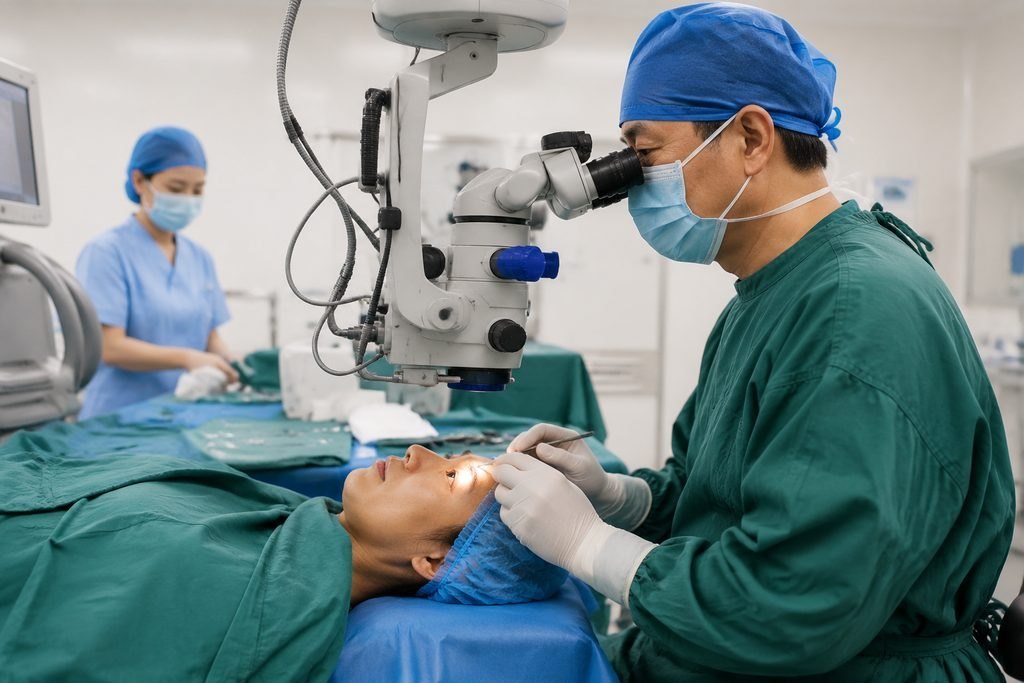
Why the total price is the weakest comparison point
Two hospitals can quote very different totals for what sounds like the same operation, and neither number is wrong. The difference often sits in what each figure was built to cover. One quote may reflect only the surgical fee, while another bundles pre-operative assessment, the planned procedure, a set number of follow-up visits and medicines. Until you know which items sit inside each number, the totals are not comparable.
Glaucoma treatment can involve drops, laser treatment or surgery, and follow-up checks monitor the condition and response. That range matters for quoting because the recommended approach is a clinical decision, not a menu choice. If one hospital is pricing a trabeculectomy-style procedure and another is pricing a drainage device or a laser session, you are comparing different clinical plans, not different prices for one plan.
The practical move is to stop asking "how much is glaucoma surgery?" and start asking "what exactly does this written quote include, and what would change it?" That reframing is the whole exercise. It also protects you from choosing a hospital because its headline number is lower when the number covers less.
Ask each hospital to state, in writing, the clinical name of the proposed procedure and the eye or eyes involved. A quote for one eye and a quote for both are not comparable either.
The four-part structure that makes quotes comparable
A quote becomes comparable when it answers four questions in writing. First, what is included: which consultations, imaging or pressure measurements, the procedure itself, anaesthesia, the hospital stay, medicines and follow-up visits. Second, what is excluded: items the hospital expects to be arranged or paid elsewhere. Third, what is undecided: costs that depend on findings during assessment, such as whether a different surgical approach becomes appropriate. Fourth, what would change the figure: a longer stay, an additional procedure, or a change in the clinical plan.
When you have those four answers from two hospitals, you can lay them side by side. You are no longer asking which total is smaller. You are asking which quote covers the care you actually expect to receive, and which gaps you would need to fund or arrange separately.
This is also where you find out whether a quote is an estimate or a fixed package. Those are different commitments, and the difference should be stated by the hospital, not assumed by you.
- Included: name each consultation, test, procedure, medicine and follow-up visit the figure covers.
- Excluded: name anything the hospital does not cover and where it would be handled.
- Undecided: name costs that depend on assessment findings or the final surgical plan.
- Change triggers: name what would raise or lower the figure, such as extra nights or a second procedure.
Pressure records, previous treatment and surgical options
The clinical information you send shapes the quote more than any negotiating does. Glaucoma assessment leans on your pressure history over time, not a single reading. Ask your current eye clinic for the record of pressure measurements with dates, the drops or laser treatment you have already had and how the eye responded, visual field results, and any imaging of the optic nerve or anterior segment. If a previous surgery was performed, the operative note matters because it changes what a surgeon would plan next.
Send the same set of records to each hospital you are comparing. If one hospital quotes from a full record set and another quotes from a summary, the two figures rest on different information. That alone can explain a gap.
Ask each hospital how your existing tests will be used in the surgical assessment and whether it expects to repeat any of them. A repeat is not automatically wasted; it may reflect that the surgeon wants current measurements. But you should know it is coming, because it affects both the plan and the quote.
You can also ask how pressure monitoring and later reviews would be managed once you return home, and what the hospital would hand over to your local eye clinic. Follow-up checks monitor the condition and response, so the arrangement after surgery is part of the decision, not an afterthought.
Questions that expose the real scope of a quote
Some questions do more work than others. Ask whether the quoted figure covers the pre-operative assessment visit or only the surgery day. Ask whether anaesthesia and the theatre fee are inside the number. Ask how many post-operative visits are included and what happens if more are needed. Ask whether medicines used around the procedure are included or prescribed separately. Ask whether the quote assumes a standard ward or an international ward, because those are different routes and you should not presume which one applies to you.
Then ask the reverse question: what is not in this quote that a patient in my situation would typically need to arrange? That single question often surfaces the items that make two totals diverge.
If a hospital cannot answer these in writing before you travel, treat the number as provisional. A provisional figure is not a problem in itself; treating it as final is.
What a preliminary reply does and does not tell you
An early reply from a hospital or coordination team is useful for planning, but it is usually based on the records you have sent and the questions you asked. It does not establish that you are suitable for a particular operation, that the hospital will accept your case, or that a quoted figure is final. Suitability and the surgical plan belong to the treating ophthalmologist after assessment.
That distinction changes how you use a preliminary quote. Use it to compare scope and to decide which hospital to pursue. Do not use it to book flights or assume a fixed total. If a hospital's first reply is a range rather than a number, ask what would narrow it and which records are still missing.
If you are comparing hospitals, keep a simple written record: hospital name, procedure named, what is included, what is excluded, what is undecided, and what is still missing. That record is more useful than any single figure.
Coordinating records and appointments, and the next step
Gathering eye records, having them translated where needed, and requesting comparable written quotes from more than one hospital is administrative work that can run in parallel with your local care. ChinaSpecialistCare can help international patients with record organisation, interpretation and specialist appointment requests for glaucoma assessment in China. An initial enquiry is free and does not require buying a proxy consultation; the hospital decides suitability and the final plan.
Do not delay urgent eye care at home while you pursue an overseas comparison. Sudden vision change, severe eye pain or new visual disturbance needs local assessment first.
A practical next step: collect your pressure records with dates, previous treatment details and recent visual field or imaging results, then ask each hospital the same four-part question about included, excluded, undecided and change-trigger items. Compare those answers before you compare totals.
One more comparison habit is worth building before you commit. When a hospital sends its written quote, reply with the same short list of questions and ask for the answers in the same order. If a hospital answers some items and skips others, note which ones are still open rather than filling the gaps yourself. Open items are not a reason to reject a hospital; they are the specific things to resolve before you treat any figure as the basis for a decision.
It also helps to separate the parts of the trip that are not clinical. Travel, accommodation and time away from work sit outside the hospital quote and outside any coordination fee, and they will differ between cities and between a short assessment visit and a longer surgical stay. Ask the hospital what it expects your length of stay to be once the plan is confirmed, and treat that as planning information rather than a fixed commitment.
Finally, decide in advance what would make you choose one hospital over another. It may be the scope of the written quote, the clarity of the answers, the named procedure, or how the hospital describes follow-up and handover to your local eye clinic. Write that down before the quotes arrive, because it is much harder to judge fairly once you are looking at two different totals.
If you would like help organising eye records, requesting comparable written quotes or arranging a glaucoma assessment appointment in China, you can send a brief summary through the enquiry form. Keep it short at first: your diagnosis, the treatment you have already had, and the specific question you want answered. Records can be shared after first contact, and the hospital remains the party that decides suitability and the final plan.
Sources & scope of this guide
References and official service information relevant to this guide.
This is general planning information and has not been individually reviewed by a doctor. Medical decisions and personal treatment advice come from your treating clinicians.