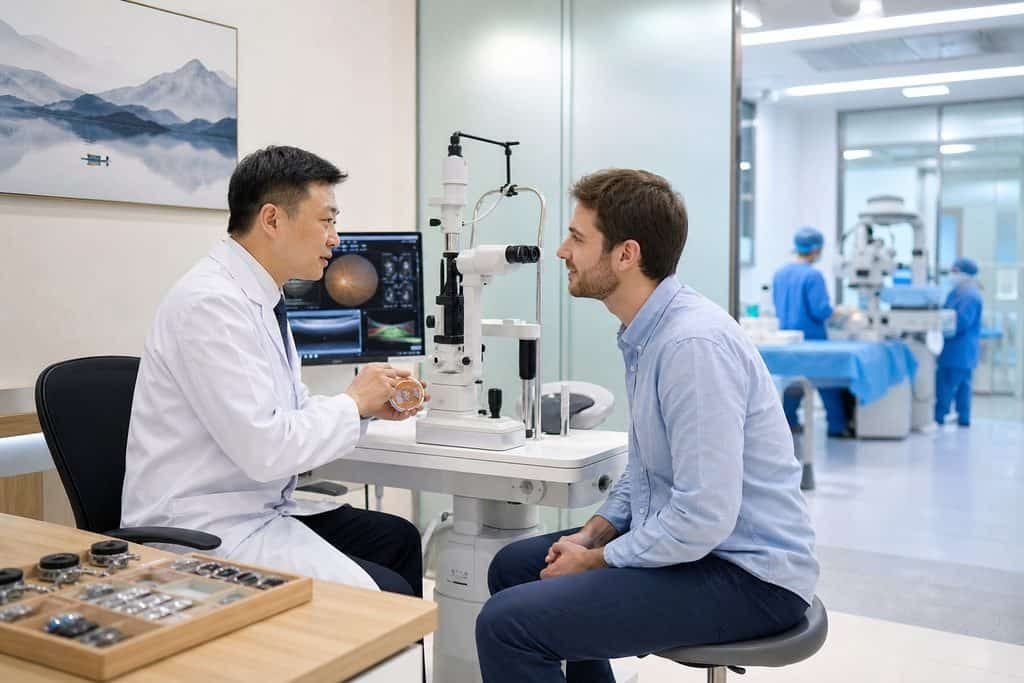
Why previous treatment changes the surgical question
Glaucoma treatment can involve drops, laser treatment or surgery, and follow-up checks monitor the condition and the response to treatment. That means a surgeon assessing you in China is not starting from a blank page. Your previous treatment is part of the clinical picture: it shows what has already been tried, how your eye responded, and whether the pressure control achieved so far has been stable or variable.
This is why a general question such as "can I have glaucoma surgery in China?" cannot be answered from a diagnosis alone. The relevant question is narrower: given your specific treatment history, what options remain, and what information does the treating team still need before it can advise you?
A common misunderstanding is that previous treatment becomes irrelevant once surgery is considered. In practice, the opposite is often true. The type of drops you used, whether laser was performed and when, and what happened after any earlier operation all shape how a new procedure might be planned and what risks the clinician must weigh. None of that can be reconstructed from memory alone, which is why records matter more than a summary paragraph.
The records that make your history usable
The most useful document is not a single diagnosis letter but a record of pressure over time. Intraocular pressure readings taken at different visits, with dates, let the receiving clinician see trends rather than one number. If your eye clinic has a printout or export of these measurements, that is more informative than a handwritten note of the most recent value.
Alongside the pressure history, the team will want to know which treatments you have had and when. For drops, this includes the names, how long you used them and whether they were changed or stopped, and why. For laser treatment, the type and date. For any previous glaucoma operation, the procedure performed, the date, and what the follow-up showed. If a treatment was stopped because of side effects or because it did not control pressure, that reason is clinically relevant and should be stated.
Current medication matters too, including eye drops and any other medicines you take. A medication list written in the generic name is easier for a Chinese clinical team to read than brand names alone, though you should bring both if you have them.
Imaging and visual field tests are also part of the assessment. If you have optic nerve imaging, visual field printouts or a recent examination report, include them. These help the clinician understand the stage of the condition and whether it has progressed. If some of these are old, say so rather than presenting them as current.
- Pressure readings with dates, ideally a clinic printout rather than a single remembered number.
- A dated list of drops, laser treatments and any previous glaucoma surgery, including why a treatment was stopped or changed.
- Current medication list, using generic names where possible.
- Visual field tests and optic nerve imaging reports, with the date of each.
- Any letter from your treating eye doctor summarising the diagnosis and course of treatment.
What to ask about how your records will be used
Sending records is not the same as having them interpreted. It is reasonable to ask, before you travel, how the hospital will use the material you provide. Will a specialist review the records before any appointment is confirmed, or is the review part of the first visit? Who will look at the pressure history and imaging, and will you receive a written response or only a verbal impression?
These questions matter because they affect your decision about timing and cost. If the records are reviewed in advance, you may learn whether a surgical assessment is worth pursuing before committing to travel. If they are only reviewed in person, you may need to plan for a longer stay and more uncertainty.
It is also fair to ask what happens if the records are incomplete. A clinician may still be able to form a view, but the limits of that view should be clear. You are not asking for a guarantee; you are asking how the assessment will be conducted and what it can and cannot establish from a distance.
One practical point: ask whether the hospital wants records in a particular format or language. Some teams accept English reports; others may ask for a translation or a structured summary. This is an administrative question for the specific hospital, not a general rule, so confirm it with the provider you are dealing with rather than assuming.
Pressure monitoring and follow-up after you return home
Glaucoma care does not end with an operation. Follow-up checks monitor the condition and the response to treatment, and this continues after surgery. For an overseas patient, the practical question is how that monitoring would be arranged once you are back in your own country.
Before committing to surgery in China, ask how the hospital would hand over your postoperative care. What records would you receive, and in what form? Would the Chinese team be willing to communicate with your local eye doctor, and if so, through what channel? What follow-up schedule would the hospital recommend, and how would that fit with the care available where you live?
These are not questions the hospital can answer in the abstract. They depend on your home clinic, your local health system and the specific procedure. But they are worth raising early, because a plan that works only while you are in China is incomplete. You should also ask what warning signs would require urgent local assessment, and make sure you understand them before you leave.
It is important not to treat follow-up as a formality. Pressure can change after surgery, and monitoring is how those changes are detected. The receiving clinician, not this article, should decide how often checks are needed and what they should include.
Questions that only the treating clinician can answer
Some questions cannot be resolved by better preparation alone. Whether surgery is appropriate at all, which procedure might be considered, and what the risks and alternatives are for your eye are clinical judgements. They depend on examination findings, the stage of your condition and your overall health, not only on the records you send.
It is reasonable to ask the team directly: based on my previous treatment, what options are you considering, and what would make you recommend against surgery? What are the alternatives if surgery is not suitable? What are the main risks in my case, and how would they be managed? These are questions for a clinician who has assessed you, and the answers may change after examination.
You should also ask what the hospital needs to confirm before it can accept you for assessment or treatment. Hospital acceptance is a decision for the hospital, and an initial enquiry does not establish it. If a provider suggests that acceptance is automatic once records are sent, that is a reason to ask more questions, not fewer.
Finally, do not stop or change any glaucoma medication on your own, and do not delay urgent eye assessment locally because you are considering care in China. Sudden eye pain, rapid vision change or other acute symptoms need prompt local attention, not an overseas enquiry.
A practical way to start the conversation
The most useful first step is a short, structured summary rather than a complete archive. State your diagnosis, the treatments you have had with approximate dates, your current drops, and your main question. Mention that you have pressure records and imaging available, and ask what the hospital would like to receive and how it would review them.
You can begin with a brief enquiry by form, email or WhatsApp, and share fuller records after first contact. An initial enquiry is free and does not commit you to anything. If you later want a records-based opinion while you remain at home, that is a separate, optional step, and it is not a prerequisite for every appointment or operation. Hospital consultation fees and any coordination fees are separate from each other.
Keep your question specific. Instead of asking whether glaucoma surgery in China is possible, ask what the team would need to assess your particular history and how follow-up would be handled after you return home. That gives the clinician something concrete to respond to, and it gives you a clearer basis for deciding whether to travel.
Sources & scope of this guide
References and official service information relevant to this guide.
This is general planning information and has not been individually reviewed by a doctor. Medical decisions and personal treatment advice come from your treating clinicians.