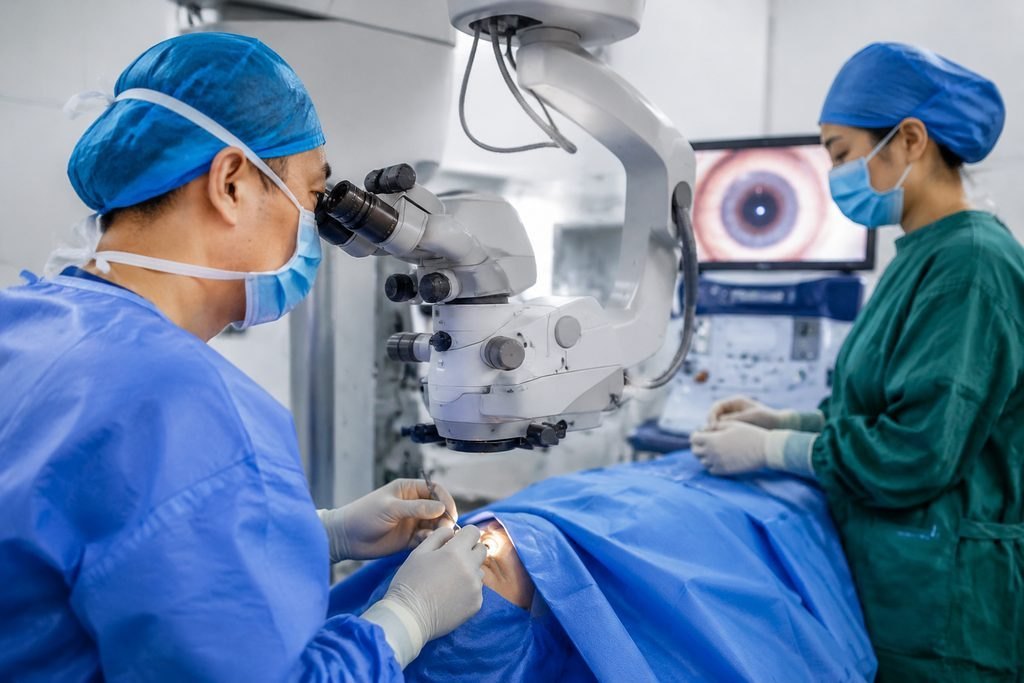
Why a treatment name alone is not enough
A list of treatment names tells a clinician what was tried. It does not tell them whether it worked. Two patients can both have used latanoprost drops for two years, yet one may have had stable pressure and no further optic nerve damage, while the other may have had pressure that remained above target and continuing visual field loss. The surgical decision is different in each case.
Glaucoma treatment can involve drops, laser treatment or surgery, and follow-up checks monitor the condition and response. That response is the missing piece when a patient sends only a medication list or a discharge summary with procedure codes. The receiving ophthalmologist needs to see the trend: what your pressure was before a treatment, what it became afterwards, and whether that change was enough to protect your optic nerve.
This is not about finding fault with earlier care. It is about building a factual timeline that a new surgeon can interpret. If you do not know why a treatment was stopped or changed, say so. That uncertainty is itself useful information, because it tells the clinician which questions to ask and which records to request.
For an overseas patient, the practical consequence is simple: your first message should not be a request for surgery. It should be a short summary of your diagnosis, your current treatment, your pressure history and your main concern. The surgical assessment then has something concrete to work with.
What to record about each previous treatment
For every drop, laser session or operation, try to capture four things: the date or approximate period, the reason it was chosen, the eye pressure before and after, and why it was stopped or continued. If you have a record of the target pressure your clinician set, include that too. A pressure of 18 mmHg means something different if the target was below 15 than if the target was below 21.
For eye drops, note the name, the concentration if you know it, how often you used it, and whether you had side effects or difficulty with adherence. Adherence matters because a treatment that was not used consistently cannot be judged as a failure of the drug itself. If you switched drops, record what prompted the switch.
For laser treatment, record the type if it is stated in your notes, the date, and the pressure response over the following weeks or months. For incisional surgery, record the procedure name as written, the date, any complications you were told about, and the pressure course afterwards. If a bleb or drainage device was created, note any later interventions or revisions.
For imaging and visual field tests, record the dates and, where possible, the actual results rather than only the conclusion. A visual field printout with mean deviation and pattern deviation is more useful than a line saying 'visual field defect'. An OCT report with retinal nerve fibre layer thickness values is more useful than 'OCT done'. If you only have the conclusion, send that and say the raw data may need to be requested.
How to describe pressure control over time
Eye pressure is not a single number. It fluctuates during the day and between visits. A surgeon assessing you for glaucoma surgery wants to know the range, not just the last reading. If you have multiple measurements, list them with dates. If you have only a few, say that the record is limited.
Describe whether pressure was measured before or after a treatment, and at what time of day if that is recorded. Note any measurements taken during a hospital stay or a 24-hour pressure profile, if one was done. If you have never had a structured pressure profile, that is a question for the treating clinician, not something to arrange yourself before an enquiry.
Also describe what happened to your vision and visual field over the same period. Stable pressure with stable fields tells a different story from stable pressure with progressive field loss. If you have been told that your glaucoma is progressing despite treatment, write that down and include the evidence you have.
If you use drops at home, record how your pressure is monitored between clinic visits. Ask the treating team how home monitoring, if any, should be done and what readings they want to see. Do not change or stop drops on your own based on a home reading.
What the surgical assessment needs from your records
A glaucoma surgical assessment is not just a review of the last visit. It is an attempt to understand the trajectory of your disease and your response to treatment so far. The clinician will want to know your diagnosis and type of glaucoma, your current medications, your allergy history, your other medical conditions, and any previous eye surgery.
They will also want to see your optic nerve and visual field records over time, because the decision to operate depends partly on whether the optic nerve is still being damaged. If your records show stability on current treatment, the question may be whether surgery is needed at all. If they show progression, the question may be which procedure is most appropriate.
Bring or send the actual reports where possible: visual field printouts, OCT reports, disc photographs, pressure charts, operation notes and discharge summaries. A short cover note explaining your main question helps the clinical team focus. If something is missing, ask what specific document would be most useful rather than sending everything you have.
For care in China, the relevant CSC reference page is Glaucoma Surgery. It describes the procedure context, but it does not replace an individual assessment. The hospital decides whether surgery is suitable for you.
Questions to ask before you travel
Before committing to travel, ask the treating hospital or coordination team a focused set of questions. Which records do they need first? Do they want the raw visual field and OCT data, or are summary reports enough? Will the surgical assessment include a new pressure measurement and examination on the day? How many visits are likely before a decision is made?
Ask how your current drops should be managed around the assessment and any procedure. This is a clinical question for the treating ophthalmologist, not a coordinator. Do not stop or change drops while waiting for a reply unless a licensed clinician tells you to.
Ask what the written estimate or treatment plan will include and exclude, and which parts are still undecided. Ask how follow-up after surgery would be arranged, including whether some reviews could be done locally with your home ophthalmologist and what information they would need to send back.
If you have acute eye pain, sudden vision loss or other urgent symptoms, seek local emergency care rather than waiting for an overseas enquiry. Glaucoma can damage sight, and urgent problems should not be managed by email.
A practical next step
Start with a short summary rather than a full archive. State your diagnosis, your current treatment, your main concern, and the dates of your most recent pressure, visual field and optic nerve assessments. Mention what you want to know: whether previous treatment results suggest that surgery is worth considering, and what records the hospital would need to assess that.
You can send this through the enquiry form, email or WhatsApp. An initial enquiry is free and does not require buying a proxy consultation. The team can check what information is missing and suggest the relevant next step, but suitability for surgery is decided by the treating hospital and licensed clinicians.
Keep your local ophthalmology care in place while you explore options. Do not delay necessary treatment or monitoring because you are considering care in China. If you are unsure how to describe a previous treatment result, write what you know and mark what you do not know. That honesty makes the assessment safer and more useful.
Sources & scope of this guide
References and official service information relevant to this guide.
This is general planning information and has not been individually reviewed by a doctor. Medical decisions and personal treatment advice come from your treating clinicians.