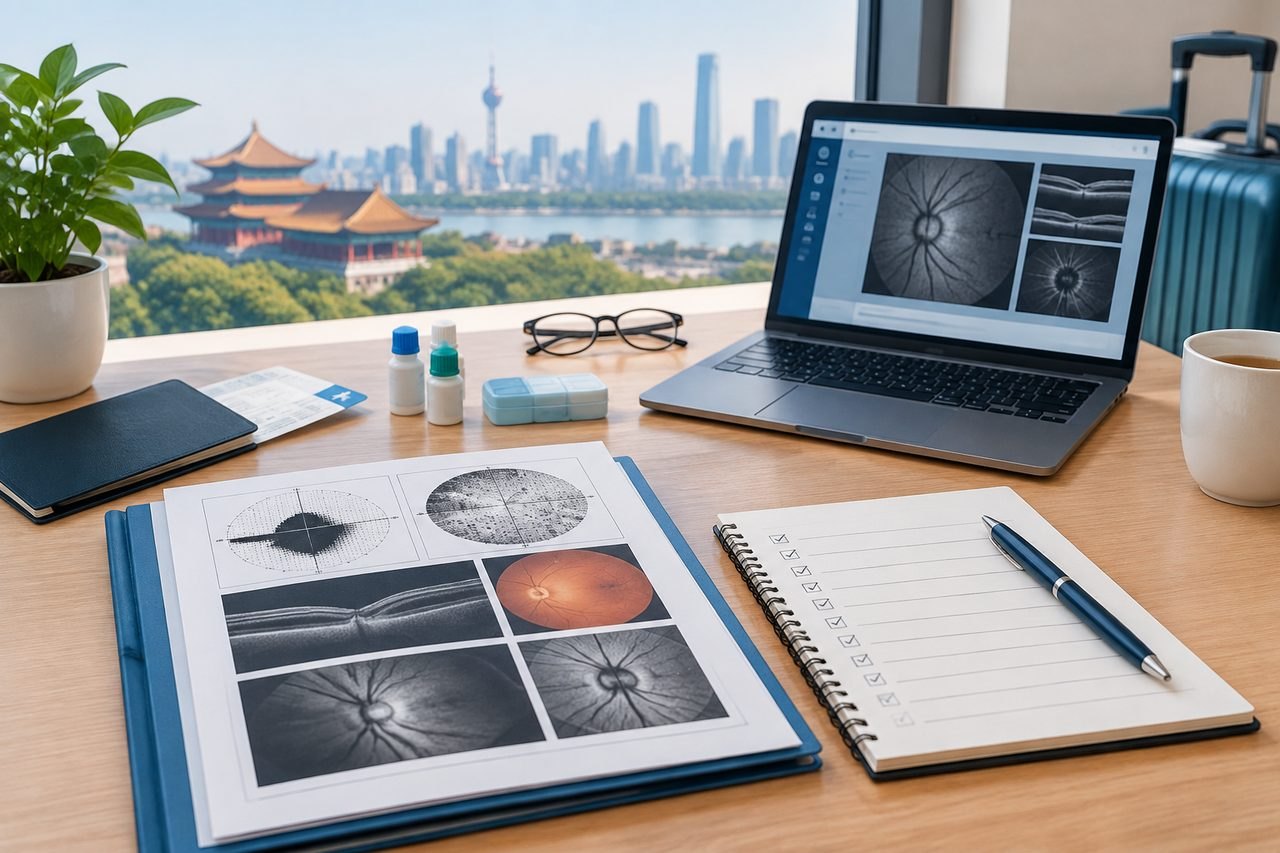
The records that actually change a glaucoma opinion
Glaucoma care is not judged from a single pressure reading. A specialist reviewing your file wants to see the pattern over time: how your intraocular pressure has behaved, how your optic nerve and visual fields have changed, and what treatments you have already used. NHS guidance describes glaucoma treatment as involving eye drops, laser treatment or surgery, with follow-up checks to monitor the condition and the response to treatment. A second opinion is essentially a review of that monitoring record.
The most useful documents are usually the ones that show change rather than a snapshot. Visual field printouts with the reliability indices, optic nerve imaging reports such as OCT or fundus photographs, and a dated list of pressure measurements matter more than a single recent number. If you have had laser treatment or surgery, the operation note and the post-operative pressure record help the reviewer understand what has already been attempted.
Your current medication list belongs in the file too, with the exact drop names, strengths and how long you have used them. A reviewer cannot assess whether your pressure control is adequate without knowing what is already being used. Do not stop or change any drops to prepare for a review; that decision belongs to your treating ophthalmologist.
- Current diagnosis and which type of glaucoma is recorded
- Visual field tests, ideally several over time, with reliability indices
- Optic nerve imaging or photographs with dates
- Intraocular pressure readings in date order
- Drop names, strengths and duration of use
- Any laser or surgical notes and follow-up pressures
- Your main question, in one or two sentences
What a remote review can clarify, and what it cannot
A records-based opinion can clarify whether the documented pressure control looks consistent with the recorded optic nerve and visual field findings, whether the treatment sequence follows a recognisable pattern, and whether there are gaps in the record that a specialist would want filled. It can also help you frame better questions for your next appointment, whether that is at home or in China.
It cannot measure your pressure, examine your optic nerve directly, assess the anterior chamber angle, or test how your eyes respond to a change in treatment. Those require an in-person examination with the appropriate equipment. A remote reviewer also cannot confirm that surgery is indicated, which procedure would suit you, or what your outcome would be. Those decisions rest with the treating ophthalmologist after examination.
This distinction matters when you are deciding whether to travel. A review can tell you whether your file is complete enough for a meaningful specialist conversation and whether a China consultation is worth arranging. It cannot tell you in advance that you will be accepted for surgery or that a particular operation will be recommended.
Organising the gaps without ordering new tests
Most incomplete files are missing history rather than missing technology. If your visual fields are scattered across different clinics, ask each provider for copies and sort them by date. If your imaging was done but you only have the report, the images themselves may be more useful to a reviewer. If your pressure readings live in a handwritten card, a typed chronological list is easier to review.
You do not need to arrange new tests before an initial enquiry. A specialist can often tell from the existing record which additional examinations would be needed, and those are normally done where the examination happens. Ordering tests in advance without a clinical assessment can produce results that are hard to interpret and may not answer the question the specialist actually has.
If a document genuinely does not exist, say so rather than leaving it ambiguous. A reviewer who knows that no baseline visual field is available will interpret the remaining record differently from one who assumes a test was simply not sent. Being explicit about what is missing is more useful than sending a large, unsorted file.
- Group records by test type, then by date
- Include the report and the images where both exist
- Note which documents you could not obtain and why
- Keep a one-page summary of your diagnosis, treatment history and main question
Questions the specialist must answer, not the file
Some questions can only be answered after examination. Whether your pressure is controlled enough for your level of optic nerve damage, whether a laser or surgical option is now appropriate, which procedure fits your type of glaucoma, and what the risks and alternatives are for your specific eye — these are clinical judgements. A records review can prepare those questions but cannot pre-answer them.
It helps to write your questions down before any consultation, in priority order. Useful ones include: what is my current target pressure and why; how has my visual field changed since the last test; are my current drops still the right choice; what would surgery aim to achieve in my case; and what would happen if I waited. The answers depend on your examination findings, not on the paperwork alone.
If you are considering care in China, the same questions apply. A Chinese ophthalmologist will form an independent view after examining you, and that view may differ from your current plan. That is a normal part of a second opinion, not a sign that either assessment is wrong.
How to prepare the file for a China consultation
If you decide to pursue a consultation in China, the practical work is mostly translation and organisation. Ask for records in a format you can share electronically, and keep a clear index so a reviewer can find each test quickly. If your records are in a language other than English or Chinese, ask the provider what they need; do not assume a particular translation format is required.
Share a short summary first rather than a complete archive. An initial enquiry only needs your diagnosis, the main question and a brief treatment history. The team can then tell you which specific documents would be useful for the next step. This keeps the first contact manageable and avoids sending sensitive material before it is needed.
Keep your current treatment running while you explore options. Do not delay assessment of sudden eye pain, a rapid change in vision, or new redness and headache, which need urgent local care rather than an overseas planning process. Glaucoma monitoring is ongoing, and a second opinion does not replace it.
- A one-page summary with diagnosis, treatment history and your main question
- Records indexed by test type and date
- A note of any documents you could not obtain
- Your current drop schedule, unchanged unless your own ophthalmologist advises otherwise
What the next step looks like
Start with a short summary by the enquiry form, email or WhatsApp. The team checks the available diagnosis, records and your main question, identifies missing information and suggests the relevant next step. This initial review is free and is not a diagnosis or a promise of acceptance. If a records-based specialist opinion is appropriate, that can be arranged separately; it is optional and not a prerequisite for every appointment.
The hospital and its ophthalmologists decide suitability, examination findings and any treatment plan. Your job at this stage is to assemble a clear, honest record and a focused question. That is what makes a second opinion useful, whether you ultimately travel or continue care closer to home.
Sources & scope of this guide
References and official service information relevant to this guide.
This is general planning information and has not been individually reviewed by a doctor. Medical decisions and personal treatment advice come from your treating clinicians.