
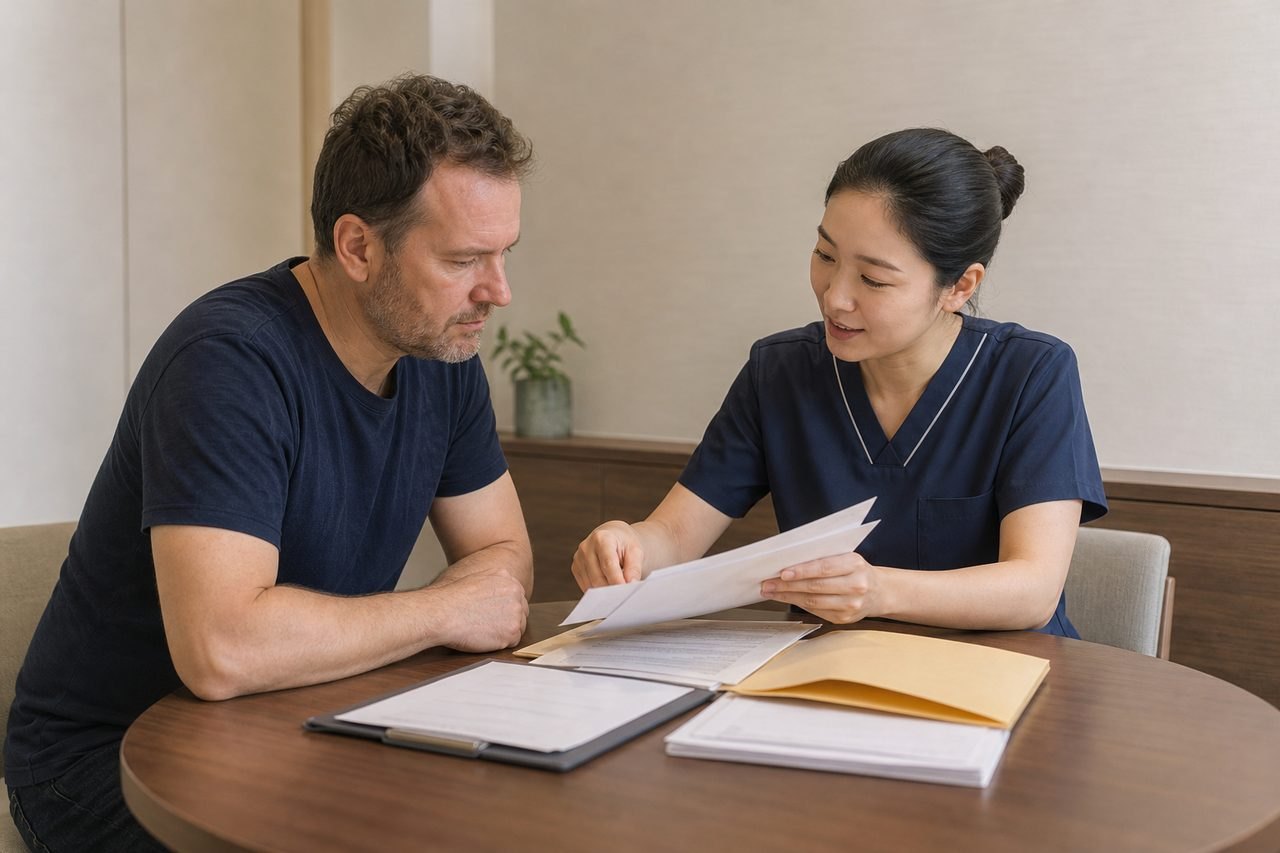
What the specialist is actually trying to reconstruct
Hand tendon repair treats damaged tendons, and follow-up therapy may form part of the individual care plan. That is the general context. For an overseas patient asking about further care in China, the practical question is narrower: what can a specialist tell from your existing records, and what must wait until you are examined in person?
A tendon injury is not one condition. The flexor tendons that bend the fingers and the extensor tendons that straighten them are different structures with different repair and rehabilitation considerations. Within each group, the level of the injury matters: a cut in the forearm, the wrist, the palm, or a finger changes which structures are involved and how the repair is protected afterwards. The original injury may also have involved nerves, blood vessels, or the tendon sheath, and that changes the picture.
Earlier treatment adds another layer. Was the tendon repaired primarily, delayed, or treated with a graft? Was a tendon transfer used? Was there a complication such as infection, rupture, or adhesion? Each of these affects what a second specialist would consider. Without those details, any remote opinion is working from an incomplete picture.
What existing records can clarify before you travel
The most useful records for a hand tendon assessment are the ones that describe what was found and what was done, not just what the patient remembers. Operative notes are central because they state the level of injury, the structures repaired, the suture technique or graft used, and any findings that were not visible on the surface.
Discharge summaries and clinic letters add the postoperative course: when movement was allowed, whether therapy was started, and whether any problems were noted. Imaging reports, particularly ultrasound or MRI if they were performed, can describe tendon continuity, scarring, or fluid collections. Photographs of the hand at rest and during attempted movement can show posture and active range, though they cannot substitute for examination.
A short written timeline is often more useful than a large unsorted file. It should state the date of injury, the date and type of each procedure, the name of any tendon graft or implant if one was used, and the current symptoms. This is the kind of summary that helps a specialist decide what to ask next.
What remains uncertain from records alone
Records describe events, but they do not measure the hand as it is now. Tendon glide, scar tethering, joint stiffness, and the quality of active movement are assessed by examining the hand. A specialist needs to see how the fingers move, where movement is blocked, and whether the limitation is from the tendon, the joint, or the scar.
Sensation and circulation also require examination. If a nerve was involved, the records may note it, but the current degree of sensory loss or recovery is a clinical finding. Similarly, the strength of individual muscles and the presence of a fixed deformity cannot be judged reliably from a photograph or a report.
This is why a remote opinion should be understood as a review of available information, not a final decision. It can identify what is missing, suggest what the specialist will want to examine, and help you prepare. It cannot confirm whether further surgery is appropriate, what procedure would be used, or what recovery to expect.
Organising the gaps without ordering new tests
You do not need to arrange new investigations before an initial enquiry. The useful step is to identify what is missing and ask the receiving clinician what they would need. If the operative note is unavailable, ask the original hospital whether a copy can be requested. If imaging was done, ask for the images themselves rather than only the report, because a specialist may want to review the actual study.
It also helps to write down your main question. Are you seeking a second opinion on whether further surgery is possible, an assessment of ongoing stiffness, or an explanation of why movement has not returned as expected? The answer changes what records matter most and what the specialist will focus on.
Do not stop prescribed therapy or change any medication while preparing. If you have new or worsening pain, swelling, fever, or a sudden loss of movement, that needs local urgent assessment rather than overseas planning.
Questions that change the next step
The next step depends on the answers to a few specific questions. Does the specialist need the original operative note before offering an opinion, or is a summary enough for an initial review? Is a video of the hand moving useful, and if so, what movements should it show? Does the assessment require imaging that can be done in China, or would the clinician prefer to see existing studies first?
It is also worth asking how the assessment would be structured. Would it be a single consultation, or would it involve hand therapy, imaging, and a surgical review? Would the specialist want to see you before deciding on any procedure, and what would they need to confirm in person? These are practical questions that help you plan without assuming a particular outcome.
Finally, ask what the written plan would include. A clear plan should state the findings, the options discussed, the reasoning, and what remains uncertain. That document is useful whether you proceed in China or seek care elsewhere.
Preparing the enquiry and the next step
The enquiry itself is the part you control, and it is worth writing it as if you were briefing someone who has never seen the hand. Start with one sentence on the original injury: the date, which hand, and whether it was a cut, a crush, a bite, or a closed rupture. Then one sentence per procedure, in order, with the date and the hospital. Then the current state in plain language: which fingers move, which do not, where it catches or blocks, whether there is numbness, and what you cannot do now that you could before. Finish with the single question you most want answered. That structure takes ten minutes to write and saves a specialist from reading a chronological file to find the same facts.
Attach only what supports those sentences. The operative note is the highest-value document because it records the level of injury, the structures repaired, the suture or graft technique, and any finding that was not visible from outside. Discharge summaries and clinic letters show the postoperative course and when therapy began. Imaging reports describe tendon continuity, scarring, or fluid collections, and if a study was done, the images themselves are more useful than the report alone because a specialist may want to review the actual scan rather than a summary of it. Photographs of the hand at rest and during attempted movement help, but they show posture, not glide or strength.
A short covering note is also useful. State whether you are seeking a second opinion on whether further surgery is possible, an assessment of ongoing stiffness, or an explanation of why movement has not returned as expected. Those three questions lead a specialist to look at different things, and naming yours means the first reply is more likely to address it. If you do not know which question fits, say so; that is itself useful information.
ChinaSpecialistCare provides information and non-clinical coordination. We can help you organise that summary, identify which records are missing, and suggest the relevant next step. An initial enquiry is free and does not require buying a proxy consultation. The hospital and its clinicians decide whether to accept a case and what assessment is appropriate; we cannot confirm acceptance in advance.
You can start with a brief summary by the enquiry form, email, or WhatsApp. After first contact, we can explain how to share records securely. Do not send passport numbers, card details, or a complete medical archive in the first message.
The relevant reference page for this topic is Hand & Microsurgery.
Sources & scope of this guide
References and official service information relevant to this guide.
This is general planning information and has not been individually reviewed by a doctor. Medical decisions and personal treatment advice come from your treating clinicians.