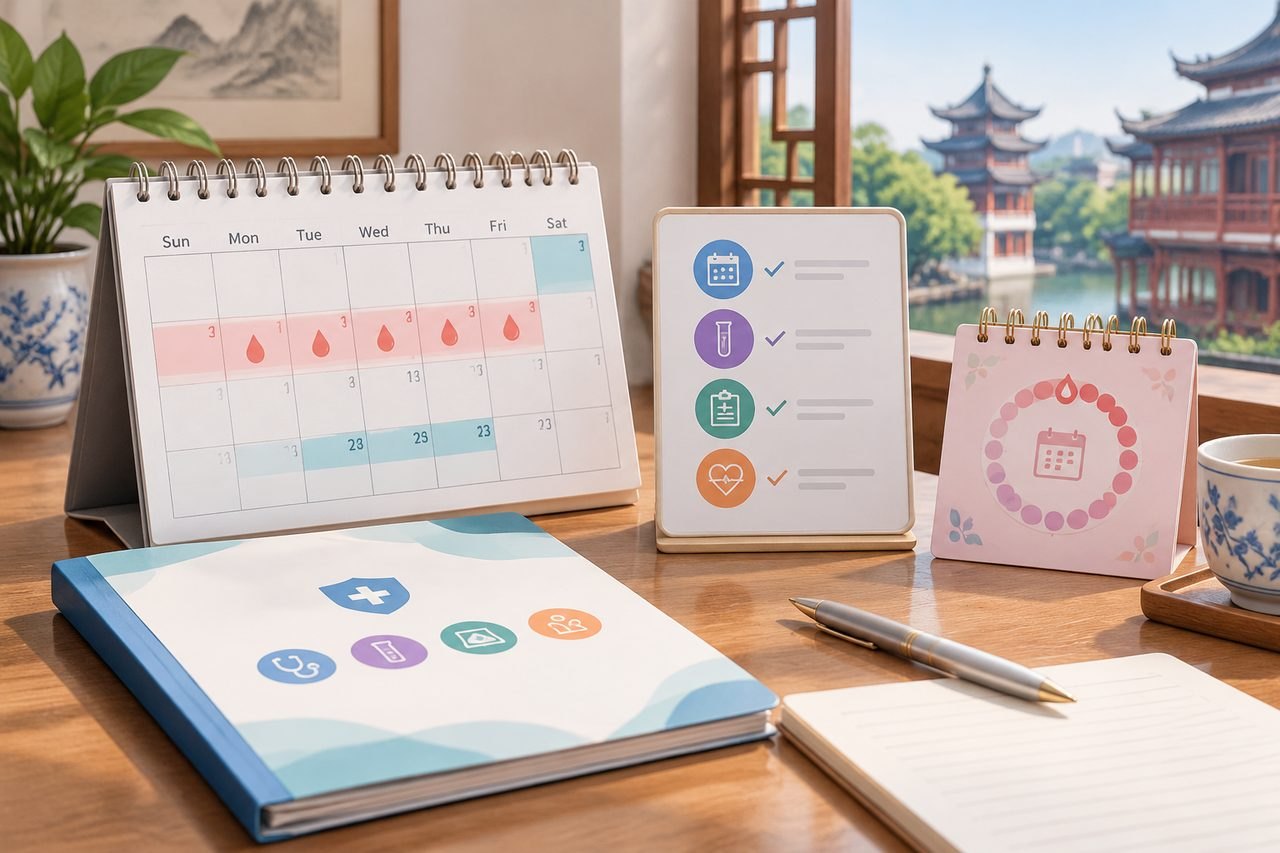
Why the cycle matters for a checkup booking
A routine preventive checkup is a bundle of measurements, blood draws, imaging and sometimes samples such as urine or a cervical screening swab. Some of those items can be affected by where you are in your cycle, and some cannot. The practical problem is that a package list rarely states this. You see a row of test names, a price and a duration, but not a note saying which day of your cycle suits which item.
That is why the cycle question belongs in the booking conversation rather than in your own guesswork. If you are mid-period on the appointment day, the hospital may still proceed with most of the package and simply note the timing, or it may suggest moving one item. Which of those happens depends on the tests included, the clinician's judgement and the hospital's own routine. None of that is something you can settle from a website description alone.
The distinction that matters most is between screening and symptoms. A scheduled checkup is for someone who feels well and wants a preventive review. If you currently have pelvic pain, unusual bleeding, a changed cycle or another active concern, that is a specialist consultation question, not a screening package question. Booking a checkup would not be the right first step, and a package is not designed to work up a symptom.
What to ask the hospital before you choose a date
You do not need to know the clinical reasoning behind each test. You need the hospital to tell you, for the specific package you are considering, whether cycle timing changes anything. Use a short, direct question and ask which points the hospital can confirm in writing.
Ask which items in the package could be affected by menstrual bleeding, and whether the hospital prefers a particular window in the cycle for those items. Ask what happens if your period arrives earlier or later than expected and the appointment no longer falls where you planned. Ask whether a single visit can cover the whole package or whether any item would need a separate appointment. Ask whether the hospital can hold the booking while you confirm your dates.
These are administrative and scheduling questions. The answers tell you whether to lock in a date now or keep it flexible. If the hospital says timing does not affect your chosen package, you have more freedom. If it says one item is cycle-sensitive, you can decide whether to plan around it or to discuss that item separately with a clinician.
Write the answers down. If you are coordinating through an intermediary, ask for the hospital's own reply rather than a summary, so the wording is clear about what is confirmed and what is still open.
Choosing a package before you add anything
Checkup providers typically offer a base package with optional additions. The sensible order is to choose the base package first, then decide whether any add-on is genuinely relevant to you. Adding items before you know what the base already includes tends to produce duplication and confusion about what you are actually paying for.
A clinician should advise on the suitable interval between routine checkups and on which tests fit your age, history and risk factors. That advice is individual. A published package list shows what a hospital can offer; it is not a statement that every listed test is appropriate for every person. If you have an existing condition, are taking regular medication or have a family history that concerns you, mention it during the booking conversation so the hospital can tell you whether a routine package is the right route or whether a specialist appointment is more suitable.
For an international patient, a private international hospital is often suggested for a comfortable environment, pre-arranged dates and examinations, English communication and report interpretation. Those arrangements are subject to confirmation with the particular hospital. Do not assume that every provider offers the same language support, room type or booking process, and do not treat a website description as a confirmed arrangement for your dates.
Building the trip around a flexible date
If your cycle is regular and predictable, you can often choose a date with reasonable confidence and keep one fallback in mind. If it is irregular, or if you are travelling a long distance, the more robust approach is to treat the appointment date as movable until the hospital confirms which items are cycle-sensitive.
Practical arrangements follow from that. Book accommodation that can be changed rather than a rigid package. Keep your return travel separate from the appointment date so a shift does not cascade into a missed flight. If you are bringing a companion, agree in advance who handles rescheduling if the date moves. If you need interpretation, confirm whether it is arranged by the hospital or separately, and for which parts of the visit.
Do not build a tight itinerary around a single day. A checkup visit can involve registration, several stations, waiting between them and a report discussion, and the sequence is set by the hospital. If you want to combine the checkup with other plans in China, leave the checkup day clear and put everything else around it.
One more point on records: bring a brief summary of your relevant history, current medication and any previous results you already have. Ask the receiving clinician which documents would be useful for your situation rather than assembling a complete archive in advance. If something is missing, the hospital can tell you whether it matters for a routine checkup.
What the report can and cannot tell you
A checkup produces measurements and findings, and someone has to interpret them in context. A result that sits outside a reference range does not by itself establish a diagnosis, and a normal result does not rule out every condition. Interpretation belongs to the clinician who sees the full picture, including your history and why the test was done.
This is especially relevant when cycle timing is involved. If a sample was taken on a day that was not ideal for that particular test, the clinician needs to know that when reading it. Tell the hospital on the day where you are in your cycle, and make sure it is recorded. If you later discuss the report with a doctor at home, pass on the same information.
Ask how and when the report will be delivered, and in what language. Reporting arrangements differ between providers, so confirm rather than assume. If you want the findings explained before you leave China, ask whether a report discussion is included in your booking and who conducts it.
If any finding needs follow-up, that is a clinical decision for the treating team. A checkup is not a substitute for investigating a symptom, and it is not a reason to change prescribed medication on your own.
A workable sequence for planning the visit
Start by deciding whether this is genuinely a routine checkup or whether you have an active concern. If it is routine, shortlist a hospital and ask for the current package contents in writing. Then ask the cycle-timing question against that specific list. Only after you have the answer should you fix a date and book travel.
Once the date is set, confirm the practical details in one message: arrival time, what to bring, whether fasting is required for any item, how payment is handled, and how the report will reach you. Leaving these points unresolved until the appointment day gives you less opportunity to clarify preparation or reschedule an affected item.
Keep your own copy of the hospital's replies. If your plans change, you have a clear record of what was agreed and what still needs re-confirming.
If you would like help identifying a suitable checkup route and preparing the questions above, you can send a short summary through the free initial enquiry. That step is non-clinical: it checks what you are asking for and points to the relevant next step. The hospital decides suitability, package contents and the final arrangements, and a clinician should advise on which tests are appropriate for you.
Sources & scope of this guide
References and official service information relevant to this guide.
This is general planning information and has not been individually reviewed by a doctor. Medical decisions and personal treatment advice come from your treating clinicians.