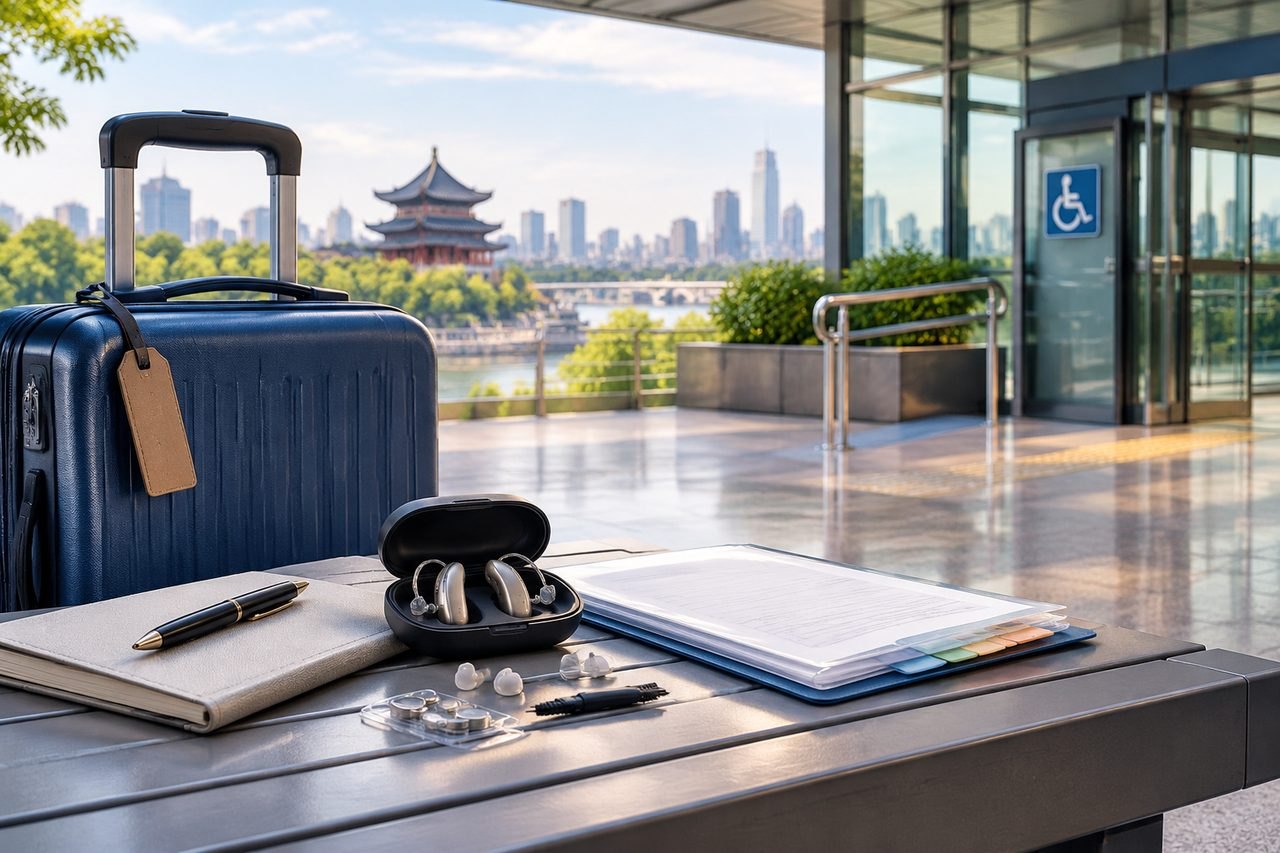
Why hearing-device history changes what you should book
A hearing check is not one single service. For an overseas patient planning care in China, the practical question is whether you are seeking a routine preventive check with no current ear or hearing symptoms, follow-up for an already diagnosed hearing condition, or assessment of a current symptom such as sudden hearing change, ear pain, discharge, tinnitus or dizziness. These are different pathways, and the receiving clinician decides which one applies.
Hearing-device history sits at the centre of that decision. If you already use a hearing aid, cochlear implant sound processor or other hearing device, the clinician needs to understand what the device is, how long you have used it, how it was fitted, and whether anything has changed recently. Without that context, a check may be planned around the wrong question.
This guide is administrative. It does not recommend tests, interpret results or tell you whether a device is suitable. It explains what to clarify before you travel and what to ask the provider to confirm in writing.
The device details worth writing down before you enquire
Start with a short device list rather than a full clinical archive. For each device, note the type, the brand and model if you know it, when you obtained it, and whether it is currently in use. If you have used more than one device over time, include the earlier ones briefly, because a change of device can explain why a previous check was arranged differently.
Then note the practical history: how the device was fitted, whether it has been adjusted since, and what accessories or batteries you rely on. If the device has been repaired or replaced, include the approximate date and the reason. You do not need to send receipts or serial numbers at the first enquiry; the point is to give the provider enough to route your question correctly.
Finally, separate device history from symptom history. A device that is working as expected is different from a device that has become uncomfortable, intermittent or ineffective. If you have a current symptom, say so plainly in your first message, because that may change the recommended appointment route.
Screening, follow-up and symptom care are not interchangeable
Routine preventive checkups are for people with no current symptoms who want a scheduled health review. A clinician should advise the interval and suitable tests. If you have current ear or hearing symptoms, that calls for a specialist consultation rather than buying a screening package. This distinction matters for hearing-device users because a device check may be part of follow-up care rather than a general checkup.
Follow-up for a known hearing condition is also different from screening. If you already have a diagnosis and a device, the receiving clinician will want to know what has been monitored before, what changed, and what question you want answered. The provider can then confirm whether a general checkup, a specialist appointment or a records-based opinion is the right first step.
Do not assume that a listed checkup package automatically includes device-specific assessment. Package contents, suitability and final scope require confirmation with the particular hospital. Ask what the package covers and what would need a separate specialist order.
Questions that clarify scope without assuming Chinese rules
Because hospital requirements and document practices vary, phrase your questions as confirmations rather than assumptions. Ask the provider which records the receiving clinician would find useful for your situation, and whether any document needs translation or a certified copy. Ask whether the appointment is provisional until the hospital reviews your information.
Ask how the provider will handle device-related questions that fall outside a routine checkup. For example: if the clinician considers that your device history needs specialist input, what is the next step, and who decides? Ask whether a stand-alone diagnostic test requires a specialist order at that hospital, and whether the checkup package can be adjusted or whether a separate consultation is needed.
Ask what the written plan will include: the appointment type, the records requested, the language arrangements, and what remains undecided until the hospital confirms. A clear written scope is more useful than a verbal assurance, especially when you are planning travel.
- Which records does the receiving clinician want for a hearing-device user?
- Does the hospital require translation or certification for any document?
- Is the appointment provisional until the hospital reviews the information?
- If specialist input is needed, what is the next step and who decides?
- Does a stand-alone test need a specialist order at this hospital?
- What does the written plan include, and what is still undecided?
Practical next step for planning a hearing check in China
Use the health checkup planning page to understand the general checkup route, then send a short enquiry describing your hearing-device history and your main question. The initial case review is free and checks whether the available information points to a routine checkup, a specialist appointment or a records-based opinion. It is not a diagnosis or a promise of acceptance, and the hospital decides suitability.
Before you write that message, decide what you actually want answered. Three common goals lead to different first questions. If you want reassurance about a device that seems to be working, you are asking about a routine review and whether the hospital's checkup route can accommodate it. If you want a second view on a known hearing condition, you are asking about records-based input and which documents the receiving clinician would find useful. If something has changed, you are asking about assessment of a current symptom, and that is a different conversation from a scheduled checkup.
Write the message in three short parts. First, one sentence on your main question. Second, one sentence listing your current device type and how long you have used it. Third, one sentence on whether you have any current ear or hearing symptom. That is enough for a first reply, and it lets the provider route your enquiry without asking you to assemble a full archive before anyone has confirmed what is needed.
Expect the first reply to be about process rather than clinical content. The provider can explain how records are shared after first contact, what the written plan will contain, and which parts remain undecided until the hospital reviews your information. It cannot tell you what the clinician will conclude, and it should not try. If a reply promises a specific finding before any records have been seen, treat that as a reason to ask more questions rather than fewer.
Keep the enquiry and the appointment separate in your planning. An enquiry costs nothing and commits you to nothing. Appointment coordination, if you later want it, is a separate step with its own scope, and a proxy consultation is optional rather than a prerequisite. Ask what each step covers before you agree to it, and ask what the hospital charges separately, because hospital fees and coordination fees are not the same thing.
If your symptoms are urgent or getting worse, do not wait for an overseas reply. Seek local care first. An enquiry about a hearing check in China can continue afterwards, and a records-based opinion remains available once the immediate question has been addressed.
If you later need appointment coordination, ask the provider what its own service fee covers and what the hospital charges separately. A proxy consultation is optional, not a prerequisite. Keep your first message brief, ask what the receiving clinician needs, and let the provider confirm the scope in writing before you make travel plans.
Sources & scope of this guide
References and official service information relevant to this guide.
This is general planning information and has not been individually reviewed by a doctor. Medical decisions and personal treatment advice come from your treating clinicians.