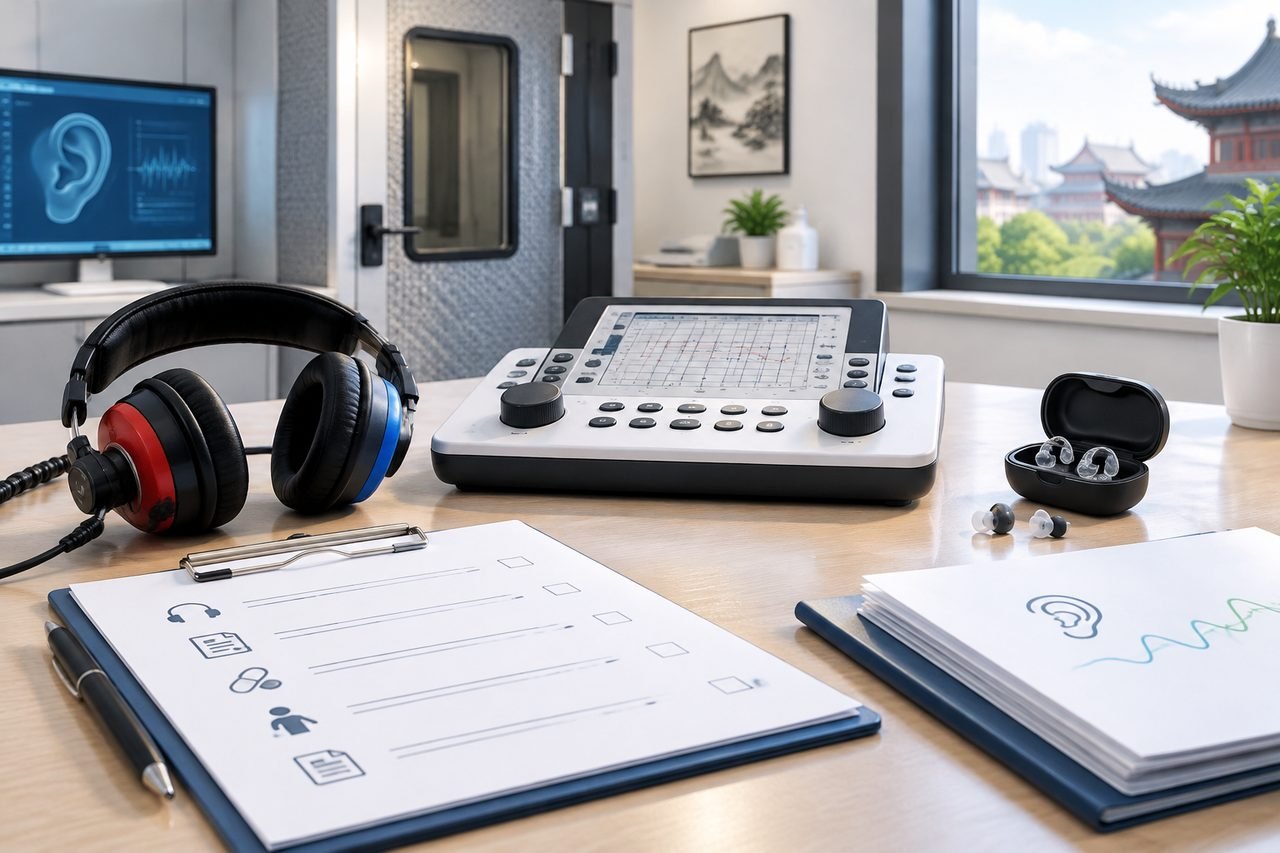
Why the provider, not a coordinator, issues the instructions
When you arrange a hearing check in China, the clinical preparation instructions belong to the hospital or clinic that will perform the assessment. A coordinator can help you request an appointment, pass on your questions and interpret replies, but cannot decide whether a test is suitable for you, what you should do about your regular medicines, or how your results should be acted on.
This matters because hearing checks are not one single test. A provider may plan pure-tone audiometry, speech audiometry, tympanometry, otoacoustic emissions or other assessments depending on your situation. Each has its own practical requirements, and the receiving clinician decides which are appropriate. If you have symptoms such as sudden hearing loss, one-sided hearing change, persistent tinnitus, ear pain, discharge or dizziness, that is a clinical problem to assess promptly, not a routine screening booking. Tell the provider about those symptoms when you enquire, and follow local medical advice without waiting for an overseas appointment.
For a routine check when you have no current ear symptoms, the purpose is different from a review of known hearing disease. The provider still decides suitability and scope. Your job is to give accurate information and ask what that particular clinic requires.
What to ask the hospital before you book
A written reply is more useful than a verbal summary, because you can check it against your own medicines and travel plans. Ask the hospital's international office, audiology department or ENT clinic directly, and keep the reply with your travel documents.
The questions below are designed to produce specific answers rather than general reassurance. Send them in one message so the provider can respond in one go.
Ask which hearing tests are planned and why, whether any test needs a quiet environment, sleep, fasting or a period without loud noise beforehand, and whether you should bring or avoid anything on the day. Ask whether the clinic needs you to pause any regular medicine, and if so, which clinician will give that instruction in writing. Do not change any prescribed medicine on the basis of a coordinator's message or a general article.
Ask whether you need an escort or someone who can interpret, whether you can drive or travel alone afterwards, and whether the appointment involves sedation or only awake testing. Ask how and when results are provided, whether a written report in English is available, and who will explain the findings to you.
Ask what the quoted fee covers and what it does not, and request that in writing. Ask whether a repeat visit is expected and whether the clinic can confirm the appointment date before you book travel. If the provider cannot answer a question yet, note it as unresolved rather than assuming an answer.
- Which specific hearing tests are planned, and what preparation does each require?
- Do I need to stop or change any regular medicine, and who will confirm that in writing?
- Do I need an escort, interpreter or someone to accompany me home?
- How and when will results and a written report be provided?
- What does the quoted fee include, and what is excluded or still undecided?
- Can the appointment date be confirmed before I book flights or hotels?
Records that help the provider decide
The clinic can only plan well if it knows your hearing history. Ask the provider which records it wants, then send only what is relevant. A short summary of your main concern is enough for an initial enquiry; you do not need to send a complete medical archive at the first contact.
Useful items may include previous audiograms or hearing test reports, ENT clinic letters, operation notes if you have had ear surgery, a list of current medicines with doses, and details of any hearing aids or implants. If you have a condition that affects hearing, such as a known ear disease or a history of noise exposure, say so briefly and let the clinician ask for more.
If you do not have a particular record, say that clearly rather than guessing. The provider can then tell you whether the missing item changes the plan. Do not arrange new tests on your own initiative before the clinic has advised what it needs; a test done elsewhere may not answer the question the clinician is asking.
Screening, review and symptom assessment are different routes
It helps to be clear about which route you are on, because the preparation and the questions change.
A routine preventive check for someone with no ear symptoms is a screening-type appointment. The clinician advises whether a hearing test is suitable and how often it should be repeated. You can ask about this during a general checkup enquiry, but the final choice of tests remains with the clinician.
A review for an existing hearing condition is different. The provider will want your previous results and may compare new findings with old ones. Ask what baseline records it needs and whether the same test conditions can be reproduced.
Assessment of current symptoms is a clinical consultation, not a screening package. If you have new or worsening hearing problems, the priority is to be assessed promptly, locally if necessary. An overseas appointment should not delay that assessment. When you contact a Chinese provider, describe the symptoms and ask whether it can see you and what it needs first.
Confirming the appointment and the practical arrangements
Once the provider has replied, confirm the appointment in writing before you commit to travel. A provisional clinical plan is not the same as a confirmed appointment slot, and a coordinator cannot guarantee a date that the hospital has not confirmed.
Check the practical points that affect your trip: the hospital's address and which entrance to use, the department name, the name on the appointment, and what identification the hospital requires. Ask whether an interpreter is needed and whether the hospital provides one or whether you should arrange your own. If you need help with hospital navigation and interpretation, that can be discussed as a separate coordination service, but it does not replace the provider's own instructions.
Ask how you will receive the report if you leave China before it is ready, and whether a follow-up discussion can be arranged remotely. Confirm who to contact if your symptoms change before the appointment. If your hearing worsens suddenly, seek local medical care rather than waiting for the scheduled visit.
What a coordinator can and cannot do
ChinaSpecialistCare provides information and non-clinical coordination. We can help you request a specialist appointment, pass your questions to the hospital, assist with interpretation and practical arrangements, and explain how to share records after first contact. We do not diagnose, prescribe, decide test suitability, give medicine instructions or promise that a hospital will accept you or offer a particular appointment date.
If you would like help requesting a hearing check appointment in China, you can start with a brief summary of your situation through the enquiry form, email or WhatsApp. An initial enquiry is free and does not require buying a proxy consultation. The hospital decides suitability and provides the clinical instructions.
For confirmed checkup planning and appointment requests, the health checkup page explains the general route. Use it to see how a checkup enquiry works, then ask the named provider for the written instructions that apply to your hearing check.
Sources & scope of this guide
References and official service information relevant to this guide.
This is general planning information and has not been individually reviewed by a doctor. Medical decisions and personal treatment advice come from your treating clinicians.