Why the Subtype Must Be Settled Before Response Can Be Discussed
Lymphoma is not one disease. It includes Hodgkin and non-Hodgkin types, and the exact diagnosis matters when treatment is discussed. A pathology report that says only "lymphoma" or "lymphoproliferative disorder" leaves the central question unanswered: response to what, and compared with which expected behaviour?
For an overseas patient, this is the first practical gap to close. Ask the treating centre for the full pathology report, including the subtype classification, the immunohistochemistry panel, and any cytogenetic or molecular findings that were used to reach it. If the original biopsy was reported at a smaller laboratory and the classification is uncertain, a pathology re-review may be part of what a Chinese centre wants before commenting on next steps. That is a clinical decision for the receiving team, not something to assume in advance.
The reason this matters for a response discussion is straightforward. A response that would be considered inadequate in one lymphoma subtype may be entirely expected in another. The same scan finding can mean different things depending on the disease. So the records request is not administrative box-ticking; it is what allows a specialist to interpret the response at all.
What Response Records Actually Show a Treating Team
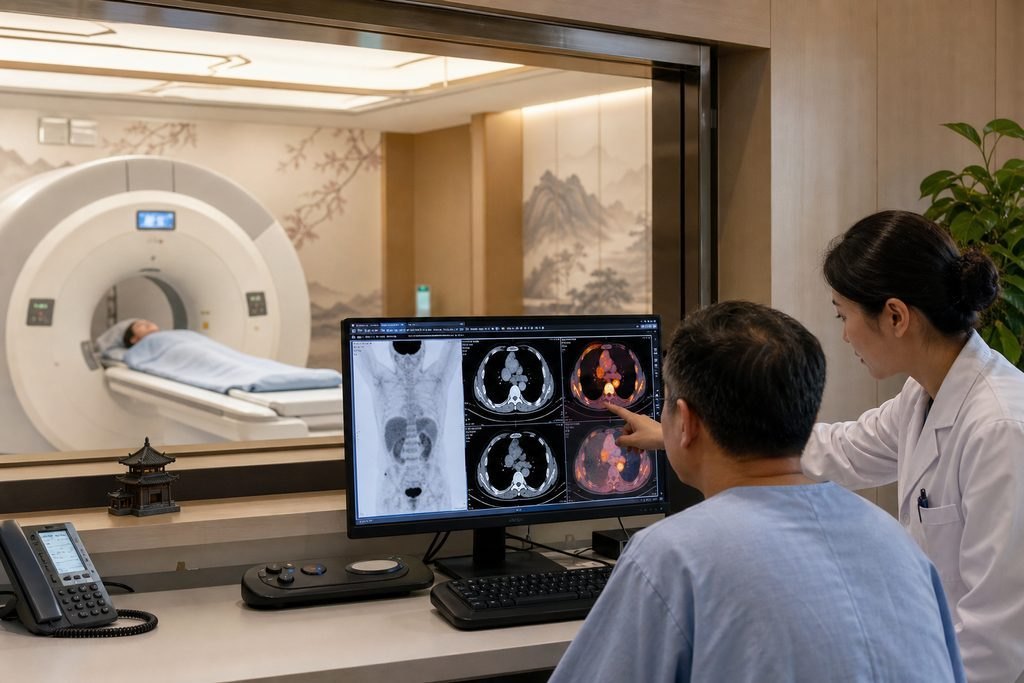
Response assessment in lymphoma is usually built from a combination of imaging and, where relevant, tissue or laboratory evidence. The specific tests used depend on the subtype and the treatment given, so the receiving clinician should confirm what they need for this patient rather than the patient guessing.
In practical terms, the records that tend to be requested include: the baseline imaging that was done before treatment started, the most recent imaging after treatment, the radiology reports for both, and any biopsy or repeat sampling that was performed to confirm or exclude residual disease. Blood counts, inflammatory markers, and organ function results are often part of the picture too, because they affect what treatment options remain.
A common difficulty is that patients arrive with the latest scan report but not the baseline. Without the baseline, a radiologist cannot describe change over time, and the specialist is left with a single snapshot. If the baseline images or reports are held by an earlier hospital, it is worth requesting them before an overseas review, because they change what can be said.
It also helps to know what the previous team concluded. A short summary letter from the treating oncologist, stating the regimen used, the number of cycles completed, the response assessment, and the reason for any change in plan, is often more useful than a folder of unlabelled scans. If no such letter exists, the patient can ask for a discharge summary or clinic letter that covers the same ground.
Questions to Ask Before Sending Records to China
The value of a records-based discussion depends on asking the right question. "Can you treat my lymphoma?" is too broad to answer usefully from documents. A sharper question produces a sharper reply.
Useful questions include: Given this subtype and this treatment history, is the current response adequate, or does it suggest a change in strategy? What additional information would the team need before it could comment on the next step? Does the case need a pathology re-review, a multidisciplinary discussion, or a specialist appointment first? And what monitoring or admission would be involved if the patient travelled?
These questions are not a request for a treatment plan by email. They are a way of finding out whether a China-based review would add anything, and what the patient would need to bring. A team that cannot answer without more records will say so, and that is useful information in itself.
It is also reasonable to ask how the review is conducted, who participates, and whether the opinion is records-based or requires an in-person visit. Those are practical questions about the process, not clinical ones, and they help the patient decide whether to proceed.
How a Records-Based Review Differs From an In-Person Assessment
A records-based opinion can clarify whether the documented response raises a question worth pursuing, and what a specialist would want to see next. It cannot examine the patient, repeat imaging, or confirm fitness for a particular treatment. It also cannot establish hospital acceptance or guarantee that a specific therapy is available.
This distinction matters when planning. If the review suggests that an in-person assessment is worthwhile, the next step is usually a specialist appointment, and the hospital decides whether to offer one. Admission, monitoring needs, and any treatment plan are confirmed only after the patient is seen and the team has what it needs.
For some patients, the honest answer after review is that the current plan is appropriate and no change is needed. That is a legitimate outcome, and it can save a long trip. For others, the review may identify a specific question that only an in-person assessment can resolve. Either way, the review is a filtering step, not a substitute for clinical care.
Practical Preparation Without Overcommitting
The temptation when considering care abroad is to send everything at once. A more useful approach is to start with a short summary: the subtype, the treatment already given, the most recent response assessment, and the specific question the patient wants answered. Records can follow once the receiving team indicates what it needs.
For the initial contact, a brief summary is enough. Passport numbers, card details, and a complete medical archive are not required at this stage. If the case moves forward, the team can explain how to share imaging and reports securely.
It is also worth keeping the current treating team informed. A response discussion in China does not replace local care, and any decision to change or continue treatment should involve the clinicians who know the patient. If symptoms are worsening, local assessment takes priority over an overseas enquiry.
Finally, be clear about what is being asked. A response review is not a request to interrupt current treatment, and it is not a promise that a new option exists. It is a structured way to get a second reading of the records before deciding whether travel is worth considering.
What the Hospital Decides, and What to Do Next
The treating hospital and its licensed clinicians decide whether a case is suitable for review, what additional records are needed, and whether an appointment or admission is appropriate. A coordination service can help organise the enquiry and the logistics, but it does not make clinical decisions or guarantee acceptance. That division of responsibility is worth understanding before any records leave the patient's home country, because it shapes what a review can and cannot deliver.
A records-based review is a filtering step, not a clinical verdict. It can tell the patient whether the documented response raises a question that a specialist would want to examine in person, and it can identify which records are still missing. It cannot confirm fitness for a particular regimen, establish that a specific therapy is available at a named hospital, or replace the treating team's judgement. If the review concludes that the current plan is appropriate, that is a useful result: it may spare the patient an unnecessary trip and the cost and disruption that come with it.
If the case does move forward, the next stage is usually a specialist appointment, and the hospital decides whether to offer one. Admission, monitoring needs, and any treatment plan are confirmed only after the patient is seen and the team has what it needs. It is reasonable to ask how the review is conducted, who participates, and whether the opinion is records-based or requires an in-person visit. Those are practical questions about the process, not clinical ones, and they help the patient decide whether to proceed.
If the patient wants to explore this, the practical next step is a free initial enquiry with a short summary of the diagnosis, previous regimens, and the response question. The team can then indicate what records would be useful and whether a records-based review or a specialist appointment is the more sensible route. There is no obligation to proceed, and no outcome is guaranteed.
For patients who want to understand the broader context of lymphoma care in China before deciding, the lymphoma treatment reference page explains the services and planning considerations in more detail.
Sources & scope of this guide
References and official service information relevant to this guide.
This is general planning information and has not been individually reviewed by a doctor. Medical decisions and personal treatment advice come from your treating clinicians.