Why a focused question list matters more than a long one
The first in-person consultation is not the place to hand over every document you own and hope the clinician finds the thread. It is a decision meeting. You want to leave knowing what the team thinks, what is still uncertain, and what happens next. A short list of questions you can actually ask in the time available does that better than a folder of printouts.
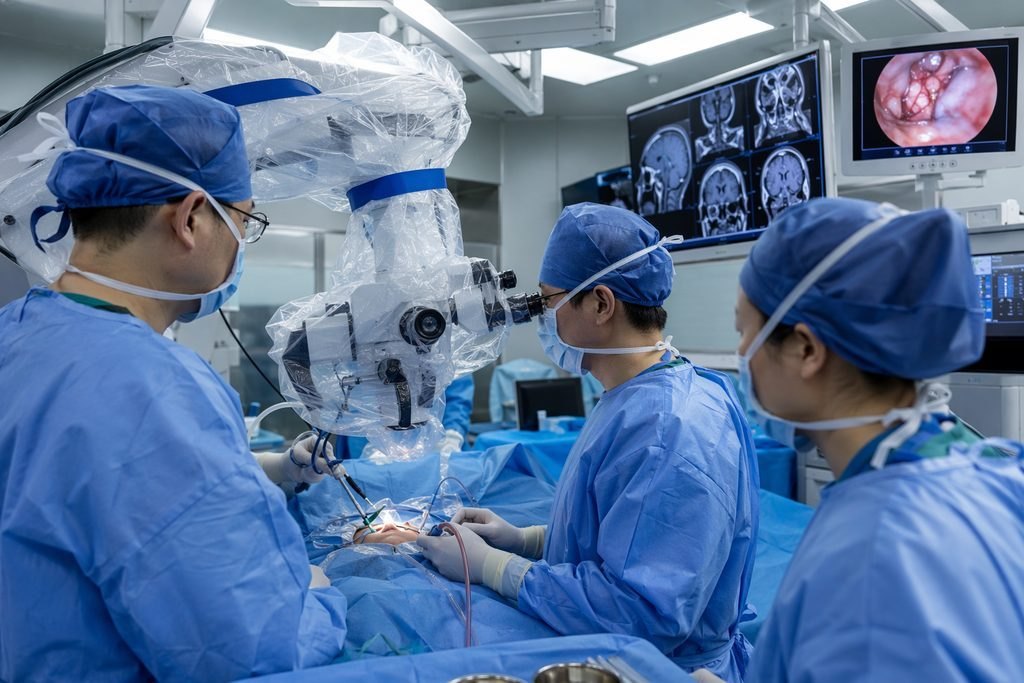
Pituitary tumors sit at a junction between endocrinology, ophthalmology and neurosurgery. Hormone and vision issues can be relevant to assessment, and endoscopic transsphenoidal surgery accesses the pituitary region through the nose. That means your questions should cross specialties, not stay inside one. If you only ask the surgeon about the operation, you may miss the endocrine and eye pieces that shape the overall plan.
Write your questions before you travel. Keep them to the ones that change your decision: what the team believes is going on, what tests or records are still missing, how the specialties will talk to each other, and who owns follow-up. Leave general background reading for the flight home.
The records that make the discussion concrete
Bring the records that show how your pituitary problem has behaved over time, not just the most recent scan. Endocrine reports, imaging and surgical-team review are the three strands the discussion usually needs. If one strand is thin, say so at the start rather than waiting to be asked.
Endocrine records are most useful when they show a sequence: which hormones were measured, when, and what changed. A single abnormal value without context is hard to interpret. If you have dynamic testing, bring the full report with reference ranges and the date. If you do not have it, ask whether it is needed and who should arrange it.
Imaging should include the actual images, not only the radiologist's report. Reports summarize; images let the surgical team judge size, position and relationship to nearby structures. Ask how the hospital prefers images to be transferred, and confirm the format before you travel. Do not assume a disc or link will be accepted without checking.
Eye assessment records matter because visual symptoms can influence urgency and surgical planning. Bring visual field tests and any ophthalmology notes with dates. If you have not had a recent eye assessment, ask the treating team whether they want one before or during the visit rather than arranging it yourself.
A short medication and hormone history is also worth writing out: what you take, the dose, who prescribed it, and when it last changed. Do not change any medication before the consultation. The treating clinician decides whether anything needs adjusting.
Questions that clarify how the specialties will work together
In a pituitary case, the practical question is not only what the surgeon can do. It is how endocrine, eye and surgical assessment will be coordinated, and who will manage ongoing hormone and imaging follow-up. Ask this directly. The answer tells you whether you are dealing with a joined-up team or a series of separate appointments you have to hold together yourself.
Useful questions include: which specialties will review my records before a recommendation is made; will they review together or separately; who will explain the combined view to me; and what is still missing before that view can be formed. These are coordination questions, and they are fair to ask at a first meeting.
Ask who would manage hormone follow-up after any treatment, and who would arrange imaging surveillance. Follow-up ownership is easy to assume and easy to get wrong. If the answer is a specific clinic or clinician, ask how that handover happens and what you would need to bring to the first follow-up visit.
If the team suggests a records-based opinion before any in-person decision, ask what that opinion can and cannot establish. A remote review can clarify options and missing information; it does not by itself confirm hospital acceptance or final suitability for a procedure.
What the surgical discussion should and should not settle
A first in-person discussion can settle whether surgery is one option, what the alternatives are, and what information is still needed. It should not be treated as a guaranteed plan. The hospital decides suitability, and that decision may depend on tests or assessments that are not complete at the first visit.
Ask what the proposed approach would involve, what the recovery and follow-up would look like in general terms, and what the main uncertainties are for your case. Ask about the risks the team considers most relevant to you, and about what they would want to monitor. Clinicians can discuss evidence-based risk and outcome estimates, including uncertainty; no estimate guarantees an individual result.
Do not expect a fixed answer on how many visits, how long you would stay, or when you could travel home. Those depend on the clinical picture, the hospital's processes and your recovery. Ask what the team's general expectations are and what would need to be confirmed closer to the time.
If you are comparing options, ask what would make the team recommend one route over another. That question often reveals the deciding factors more clearly than asking for a single recommendation.
Practical preparation for the visit itself
Confirm the appointment details in writing before you travel: date, time, location, which department, and what to bring. Ask whether an interpreter will be present or whether you should arrange one. If you need interpretation, confirm who provides it and whether there is a cost.
Keep your question list to one page. Put the three or four questions that most affect your decision at the top. If time runs short, those are the ones to ask. Leave space to write the answers, because memory of a clinical discussion is unreliable even when you are not stressed.
Ask at the end of the visit for a written summary or next-step note if the hospital provides one. If not, write your own summary immediately afterwards and send it to the team to confirm your understanding. This is a reasonable request and it reduces the chance of acting on a misheard instruction.
Do not delay necessary local care while you plan an overseas enquiry. If your symptoms worsen, seek local assessment first.
Next step
Before the in-person visit, you can send a brief summary of your situation and your main question. ChinaSpecialistCare's free initial case review checks the available diagnosis and records, identifies what is missing, and suggests a relevant next step. It is not a diagnosis or a promise of acceptance, and it does not require buying a proxy consultation.
If you want help preparing records, requesting a specialist appointment or arranging interpretation for the discussion, that can be discussed separately. The hospital and its clinicians decide suitability, treatment and follow-up. For confirmed help with records, interpretation or specialist appointment requests for pituitary tumor surgery, the team can coordinate those practical steps alongside your own clinician's advice.
Start with a short summary by the enquiry form, email or WhatsApp. Share detailed records only after first contact, when the team explains what is useful and how to send it securely.
Sources & scope of this guide
References and official service information relevant to this guide.
This is general planning information and has not been individually reviewed by a doctor. Medical decisions and personal treatment advice come from your treating clinicians.