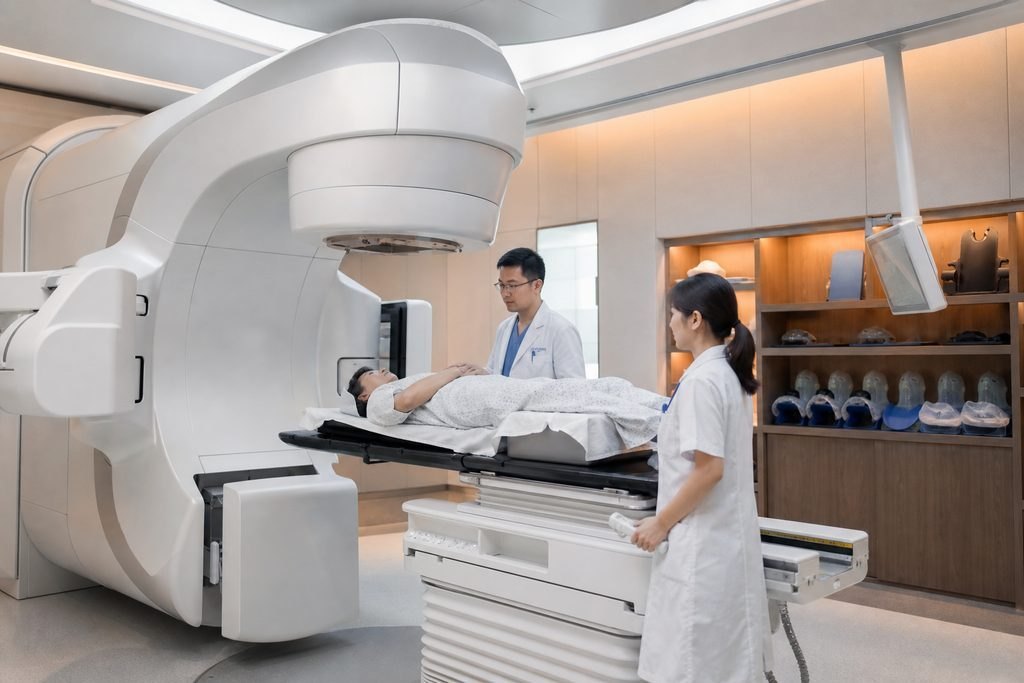
What 'Exchanging Real Records' Actually Means for Radiotherapy
Radiotherapy is not a single appointment. It usually involves a consultation, a planning stage and a series of treatment sessions, and the technique and schedule depend on the individual treatment plan. That structure matters for communication because the Chinese team and your home team may each hold only part of the picture.
A useful exchange is not a courier envelope of scans. It is a documented set of questions and answers that both clinical teams can see. Your home team needs to know what is being proposed in China. The Chinese team needs to know what radiation you have already received, where, and with what intent. Without that, neither side can comment responsibly on whether a new course is appropriate.
Start by asking your home oncologist one direct question: 'If I seek a radiotherapy opinion in China, what records would you send, and what would you want to know before I proceed?' Their answer defines the exchange. It also gives you a named contact at home who can respond to the Chinese team's questions.
Do not assume your home team will automatically share records with an overseas hospital. Ask what their process is, what they need in writing, and how long their internal review takes. These are administrative questions you can resolve before any clinical decision.
The Three Questions the Chinese Team Needs Answered First
Before a Chinese radiotherapy department can assess suitability, it needs to understand your prior treatment. The most useful thing you can do is prepare clear answers to three questions and put them in writing for both teams.
First: what radiotherapy have you already received? This includes the body site treated, the intent of that treatment, and any written summary your home team can provide. Second: what has changed since then? New imaging, a new pathology report, or a change in symptoms all affect whether further radiation is even a question. Third: what is the current treatment goal? Curative, adjuvant or palliative intent changes how a radiotherapy plan is designed and how sessions are scheduled.
You do not need to interpret these answers yourself. Your job is to make sure both clinical teams have them. If a record is missing, say so plainly rather than guessing. A Chinese team that knows a document is unavailable can tell you whether it can proceed without it or whether the gap matters.
Ask the Chinese hospital, in writing, which specific records it wants before a radiotherapy consultation. Ask your home team, in writing, what it can release and in what format. Keep both replies together.
Distinguishing Consultation, Planning and Delivery
A common misunderstanding is that a radiotherapy appointment equals treatment. It does not. The consultation is where a radiation oncologist reviews your history and decides whether radiotherapy is appropriate. Planning is a separate stage where the treatment volume and technique are defined. Delivery is the series of sessions themselves.
This distinction matters for communication because each stage generates different questions. At consultation, the question is suitability and intent. At planning, the question is technique and target. At delivery, the question is schedule and what happens if you need to pause.
Ask the Chinese team how it separates these stages, who you would see at each, and what information it needs from your home team before moving from one stage to the next. Ask whether a planning scan would be done in China or whether existing imaging can be used. These are practical questions, not clinical decisions, and the hospital should be able to answer them.
If the Chinese team proposes a plan, ask for a written summary you can send to your home oncologist. A short document listing the proposed intent, the target area and the number of sessions is more useful to your home team than a verbal report.
What Your Home Team Should Receive From China
Communication should run in both directions. Your home oncologist cannot advise on a Chinese radiotherapy plan if they only receive a bill and a discharge note. Ask the Chinese hospital what written output it can provide after consultation and planning, and whether it can be shared with your home team.
Useful items include a consultation summary, a statement of the proposed technique and intent, and a record of what was actually delivered. If your home team will resume your care afterwards, they need to know what was done and when. Ask the Chinese hospital how it documents treatment delivery and whether that record can be released to you or your home clinician.
You may need to sign a release form. Ask about that early rather than at discharge. If language is a barrier, ask whether the hospital can provide an English summary or whether you need an interpreter to review the Chinese documents with you.
Do not assume the two systems use the same record format. Ask each side what it can send, in what language, and by what method. A clear answer here prevents a gap later.
Questions to Ask Before Any Radiotherapy Plan Is Confirmed
You are not expected to evaluate a radiotherapy plan clinically. You are entitled to ask questions that make the plan understandable to you and to your home team. Write them down and ask them at the consultation.
Ask which radiotherapy technique is proposed and why. Ask what the treatment intent is. Ask how many sessions are planned and how they would be scheduled. Ask what the alternatives are and what happens if you decide not to proceed. Ask what side effects the treating team would monitor and who you should contact if you develop symptoms.
Ask whether your prior radiation records are needed before planning can proceed, and what happens if they are incomplete. Ask how later reviews would be arranged and whether those can be shared with your home team.
These questions do not commit you to treatment. They give you and your home oncologist the information needed to decide whether proceeding in China is reasonable. The hospital decides suitability; your role is to make sure the decision is informed.
Practical Steps and a Brief Next Step
Before you travel, confirm three things in writing. First, that the Chinese hospital has received and reviewed your prior radiotherapy records. Second, that your home oncologist knows what is being proposed and has had the chance to comment. Third, that you understand what happens at consultation, planning and delivery, and what records you will receive afterwards.
If you need help with the administrative side, ChinaSpecialistCare can assist with records handling, interpretation and specialist appointment requests for radiotherapy planning. This is non-clinical coordination; the hospital and its clinicians decide suitability, technique and scheduling. An initial enquiry is free and does not require purchasing a proxy consultation.
Keep your home team informed at each stage. A short email after consultation, and another after planning, keeps the exchange alive. If you return home, your home oncologist should receive a written summary of what was delivered. That handover is part of the treatment, not an afterthought.
If your symptoms worsen or you need urgent care, seek local assessment first. An overseas radiotherapy enquiry should not delay necessary care where you are.
Sources & scope of this guide
References and official service information relevant to this guide.
This is general planning information and has not been individually reviewed by a doctor. Medical decisions and personal treatment advice come from your treating clinicians.