What the two teams actually need from each other
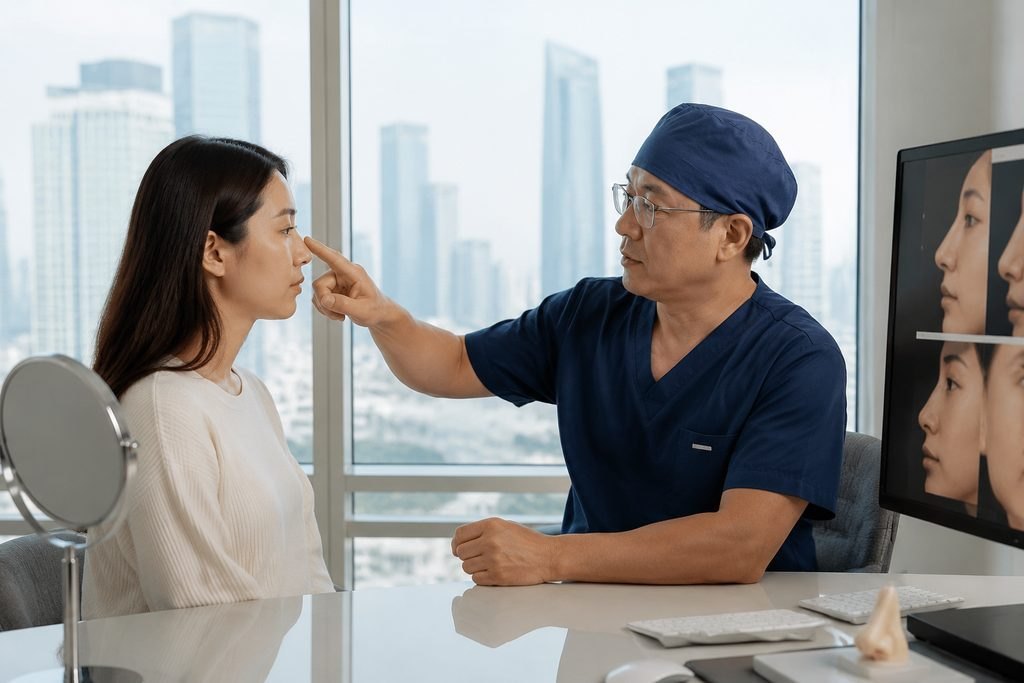
A rhinoplasty consultation in China is not a single conversation about a photograph. The surgeon needs to understand what you want changed, how your nose functions when you breathe, what has been done before and what you expect afterwards. Your home medical team holds much of that history, especially if you have had previous nasal surgery, trauma, allergy treatment or ongoing breathing problems.
The practical exchange is therefore two-way. From home, the China team needs records and context. Back to your home clinician, the China team needs to send a clear account of what was discussed, what was proposed and what aftercare will be required. Without that return message, your home doctor cannot help you interpret the plan or support you after you return.
Think of the handover as a short, structured document rather than a full archive. A one-page summary with dates, procedures and current symptoms is more useful than hundreds of pages of unrelated notes. The China team can then request specific additional items if something is missing.
Separating breathing goals from appearance goals
Rhinoplasty changes nose shape, and goals, risks and realistic expectations should be discussed with the surgeon. That discussion has two distinct halves. The appearance half covers what you want to look different and how you would feel if the change were smaller or larger than you imagine. The breathing half covers whether you have obstruction, which side is affected, whether it is constant or positional, and what has already been tried.
These halves can overlap, but they should not be merged into one request. A surgeon assessing appearance may not be the same clinician assessing nasal airflow, and a plan that improves one does not automatically improve the other. If you have a deviated septum, enlarged turbinates, nasal valve collapse or chronic sinus symptoms, say so explicitly and ask whether a separate assessment is needed.
Before you travel, write down your breathing symptoms in plain language: when they occur, what makes them worse, whether you use any sprays or medicines, and whether you have had allergy testing or imaging. Ask your home clinician to confirm the diagnosis in writing if one exists. This gives the China team a starting point rather than a guess.
Previous surgery and the exact record that matters
If you have had a previous rhinoplasty, septoplasty or nasal trauma, the operative note is the single most useful document. It should state what was done, what graft material was used, whether any cartilage was harvested and from where, and whether there were complications. If the note is unavailable, ask your home surgeon's office to write a short summary of the procedure from their records.
Photographs taken before and after previous surgery are also useful, but they must be dated and clearly labelled. The China team may ask for standard views. Do not send edited or filtered images, because they change the information the surgeon can use.
Ask your home clinician one direct question: is there anything in my history that would make another nasal operation higher risk? The answer might concern scarring, healing problems, medication, bleeding tendency or airway disease. You do not need to interpret that answer yourself; you need to pass it on accurately.
What the China plan should state before you commit
A written plan is more useful than a verbal summary. Ask the China team to put in writing which procedures are proposed, whether additional procedures are included or discussed separately, what the recovery and follow-up arrangements are expected to be, and who will be responsible for review after you return home.
The plan should also say what is not decided. If the surgeon wants to assess your breathing in person, or if a cartilage graft decision depends on examination, that should be stated rather than assumed. A plan that lists only the appearance change may leave the functional question unresolved.
Ask how the China team will communicate with your home clinician. Will they send a written summary, a discharge letter or imaging? Who will translate it? Will your home clinician receive it before you leave China or after you return? These are administrative questions, but they determine whether the handover actually happens.
- Which procedures are proposed, and which are still undecided?
- Does the plan address breathing as well as appearance?
- What follow-up is expected after you return home, and who provides it?
- What written summary will be sent to your home clinician, and when?
Consent, confidentiality and who controls the file
You decide what is shared, and that decision is the first thing to settle rather than the last. Before any document leaves your home clinic, confirm in writing which specific items you are authorising for release, to whom, and for what purpose. A general instruction to send everything is harder for your home clinician to act on than a named list: the previous operative note, the most recent clinic letter, the current medicine list, and any imaging report that touches the nose or airway. Ask what format the records will be sent in, whether a translation will be attached, and who will hold the copies on each side. If the China team later asks for something you did not authorise, that is a new consent decision, not an extension of the first one.
Confidentiality rules and release procedures differ between countries, and your home clinician may be willing to write a summary letter but unwilling to hand over the full file. That is a reasonable position and it does not block the exchange. A clear letter covering the diagnosis, previous nasal operations, current medicines and the specific concerns you have raised can give the China team enough to begin a records-based discussion. What it cannot do is substitute for an in-person examination, so treat the letter as the starting point of the handover rather than its conclusion. If your home clinician wants to know how the information will be used, tell them plainly: it supports a treatment discussion in China and a follow-up report back to them.
If you are unsure what to send, start with a short summary and ask the China team what else they need for this particular question. Do not send passport numbers, payment details or a complete medical archive in a first message. Records can be shared after initial contact, once you know what is relevant and have confirmed who will receive them. Keep a dated copy of everything you send, and note which version of each document you released, because a revised letter or a re-read scan can otherwise be mistaken for a new finding. When the China team sends its summary back, check that it names the procedures discussed, the breathing question if one was raised, and the follow-up arrangements, then forward it to your home clinician yourself if that is the agreed route.
Practical wording and the next step
You can keep the exchange simple by using the same three questions on both sides. First: what are the patient's breathing and appearance goals? Second: what previous nasal surgery, trauma or treatment is relevant? Third: what does each clinician need to know before deciding on further treatment? Send those questions to your home clinician and to the China team, and compare the answers.
If you would like help organising the records, interpretation or a specialist appointment request, ChinaSpecialistCare can coordinate that as a non-clinical service. A brief initial enquiry is free and does not require buying a proxy consultation. The hospital decides whether rhinoplasty is suitable, and the treating clinician confirms the plan.
Before you travel, ask your home clinician to write a short summary letter and confirm that they are willing to receive a follow-up report. Then ask the China team to confirm, in writing, what they will send back and when. That single exchange of responsibility is what makes the handover real rather than assumed.
Sources & scope of this guide
References and official service information relevant to this guide.
This is general planning information and has not been individually reviewed by a doctor. Medical decisions and personal treatment advice come from your treating clinicians.