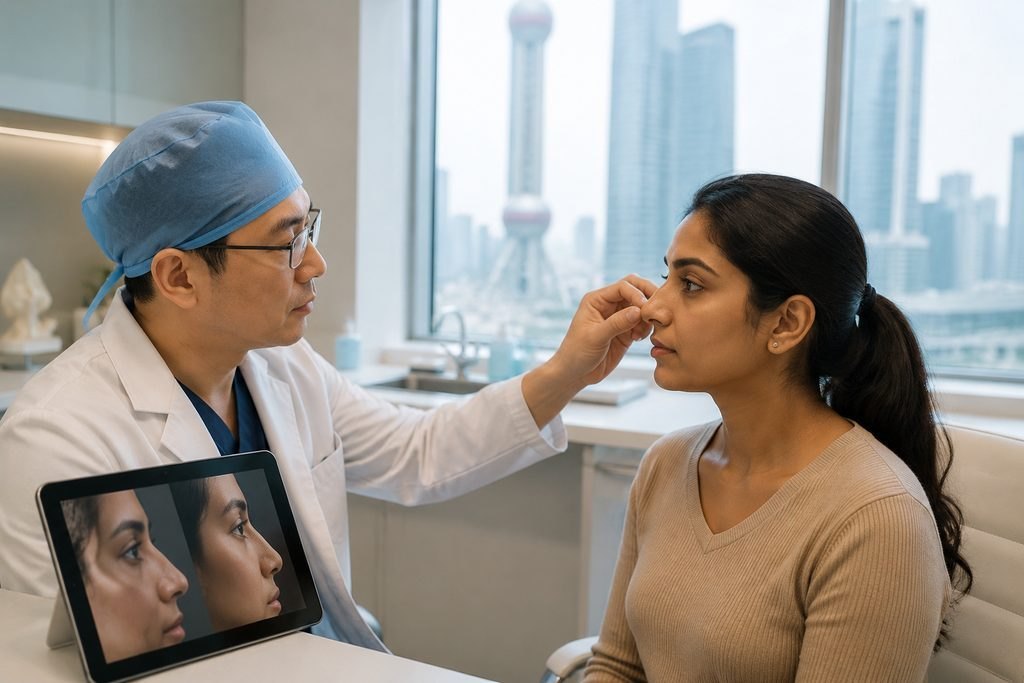
Which records actually matter for rhinoplasty planning
Rhinoplasty changes nose shape, and the goals, risks and realistic expectations should be discussed with the surgeon. That discussion depends on knowing your starting point. For a first rhinoplasty, the most useful records describe your nose as it is now. For a revision, the operative history becomes central because the surgeon needs to understand what was done before, with which materials, and what changed afterward.
The records that tend to matter fall into a few groups. Clinical notes from any previous consultation or surgery explain the reasoning behind earlier decisions. Operative reports describe what was actually performed, including grafts, implants or structural changes. Imaging, if it exists, shows bone and cartilage anatomy. Photographs taken before and after previous surgery show the visible change over time. Allergy records, medication lists and relevant medical history help the treating team assess fitness for any procedure.
Not every item is essential for every enquiry. A surgeon reviewing a first rhinoplasty may work from current photographs and a clinical examination. A revision surgeon often needs the earlier operative details because scar tissue, graft material and structural support affect what is technically possible. The practical step is to separate what you have from what you can request, rather than assuming the file must be complete before anyone will speak with you.
Who to ask, and what to say when you request records
The original provider is the first place to ask. That may be the hospital where a previous operation took place, the surgeon's office, or the clinic that holds your imaging. Requests are usually more effective when they are specific. Instead of asking for 'my file', name the documents: the operative report from a particular date, the discharge summary, the pathology or implant record if one exists, and any pre-operative photographs.
Hospitals and clinics differ in how they release records, what they charge for copies, and how long they retain older files. These are administrative questions for the records department, not clinical ones. Ask what format they can provide, whether an English translation is available, and how long the request may take. If a provider no longer holds the file, ask whether it was transferred and to where. If the answer is unclear, note that gap rather than filling it with assumption.
When you contact a new clinical team, a short summary is more useful than a large unorganised file. State your main concern, list the operations you have had with approximate dates, and say which records you can supply and which are missing. That lets the receiving team tell you what they need first. You do not need to send passport numbers, payment details or a complete archive at the initial enquiry stage.
- Name the exact document and date rather than requesting a general file.
- Ask the records department about format, translation and any copy fee.
- Keep a short written list of what you requested, from whom, and when.
- Tell the new clinical team what is missing so they can prioritise.
Why a missing operative report changes the conversation
A missing operative report does not make assessment impossible, but it changes what a surgeon can say with confidence. Without knowing which grafts were used, how the septum was managed, or whether previous surgery addressed breathing, a revision plan carries more uncertainty. The surgeon may need to rely on examination findings and imaging, and may explain that some questions can only be answered during surgery.
This distinction matters for your expectations. A records-based opinion can discuss likely options, risks and the questions that remain open. It cannot guarantee a specific outcome, and it does not replace an in-person examination. If a surgeon says more information is needed, that is a clinical judgement about what is safe to plan, not a bureaucratic delay.
Breathing and appearance are separate but connected concerns. If you have nasal obstruction, that needs its own assessment, which may involve examination and possibly imaging. Aesthetic goals should be described in plain terms, and the surgeon should explain what is realistic given your anatomy and surgical history. Neither goal should be assumed to improve automatically after revision.
How to prepare a records-based enquiry for care in China
A useful enquiry gives the clinical team enough to understand your situation without overwhelming them. Start with a one-page summary: your main concern, whether this is a first or revision rhinoplasty, the dates of previous operations, and any breathing symptoms. Then attach the records you have, clearly labelled. If a document is missing, say so explicitly rather than leaving the team to discover the gap.
Photographs are helpful when they are standardised. Front, profile and base views taken in consistent lighting allow comparison over time. If you have older photographs from before a previous operation, include them. If you do not, say that no earlier images exist. Do not send edited or filtered images, because they misrepresent the starting point.
For care in China, the practical question is which hospital and surgeon can review your case. Public tertiary hospitals and private international hospitals are possible routes, and the appropriate one depends on your clinical needs and preferences. A coordination service can help request a specialist appointment and prepare your records, but the hospital decides whether to accept the case and what further assessment is required. No outcome or acceptance is guaranteed.
Questions to ask before you commit to travel
Before making travel plans, clarify what has actually been confirmed. A provisional response to an enquiry is not the same as a scheduled operation. Ask whether the surgeon has reviewed your records personally, what additional tests or examinations would be needed in China, and whether a second in-person consultation is expected before any decision.
Ask about the plan in specific terms. Does the proposed approach address appearance, breathing, or both? Are additional procedures such as septoplasty or graft harvesting part of the plan, or separate discussions? What follow-up is expected, and how long would you need to remain in China for reviews? These are questions for the treating team, and the answers depend on your individual case.
Cost questions also belong here, but they need a written scope rather than a headline figure. Ask the hospital what its written estimate includes and excludes, and which items remain undecided until examination. Coordination fees are separate from hospital charges. Without an itemised quote from the specific provider, any comparison between hospitals is incomplete.
What to do next if your records are incomplete
Start the record requests now, even if some documents may take time to arrive. Contact the original provider, ask for the specific items you identified, and keep a written note of each request. In parallel, prepare your one-page summary and gather current photographs. This gives the clinical team something to work with while the remaining records are pending.
If you would like help organising a records-based enquiry or requesting a specialist appointment in China, you can send a brief summary through the enquiry form, email or WhatsApp. An initial enquiry is free and does not require purchasing a proxy consultation. The team can help identify what is missing and suggest the relevant next step, but the treating hospital and licensed clinicians decide suitability, diagnosis and any treatment plan.
Do not delay necessary local care while pursuing an overseas enquiry. If you have significant breathing difficulty, infection or another urgent symptom, seek assessment where you are. For non-urgent rhinoplasty planning, the useful next step is to request the missing records and prepare a clear summary for review.
Sources & scope of this guide
References and official service information relevant to this guide.
This is general planning information and has not been individually reviewed by a doctor. Medical decisions and personal treatment advice come from your treating clinicians.