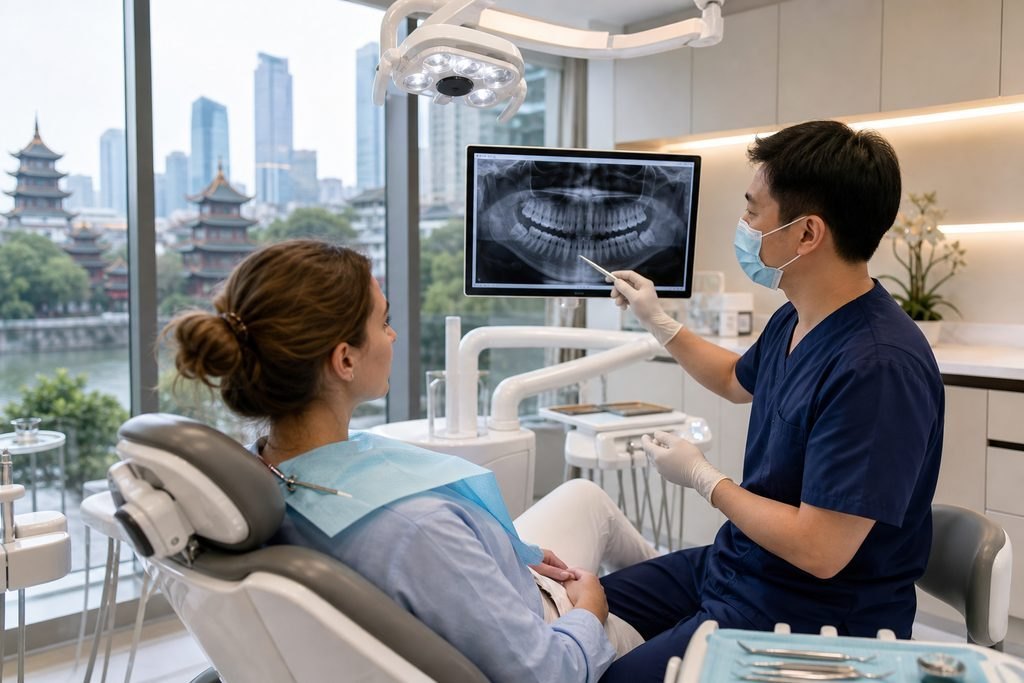
First treatment or retreatment: why the distinction changes your decision
Root canal treatment removes infected pulp and seals the tooth. The supplied NHS source notes that treatment can involve multiple appointments, temporary fillings and, for some teeth, a crown. That description covers both a tooth receiving root canal treatment for the first time and a tooth that has already had root canal treatment and needs retreatment.
The distinction matters because retreatment usually means the dentist must remove existing filling material, locate any missed canals and manage a tooth that may already have been weakened or restored. The clinical steps, the equipment needed and the time required can differ from a first-time procedure. If you do not know which situation applies to you, you cannot judge whether the quoted plan is comparable to another quote or to advice you received at home.
Ask directly: 'Is this first-time root canal treatment or retreatment of a tooth that already had root canal treatment?' If the answer is retreatment, ask what the dentist has seen on the X-ray or examination that makes retreatment necessary rather than extraction or monitoring. You are not asking the dentist to justify every decision; you are checking that you understand the starting point.
A preliminary reply from a clinic may say only that root canal treatment is 'possible' or 'needed'. That is not the same as a confirmed treatment plan. Treat it as a prompt to ask the three questions above before you agree to anything.
How many appointments are proposed, and what happens at each one
Root canal treatment can involve multiple appointments. The number depends on the tooth, the infection, the dentist's assessment and whether the tooth needs retreatment. No article can tell you a fixed number that applies in China or anywhere else.
What you can do is ask the clinic to state, in writing, how many appointments it proposes and what it intends to complete at each visit. A plan might separate cleaning and shaping of the canals from filling and sealing them, with a temporary filling in between. If the clinic cannot or will not describe the appointment sequence, you cannot plan your trip, your time away from work or your budget with any confidence.
Ask: 'How many appointments do you propose, and what will be done at each one?' Then ask: 'What would cause the number to change?' A dentist may need to adjust the plan if a canal is blocked, if the tooth is more damaged than the X-ray suggested, or if you develop symptoms between visits. Knowing that in advance helps you decide whether to start treatment in China or wait.
If you are travelling specifically for this treatment, ask whether the proposed appointments can be scheduled within your available time. Do not assume that a clinic can compress a multi-visit plan into one trip. Ask the clinic to confirm the schedule it can actually offer you, and treat any provisional reply as provisional until you have a written appointment plan.
Is the final restoration separate, and who provides it
Root canal treatment seals the inside of the tooth. It does not necessarily restore the outside. For some teeth, a crown is needed after root canal treatment to protect the tooth and restore function.
Ask the clinic: 'Is the final restoration included in this plan, or is it separate?' If it is separate, ask what type of restoration is proposed, who will provide it, and whether it can be done at the same clinic or requires a different appointment or provider. A temporary filling placed between appointments does not by itself establish that root canal treatment is complete, and it is not the final restoration.
This question affects both your timeline and your understanding of the total scope. A plan that lists root canal treatment only may leave you needing a crown later, possibly after you have left China. If the clinic says a crown is needed, ask when it can be placed and whether that timing depends on healing or on the tooth's condition.
If you already have a crown or a large filling on the tooth, ask how that affects the plan. The dentist may need to remove or modify existing restorations to access the canals. That is a clinical decision for the treating dentist, but you should know whether it is part of the proposed plan.
What the written plan should state before you consent
Consent is not a formality. It is your agreement to a specific procedure after you have had a chance to understand what will be done. Before you agree, ask the clinic to give you a written plan that states the tooth being treated, whether it is first treatment or retreatment, the proposed number of appointments, what each appointment involves, and whether the final restoration is included or separate.
Ask what the quoted scope includes and what it does not. Do not assume that a headline figure covers every stage. Ask the clinic how its written estimate is structured: which items are included, which are excluded, and which are still undecided because the dentist needs more information. If the clinic cannot answer, that is useful information about how clearly it communicates.
Ask about the dentist's assessment of the tooth's condition and any alternatives. You may want to know whether extraction, monitoring or a different restoration is a reasonable option. The treating dentist decides suitability and recommends a plan; you decide whether to accept it. If you feel rushed, ask for time to consider the written plan before consenting.
If you are comparing a plan from China with advice you received elsewhere, compare the scope, not just the procedure name. A plan for first-time root canal treatment on a single-rooted tooth is not the same as retreatment of a molar with a crown. Ask each provider to describe the same elements so the comparison is meaningful.
Practical preparation for an overseas patient
Bring any dental records you already have: recent X-rays, a treatment history, and notes from your dentist at home. These help the receiving dentist understand what has already been done and what the tooth looks like now. If you do not have them, ask your dentist at home whether they can be shared with you before you travel.
Ask the clinic what records it needs to assess your case. It may want a recent X-ray or a specific view of the tooth. Do not assume that a panoramic X-ray shows the same detail as other imaging; ask the dentist what is needed for your situation. If you need a new X-ray, the clinic will advise you.
Plan for the possibility that the treatment cannot be completed in one visit. If you are travelling for a limited time, ask the clinic whether it can provide a temporary restoration and a written summary of what remains, so a dentist at home can continue care if needed. The receiving dentist decides what is safe and appropriate.
Do not delay urgent local care for an overseas enquiry. If you have severe pain, swelling or fever, seek local assessment first. Root canal treatment is not an emergency procedure you should postpone while you compare clinics online.
Next step: get the plan in writing before you agree
Before you consent to root canal treatment in China, ask the clinic to put the plan in writing. It should state whether the treatment is first-time or retreatment, how many appointments are proposed, what each appointment involves, and whether the final restoration is included or separate. If any of those answers are missing, ask again before you agree.
You can start with a short enquiry to ChinaSpecialistCare. Our team checks the available records and your main question, identifies missing information and suggests a relevant next step. This initial review is free and is not a diagnosis or a promise of acceptance. You do not need to buy a proxy consultation to make an initial enquiry.
If you want help requesting a specialist appointment or coordinating records, we can describe the confirmed services available. The hospital and its licensed clinicians decide suitability, the treatment plan and whether to accept you as a patient. No outcome is guaranteed.
For more detail on the procedure itself, see the root canal treatment reference page.
Sources & scope of this guide
References and official service information relevant to this guide.
This is general planning information and has not been individually reviewed by a doctor. Medical decisions and personal treatment advice come from your treating clinicians.