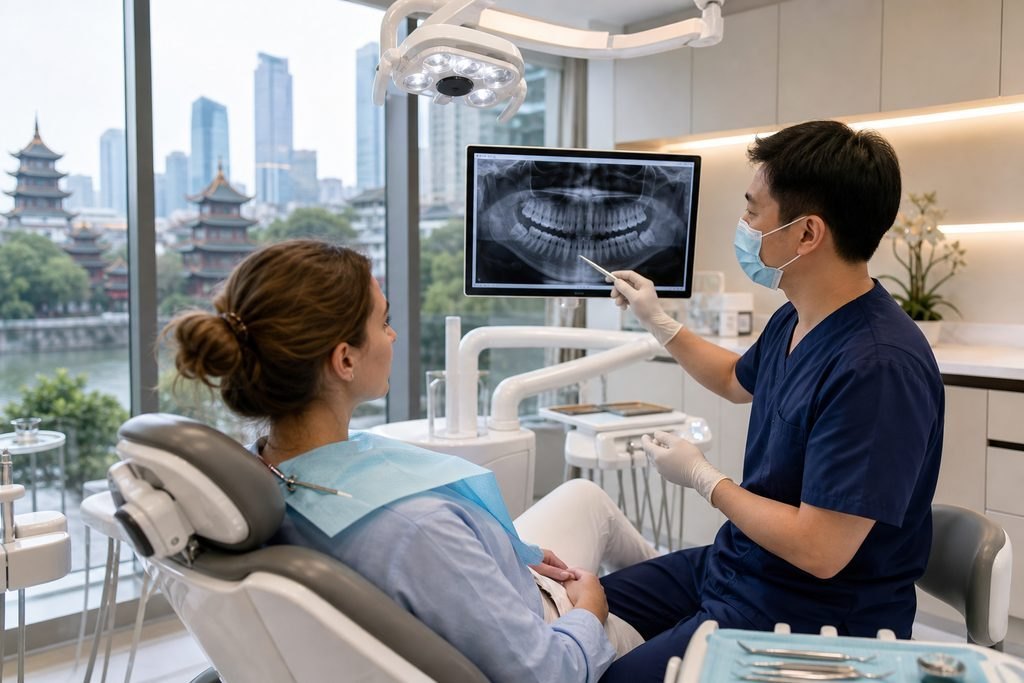
Why a short question list matters more than a long history
A first in-person discussion about root canal treatment can move quickly. The dentist examines the tooth, looks at imaging and decides whether the pulp needs treatment, whether an earlier root canal has failed, or whether another problem is causing the symptoms. If you arrive with a long chronological story and no clear questions, the appointment can end before you have the answers that affect your decision.
A better approach is to separate what you know from what you need to ask. Bring a one-page summary: which tooth bothers you, when symptoms started, what treatment it has already had, and any relevant health conditions or medicines. Then bring a short question list covering the three decisions that matter most: what treatment is proposed, how many appointments it involves, and what happens to the tooth afterwards.
This is not about second-guessing the dentist. It is about making sure you understand the plan before you agree to it, especially when you are arranging care away from home. The dentist decides suitability and technique; you decide whether you have enough information to proceed.
Root canal treatment removes infected pulp and seals the tooth. Depending on the tooth and the situation, it can involve more than one appointment, a temporary filling between visits, and a crown afterwards. Those are general possibilities, not a prediction for your tooth. The first discussion is where the dentist applies them to your case.
First treatment or retreatment: the question that changes everything
Ask directly: is this a first root canal treatment on this tooth, or a retreatment of a tooth that already had root canal work? The answer changes the assessment, the imaging the dentist may want and the way the plan is explained to you.
If the tooth has not had root canal treatment before, the discussion is about whether the pulp is infected or inflamed and whether root canal treatment is the right option compared with alternatives. If the tooth has already been treated, the dentist needs to understand why it is still causing problems. That may involve looking for missed canals, new infection, a cracked tooth or a restoration that is no longer sealing the tooth.
This distinction also affects what records are useful. For a first treatment, recent dental X-rays and a clear description of symptoms may be enough for an initial conversation. For a retreatment, the dentist may want the previous treatment records, any earlier imaging and details of the crown or filling on the tooth. If you do not have those records, say so at the start rather than waiting to be asked.
A temporary filling does not by itself tell you whether root canal treatment is complete. If you have a temporary filling from earlier care, ask the dentist to explain what stage the tooth is at and what still needs to be done. Do not assume the tooth is finished because the pain stopped.
If the dentist recommends retreatment, ask what the goal is: to save the tooth, to resolve symptoms, or to prepare it for a new restoration. Ask what happens if retreatment is not possible or not chosen. You do not need to decide during the first appointment, but you should understand the alternatives before you leave.
Appointment count, temporary fillings and what happens between visits
Root canal treatment can involve multiple appointments. That is a general statement, not a schedule for your tooth. The practical question is: how many appointments does this dentist propose for this tooth, and what happens at each one?
Ask whether a temporary filling will be placed between visits and what you should do if it comes loose or if the tooth becomes painful. Ask whether you can eat normally, whether you need to avoid chewing on that side, and what symptoms would mean you should contact the clinic before the next appointment. These are safety questions, not challenges to the dentist's plan.
If you are travelling to China for treatment, the appointment count affects your practical planning. Ask whether the dentist expects you to stay in the area between visits and whether the intervals are fixed or flexible. Do not assume that all appointments can be compressed into a short trip. Ask the clinic to confirm the proposed sequence in writing if you need it for your own planning.
Ask what the dentist will do if the tooth cannot be sealed or if the infection does not settle as expected. You are not asking for a guarantee; you are asking how the plan would be adjusted. A dentist who can explain the fallback options is giving you useful information for your decision.
Finally, ask who to contact between appointments if something goes wrong. Confirm the clinic's arrangement for urgent questions, and keep that information with your appointment details. This is practical preparation, not a comment on the quality of care.
The final restoration: a separate decision to clarify
Root canal treatment seals the inside of the tooth, but it does not rebuild the part of the tooth that was lost to decay, fracture or the access opening. Many teeth need a restoration afterwards, and for some teeth a crown is recommended. Ask whether the final restoration is included in the proposed plan or whether it is a separate stage with its own discussion and cost.
This matters for two reasons. First, the tooth may not be protected or fully functional until the restoration is placed. Second, the type of restoration affects how much tooth structure is removed and how the tooth is prepared. Ask the dentist to explain what restoration is proposed for your tooth and why.
If a crown is recommended, ask when it would be placed relative to the root canal treatment and what happens in the meantime. Ask whether a temporary restoration will be used and how long it is expected to last. These are planning questions, not clinical instructions.
If you are comparing quotes from different providers, make sure you are comparing the same scope. One quote may cover only the root canal treatment; another may include the restoration. Ask each provider to put the included and excluded items in writing, and ask what remains undecided until the tooth is examined. Without that, a lower number may not mean a lower total for the care you actually need.
You can also ask whether the dentist expects to review the tooth after the restoration and what follow-up is proposed. The answer helps you plan whether you need to stay in China for a review appointment or whether your own dentist at home can take that over. The receiving dentist decides what follow-up is appropriate; your job is to ask how the handover would work.
Records, imaging and what the dentist needs before deciding
Ask what records or imaging the dentist wants before the first appointment or during it. For a tooth that has not been treated before, recent X-rays and a clear description of symptoms may be enough to start the discussion. For a tooth that has already had root canal treatment, the dentist may want the earlier treatment records, any previous imaging and details of the existing restoration.
If you do not have a record, say so. Do not delay urgent local care while you try to collect documents for an overseas enquiry. If your tooth is painful, swollen or affecting your general health, seek local assessment first. An overseas consultation can follow once the urgent problem is addressed.
Ask whether the dentist needs to take new imaging at the clinic and whether that is part of the same visit. Do not assume that a panoramic X-ray shows the same detail as other imaging; different images answer different questions. Ask the dentist which image is needed for your tooth and why.
If you are sharing records with a clinic in China before travelling, keep the first contact brief. A short summary of the tooth, the main question and the records you have is enough to start. You do not need to send a complete medical archive or payment details at the enquiry stage. The clinic can tell you what it needs next.
Ask whether the dentist can review your records before you travel and what a records-based opinion can and cannot establish. A remote review can help you understand the likely options, but it does not replace the in-person examination and it does not confirm that treatment will go ahead. The treating dentist decides suitability after seeing the tooth.
Turning the discussion into a clear next step
Before you leave the first appointment, summarise what you have understood and ask the dentist to correct anything you have wrong. A simple recap works well: the tooth needs first treatment or retreatment; the plan involves a stated number of appointments; a temporary filling may be used; the final restoration is included or separate; and the next review is at a stated point.
Ask for the plan in writing if you need it for travel, insurance or your own records. Ask what the written plan includes and what remains undecided until the tooth is examined further. If you are comparing providers, use the same questions for each one so the answers are comparable.
If you are considering care in China, you can start with a brief enquiry. ChinaSpecialistCare's editorial team can help you understand what records to prepare and how to request a specialist appointment, with interpretation and hospital navigation available as separate coordination services. An initial enquiry is free and does not require buying a proxy consultation. The hospital and its dentists decide whether treatment is suitable and when it can be scheduled.
Keep the next step small. Send a short summary of the tooth and your main question. Ask what the clinic needs to arrange a first in-person discussion. Then decide, with the dentist, whether to proceed.
Sources & scope of this guide
References and official service information relevant to this guide.
This is general planning information and has not been individually reviewed by a doctor. Medical decisions and personal treatment advice come from your treating clinicians.