What Old Records Can and Cannot Answer
A previous X-ray, treatment note or referral letter is useful because it gives the new dentist a starting point. It may show which tooth was treated, what type of restoration was placed, and whether a temporary filling was used. It can also show how long ago the work was done and whether any follow-up was recorded.
What old records cannot reliably answer is the current condition of the pulp, the root canal system or the surrounding bone. A radiograph taken months ago does not show what has happened since. A treatment note may describe the procedure but not whether every canal was located, cleaned and sealed. A temporary filling does not by itself establish whether root canal treatment is complete.
This distinction matters because it changes the clinical question. If the tooth was never treated, the assessment is about first-time root canal treatment. If it was treated and symptoms or radiographic findings persist, the assessment is about retreatment. Those are different procedures with different risks, different appointment patterns and different questions for the dentist.
When you send records ahead of a visit, include the most recent images and any treatment notes you have. If you do not have them, say so. The receiving dentist can then tell you what additional imaging or examination is needed. Do not assume that missing records mean the assessment cannot begin; ask what the dentist needs and what can be confirmed at the visit.
First Treatment or Retreatment: Why the Answer Changes the Plan
Root canal treatment removes infected pulp and seals the tooth. That description covers both first treatment and retreatment, but the practical steps differ. In a first treatment, the dentist works with the original anatomy. In a retreatment, previous filling material, posts or crowns may need to be removed before the canals can be accessed again.
Retreatment can take longer and may require different instruments or magnification. It may also carry a different risk profile because previous treatment can have changed the tooth structure. The dentist needs to see the tooth and the current imaging before deciding whether retreatment is appropriate, whether a different approach is needed, or whether the tooth cannot be retained.
Ask directly: is this first treatment or retreatment? If the answer is not yet clear, ask what information is missing. The answer affects how many appointments are proposed, what the dentist plans to do at each visit, and whether the final restoration is planned at the same time or later.
A temporary filling placed between appointments is not evidence that treatment is finished. It protects the tooth while the dentist completes the work. The final restoration, which may be a filling or a crown depending on the tooth, is a separate decision. Ask whether that restoration is included in the quoted plan or arranged separately.
What a New Assessment Adds
A new assessment is not a repeat of old records. It answers questions that old records cannot: what is the condition of the tooth now, what treatment is appropriate, and what the patient can expect during and after the procedure.
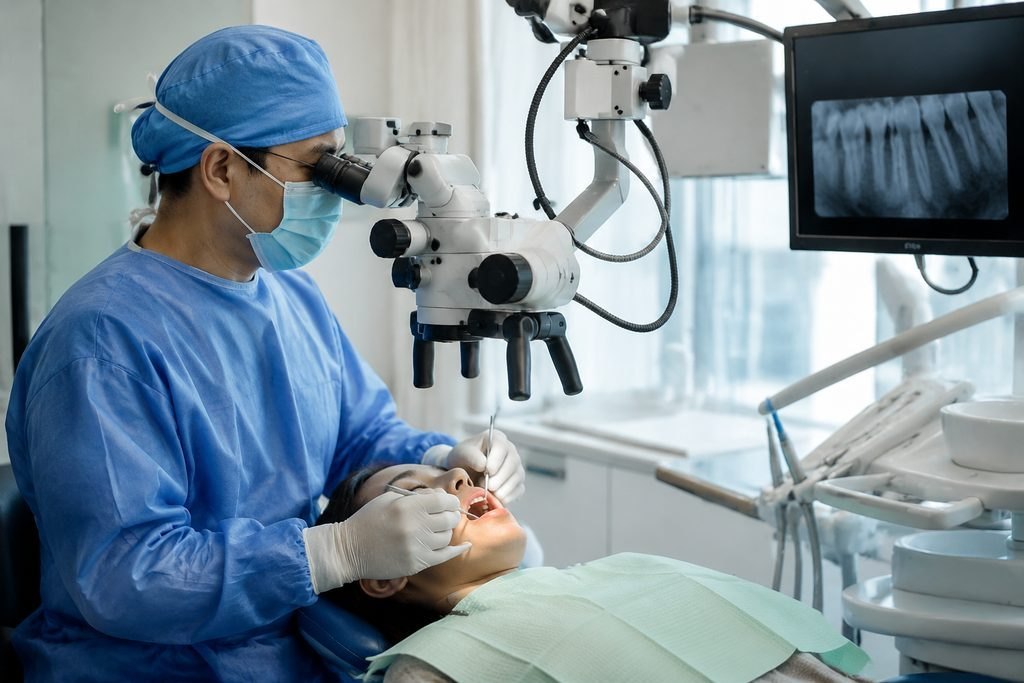
The assessment typically involves a clinical examination and imaging. The dentist looks at the tooth, the gums and the surrounding structures. Imaging helps show the root canal system and the bone around the root. The dentist may also test the tooth's response to temperature or pressure. These findings inform whether root canal treatment is needed, whether retreatment is needed, or whether another option should be considered.
The assessment also clarifies the practical plan. How many appointments are proposed? What happens at each one? Is the final restoration separate? What should the patient do between appointments? These are not administrative details; they affect how the patient plans time, travel and follow-up.
If you are considering care in China, ask the treating dentist or hospital what the assessment includes and what it does not. The hospital decides suitability. An initial enquiry does not require buying a proxy consultation, and a records-based opinion does not establish final treatment eligibility or hospital acceptance.
Questions That Clarify the Scope Before You Commit
The most useful questions are specific. They ask the dentist to describe the proposed plan in plain terms and to identify what remains uncertain.
Ask whether the plan is first treatment or retreatment. Ask how many appointments are proposed and what happens at each. Ask whether the final restoration is separate and, if so, when it would be placed. Ask what imaging is needed and whether it can be done at the visit. Ask what the written estimate includes and what it does not.
If the dentist proposes a crown, ask why. A crown may be recommended for some teeth after root canal treatment, but the decision depends on the tooth and the remaining structure. The treating dentist should explain the reasoning for your situation.
If you have symptoms now, such as pain, swelling or fever, seek local care promptly. Do not delay assessment because you are planning an overseas visit. Urgent or worsening symptoms take priority over travel planning.
- Is this first treatment or retreatment?
- How many appointments are proposed, and what happens at each?
- Is the final restoration separate, and when would it be placed?
- What imaging is needed, and can it be done at the visit?
- What does the written estimate include and exclude?
Records, Imaging and What to Send Ahead
For an initial enquiry, a brief summary is enough. You do not need to send a complete dental archive before first contact. After the team responds, you can share relevant records.
Useful records include recent dental X-rays or other imaging, treatment notes from previous visits, and a short description of your main concern. If you have a crown or bridge on the tooth, mention it. If you have had previous root canal treatment, say when and where, if you know.
Do not send passport numbers, card details or a complete medical archive in the first message. The initial enquiry is for a brief summary and the main question. The team can then explain what to share next.
If you do not have imaging, ask whether it can be taken at the visit. Do not assume that you must obtain specific scans before travelling. The receiving dentist will say what is needed for the assessment.
Planning the Visit and the Next Step
Once the dentist has reviewed your records and answered your questions, you can decide whether to proceed. The plan should be clear about the number of appointments, the sequence of treatment, and whether the final restoration is separate. If any of these points are unclear, ask for clarification before committing.
For care in China, the hospital or clinic decides whether it can accept your case and what the treatment plan will be. ChinaSpecialistCare can help with non-clinical coordination, such as matching you with a suitable hospital or clinic and helping with appointment requests. Hospital consultation fees, treatment fees and any restoration costs are paid to the hospital or provider. Coordination fees are separate.
A brief next step: send a short summary of your situation and your main question through the enquiry form, email or WhatsApp. The team will review it and suggest the relevant next step. An initial enquiry is free and does not commit you to treatment.
No outcome is guaranteed. The treating dentist will confirm what is appropriate for your tooth after the assessment.
Sources & scope of this guide
References and official service information relevant to this guide.
This is general planning information and has not been individually reviewed by a doctor. Medical decisions and personal treatment advice come from your treating clinicians.