
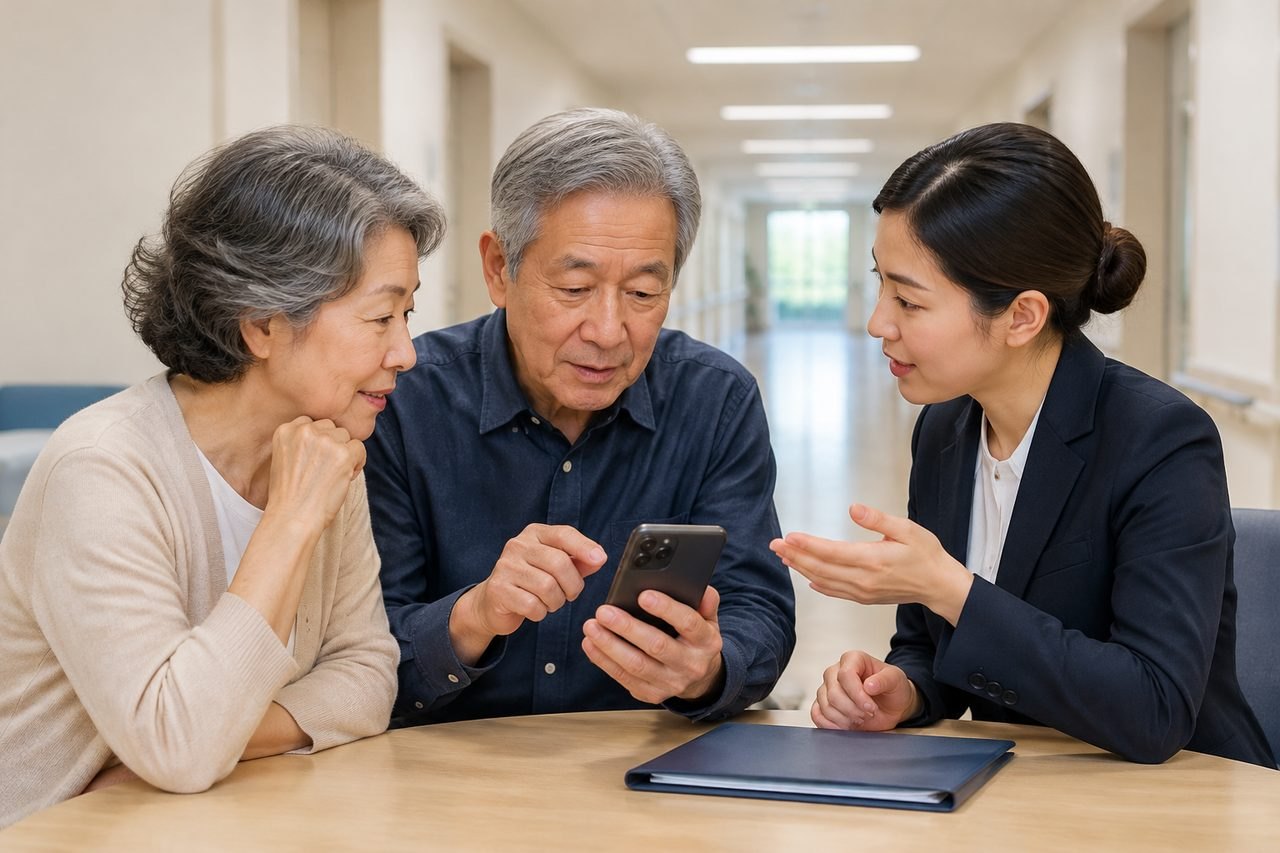
What WeChat translation actually does
WeChat is a messaging and payments app used widely in China, and its translation feature works on text inside chats and on some other in-app content. You long-press a message and choose translate, and the app returns a machine translation, usually into the language set on your phone. The same kind of translation appears in some menus and official accounts. It is convenient because it sits inside the tool you are already using to talk to a hospital coordinator, a hotel or a driver.
What it is not: a certified interpreter, a medical record translator or a legal translation service. The output is generated automatically, and the app does not know your diagnosis, your allergies or the difference between two similar drug names. It also does not preserve formatting well, so a lab report pasted into a chat can come back as a jumble of numbers and units.
Expect short, plain sentences to translate more reliably than long ones. Expect idioms, hospital abbreviations and traditional Chinese medicine terminology to come back oddly or not at all. Expect the translation to change if you re-send the same message, because the underlying model is not fixed. None of this makes the feature useless; it makes it a first-pass tool whose output you should verify whenever a decision depends on it.
Where machine translation helps during a hospital visit
WeChat translation is genuinely useful for the low-stakes, high-frequency communication that surrounds clinical care. A registration desk sends a floor number. A nurse sends a time to come to a window. A pharmacy sends a pickup message. A driver sends a gate name. These are short, factual and easy to check against the situation in front of you.
It also helps before you travel. You can read a hospital's official account posts about opening hours, department locations or document requirements, even if the English is imperfect. You can confirm a hotel address or ask a coordinator whether a particular entrance is open. In these cases a mistranslation costs you a phone call, not a clinical decision.
There is a practical limit worth knowing. Translation inside a chat does not automatically translate a photo of a printed report, a handwritten prescription or a scanned discharge summary. You may need to type the key text, use your phone's camera translation on the document itself, or ask the sender for a typed version. If a document matters, ask for a human translation rather than relying on a screenshot.
Why medical conversations need a human interpreter
Clinical communication carries risks that ordinary chat does not. A clinician explaining a diagnosis is choosing words carefully: whether a finding is suspicious or confirmed, whether a treatment is curative or supportive, whether a risk is common or serious. Machine translation can flatten those distinctions. A negated sentence can lose its negation. A dose can lose its unit. A question about allergies can come back as a statement.
Consent is the clearest example. Before a procedure, the treating team must explain the proposed intervention, its alternatives, the material risks and what happens if you decline. You must be able to ask questions and have them answered in a way you understand. A machine translation of a consent form is not a substitute for that discussion, and signing a document you have not understood is a poor position to be in.
Medicine instructions are another. How often, how much, with or without food, what to do if a dose is missed, which side effects should prompt a call: these details matter, and they are exactly the kind of short instruction that machine translation handles inconsistently. Ask for written instructions in English where the hospital can provide them, and have a human confirm anything you will act on at home.
This is not a criticism of the technology. It is a statement about the standard of understanding that clinical decisions require. The treating clinician remains responsible for confirming that you have understood, and you remain responsible for saying when you have not.
Preparing your own text so translation works better
You can improve the odds by writing for translation rather than for fluency. Short sentences. One idea per sentence. Plain nouns. No idioms, no sarcasm, no abbreviations you have not defined. If you are describing symptoms, give the body part, the sensation, when it started and what makes it better or worse, each in its own sentence.
Keep a small bilingual file on your phone: your name as written in your passport, your date of birth, your diagnosis in both languages, your current medicines with generic names and doses, and your allergies. Ask your own clinician or pharmacist at home to write the medicine list in plain terms before you travel. When you send this to a coordinator, send it as text as well as a photo, so the text can be translated and the photo can be read by a person.
Be careful with numbers. Write dates as day, month, year in words if there is any chance of confusion. Write doses with units spelled out. If you are sending a lab result, include the reference range and the unit exactly as printed, and say which language the original is in.
Finally, say what you need. "Please reply in simple English" is a useful sentence. "Please confirm this in writing" is another. A coordinator or clinician who knows you are relying on translation can adjust how they write.
Questions to ask the hospital about language support
Language arrangements vary by hospital, department and even by which clinician is on duty. Rather than assume, ask directly and early. The answers tell you whether WeChat translation is a backup or your main channel.
Ask whether the department you are attending can provide an English-speaking clinician or a staff interpreter for the appointment, and whether that needs to be requested in advance. Ask whether written materials such as consent forms, discharge instructions and prescription labels can be provided in English. Ask who you should contact if you do not understand something during the visit, and whether that person is available outside office hours.
Ask how the hospital prefers to receive records: as text, as scanned PDFs, or through a patient portal. Ask whether a family member or a professional interpreter may join the consultation, and whether there are limits on who can be present. Ask whether the hospital works with any interpretation service and how that is arranged and charged. These are administrative questions, and the hospital is the right source for the answers.
If you use a paid companion or interpretation service, clarify in writing what is included: hours, location, whether the interpreter attends the consultation itself or waits outside, and how urgent changes are handled. A bilingual companion is a coordination service, not clinical care, and does not replace the treating team's own responsibility to explain.
A realistic plan for using WeChat around your care
Use WeChat translation for logistics and for first-pass reading, and treat anything clinical as unconfirmed until a person has checked it. That single rule resolves most of the confusion overseas patients describe.
Before the appointment, send your key records as text and ask the coordinator to confirm what has been received and what is still missing. During the appointment, put your most important question first and ask for the answer in writing. After the appointment, ask for the discharge or follow-up instructions in English, and read them back to the clinician in your own words so any misunderstanding surfaces while you are still there.
Keep a record of what was translated by machine and what was confirmed by a person. If a decision later depends on a message, you will want to know which kind it was. If you become unwell or your symptoms worsen, seek local clinical assessment rather than waiting for a translated reply.
ChinaSpecialistCare's team can review a short summary of your situation, identify missing information and suggest a relevant next step; this is a non-clinical initial enquiry and does not replace the hospital's own assessment. You can start with a brief message through the enquiry form, and share fuller records once contact is established. Hospital suitability, language arrangements and any treatment plan are decided by the treating hospital and its clinicians.
Sources & scope of this guide
References and official service information relevant to this guide.
This is general planning information and has not been individually reviewed by a doctor. Medical decisions and personal treatment advice come from your treating clinicians.