
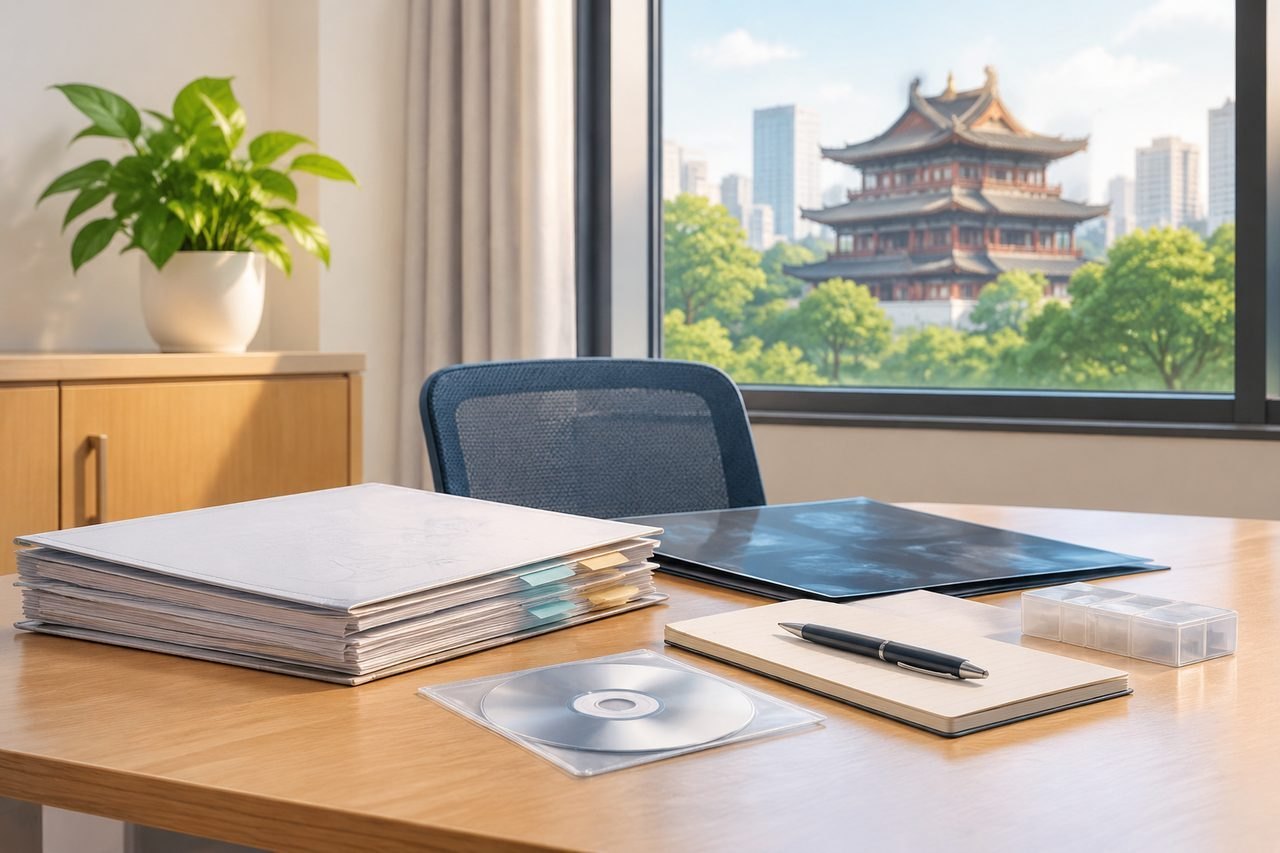
Start with a one-page summary, not your whole file
A specialist in China may see many patients in a session, and the first minutes shape the rest of the conversation. A single page in English, with a Chinese translation if you can arrange one, helps the clinician understand why you are there before opening a folder of scans. Write your main symptom or diagnosis, when it began, what has changed recently, what treatment you have already had, and the one decision you hope to leave with.
Keep the summary factual. Avoid long narrative about travel or previous dissatisfaction unless it changes the clinical picture. If your concern is a named condition, state the diagnosis as given to you and by whom, and note whether it was confirmed by biopsy, imaging or clinical assessment. If you are unsure, say so rather than presenting a guess as a diagnosis.
The summary is also a test of your own preparation. If you cannot state the main question in one sentence, the consultation may drift. Decide beforehand whether you want a diagnostic opinion, a treatment recommendation, a second opinion on a plan already offered, or help deciding between options. These are different requests and may need different records.
Bring several printed copies. One goes to the clinician, one stays with your interpreter or companion, and one remains with you for notes. A digital copy on a phone is useful as backup but should not replace paper for a busy clinic.
Original records and images matter more than translated summaries
Hospitals generally place more weight on primary records than on a patient-written summary. Bring original or high-quality copies of discharge summaries, operation notes, pathology reports, laboratory results and clinic letters. If a report exists only in your home language, bring it as issued and add a translation where possible. A translation helps communication but does not replace the original document.
Imaging needs particular care. For CT, MRI, ultrasound and similar studies, bring the actual image files on disc or another medium the hospital can read, together with the written report. A report alone describes what one radiologist saw; the treating clinician may want to review the images directly. Ask the hospital in advance which formats and media it can accept, because this varies by department and equipment.
Pathology material is a separate question. If your diagnosis depends on a tissue sample, ask whether the receiving hospital wants the original slides or blocks sent, or whether it will accept a review of existing reports. Sending pathological material across borders can involve export rules and courier requirements in your own country, so confirm the process with both the sending laboratory and the receiving hospital rather than assuming it is routine.
Label everything. Put your name, date of birth and the date of each document on the folder or a cover sheet. A clinician who cannot match a scan to a patient may set it aside.
Your medicine list and allergy history
Bring a complete list of everything you take, including prescribed medicines, over-the-counter products, supplements and herbal preparations. For each item, give the generic name where you know it, the dose, how often you take it and the reason. Brand names differ between countries, so a generic name is more useful to a clinician who may not recognise your local product.
Include medicines that are easy to forget: eye drops, inhalers, creams, injections, and anything taken only occasionally. Note any medicine you have stopped recently and why. If you have had a reaction to a medicine, food, contrast dye or anaesthetic, describe what happened rather than only naming the substance.
Bring your medicines in their original packaging if you can, or clear photographs of the labels. This helps confirm the exact product and dose. Do not change or stop any medicine in preparation for the consultation unless your own prescribing clinician has told you to; the consultation is for assessment, and any change should be a decision made with a clinician who knows your history.
Ask the treating team whether they want your list in a particular format or language. Some hospitals provide their own medication history form, and completing it in advance can save time.
Identification, appointment details and payment questions
Bring your passport and any appointment confirmation the hospital has issued. Registration procedures for international patients differ between hospitals, so ask what identification and registration documents the specific hospital requires before you travel. Do not assume that a confirmation message alone is enough at the desk.
Payment arrangements also need confirming with the hospital, not with a coordinator. Ask the hospital what it requires at registration and how it handles payment for the consultation, tests and any treatment. Our coordination fees are separate from hospital charges, and the hospital's own written information is the reliable source for what it collects and when.
If you hold travel or medical insurance that might cover part of the care, bring your policy details and any pre-authorisation documents. Whether a Chinese hospital can bill an overseas insurer directly, or whether you must pay and claim later, is a question for the hospital and your insurer. Do not assume direct billing is available.
Keep a small folder for receipts and paperwork issued during the visit. You may need them for insurance claims or for a follow-up appointment.
Questions to ask, and what to agree before any procedure
Write your questions down before the visit and order them by importance. A useful first question is what the clinician thinks is happening and on what evidence. Then ask what options exist, including the option of waiting or continuing current treatment, and what the clinician would recommend for someone in your situation. Ask what the expected benefits and risks are, and what is uncertain.
If a procedure is proposed, ask who will perform it, what the plan involves, what alternatives exist and what recovery and follow-up would require. Ask what the clinician needs from you before a decision, such as further tests or a review of pathology. These are legitimate questions, and a clinician should be able to discuss the reasoning behind a recommendation.
Consent deserves time. If sedation or anaesthesia is planned, ask for the important discussions to happen before sedation, when you can think clearly and ask questions. Ask what you will be told afterwards and who will speak with your family or companion. Clarify any language support arrangements in advance, because a consultation conducted through an interpreter needs more time, not less.
Record the outcome in writing before you leave: the working diagnosis, the plan, any tests ordered, any medicine changes the clinician has authorised, and the next appointment. If something remains unclear, ask for it to be written down.
What not to bring, and what to confirm with the hospital
Do not bring your entire medical archive to a first consultation unless the hospital has asked for it. A focused set of records relevant to the question is easier to use and reduces the risk that the important document is buried. Keep the rest available digitally in case the clinician asks for more.
Do not send passport numbers, card details or a complete medical history in an initial enquiry. A short summary of the diagnosis, the main question and the records you hold is enough to start. The hospital, not a coordinator, decides whether an appointment or treatment is suitable, and a records review does not establish acceptance or eligibility for any procedure.
Confirm practical details with the named hospital: which entrance and department to attend, whether an interpreter is available, whether a companion can accompany you into the consultation, and what the hospital's own requirements are for records and identification. These arrangements vary, and asking in advance is more reliable than assuming.
If your symptoms worsen or become urgent before the appointment, seek local medical care rather than waiting for the trip. A planned consultation in China is not a substitute for timely assessment where you are.
A practical next step
If you would like help preparing for a specialist appointment in China, you can send a brief summary through the enquiry form, email or WhatsApp. Our team checks the available diagnosis, the records you hold and your main question, and suggests a relevant next step. This initial review is free and is not a diagnosis or a promise of acceptance. You can also read more about planning medical care in China before deciding whether to proceed.
Sources & scope of this guide
References and official service information relevant to this guide.
This is general planning information and has not been individually reviewed by a doctor. Medical decisions and personal treatment advice come from your treating clinicians.