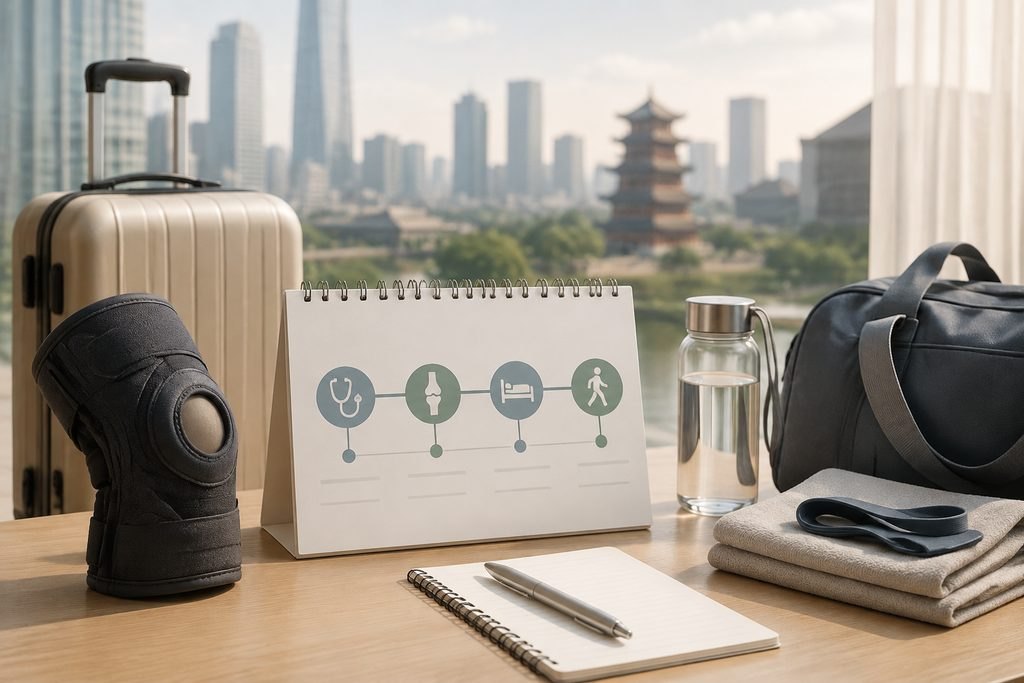
Why the visit count is not fixed
ACL reconstruction is not a single appointment. It is a treatment pathway that usually starts with a clinical assessment, includes the operation, and continues with rehabilitation and follow-up. The number of times you need to be seen in China depends on decisions that only the treating orthopedic team can make after reviewing your knee.
The American Academy of Orthopaedic Surgeons notes that treatment for an ACL injury depends on instability, activity goals and any associated injuries, and that reconstruction uses a graft. That means two patients with the same MRI report can still need different visit plans. A partial tear managed without surgery, a revision reconstruction, or a knee with meniscus or cartilage damage may all follow different schedules.
For international patients, the practical question is usually not 'how many visits exactly' but 'how many trips to China, and which steps can be done remotely or locally.' That is a planning question, and it is reasonable to ask the hospital to outline it before you commit to travel.
- Assessment visit: history, examination, imaging review and a discussion of surgical versus non-surgical options.
- Pre-operative preparation: any tests, anesthesia review or paperwork the hospital requires before surgery.
- Surgery and immediate post-operative care: the operation and the first part of recovery in hospital.
- Follow-up review: wound check, knee assessment and rehabilitation planning.
- Later reviews: often arranged locally or by video where the treating team agrees.
What the treating team must confirm before you book travel
No article can tell you how many visits your knee will need. The hospital decides suitability, the surgical plan and the follow-up schedule. Before you book flights, ask the clinical team to confirm the points below in writing. These are questions, not assumptions about what any hospital provides.
Ask whether the initial assessment and the surgery can be combined in one trip, or whether the surgeon wants to see you first and operate on a later date. Ask how many post-operative reviews are expected in China, and which of those could be done by your local doctor or by video. Ask what imaging, blood tests or anesthesia checks are needed, and whether recent tests from your home country will be accepted or repeated.
Also ask who will provide rehabilitation instructions after discharge, and how those instructions will be shared with a physiotherapist at home. Rehabilitation and return to activity need individual assessment, so the plan should be specific to you rather than a generic sheet.
- Can assessment and surgery be scheduled in one trip, or are two trips expected?
- How many in-person follow-up visits does the surgeon normally require?
- Which follow-ups could be done locally or remotely?
- What tests or imaging must be valid on the day of surgery?
- Who provides rehabilitation guidance after discharge, and in what language?
- What is the plan if a wound or knee problem appears after you return home?
Records and preparation that reduce avoidable visits
A well-prepared record set helps the hospital decide whether you are suitable for surgery and what the visit plan should look like. It does not mean the hospital has accepted your case, and it does not replace the surgeon's own examination. Send clear, translated summaries rather than a complete archive at first contact.
Useful records usually include your MRI report and images, X-rays if available, operation notes from any previous knee surgery, a list of current medicines and allergies, and a short note on your activity goals and instability symptoms. If you have had a previous ACL reconstruction, the previous graft type and tunnel position may matter to the revision plan.
Keep the initial enquiry brief. A short summary of the diagnosis and your main question is enough for the team to identify missing information and suggest the next step. Detailed records can be shared after first contact through the channel the team confirms.
- MRI report and images, plus any X-rays.
- Previous knee operation notes, if any.
- Current medicines, allergies and relevant medical conditions.
- A short description of instability, pain or giving-way episodes.
- Your activity goals and whether you hope to return to sport.
How coordination fits around the hospital's visit plan
ChinaSpecialistCare provides information and non-clinical coordination. We can help match your case to a suitable hospital or senior specialist team, request an appointment, and support admission preparation after the hospital accepts you. We do not decide how many visits you need, and we do not promise a named surgeon, hospital acceptance or a clinical outcome.
Hospital consultation fees, tests, surgery, medicines and rooms are paid to the hospital or relevant provider. Our coordination fees are separate. If you want a records-based opinion before travelling, a proxy consultation is optional and is not a prerequisite for every appointment or operation. An initial case review is free and is enough to start.
For visit planning, the most useful thing we can do is help you ask the right questions and keep the practical arrangements clear: appointment timing, interpretation, hospital navigation and what to prepare for each stage. The clinical decisions remain with the treating team.
- Free initial case review to check records and the main question.
- Specialist matching and appointment coordination if you decide to proceed.
- Hospital, treatment and surgery coordination after hospital acceptance.
- Companion and interpretation support can be arranged separately.
A practical way to decide your travel plan
Start by asking the hospital for a written outline of the expected visits: assessment, surgery, inpatient stay and follow-up. Treat that outline as the hospital's plan, not as a fixed promise, because the surgeon may change it after examining your knee or reviewing the MRI.
Then compare that outline with your own constraints: how long you can stay in China, whether a companion can travel with you, how follow-up would work at home, and what your insurance or employer requires. If the hospital expects more in-person reviews than you can attend, ask whether some can be replaced by local review or video, and who would take responsibility for those arrangements.
Do not delay urgent care. If you have a locked knee, a suspected new injury, signs of infection, or worsening pain and swelling, seek local medical assessment before planning overseas travel. A remote record review does not establish final eligibility or hospital acceptance.
- Ask for the visit outline in writing before booking flights.
- Confirm which reviews must be in China and which can be local.
- Check how rehabilitation instructions will reach your home physiotherapist.
- Keep a copy of your imaging and operation notes with you.
Sources & scope of this guide
References and official service information relevant to this guide.
This is general planning information and has not been individually reviewed by a doctor. Medical decisions and personal treatment advice come from your treating clinicians.