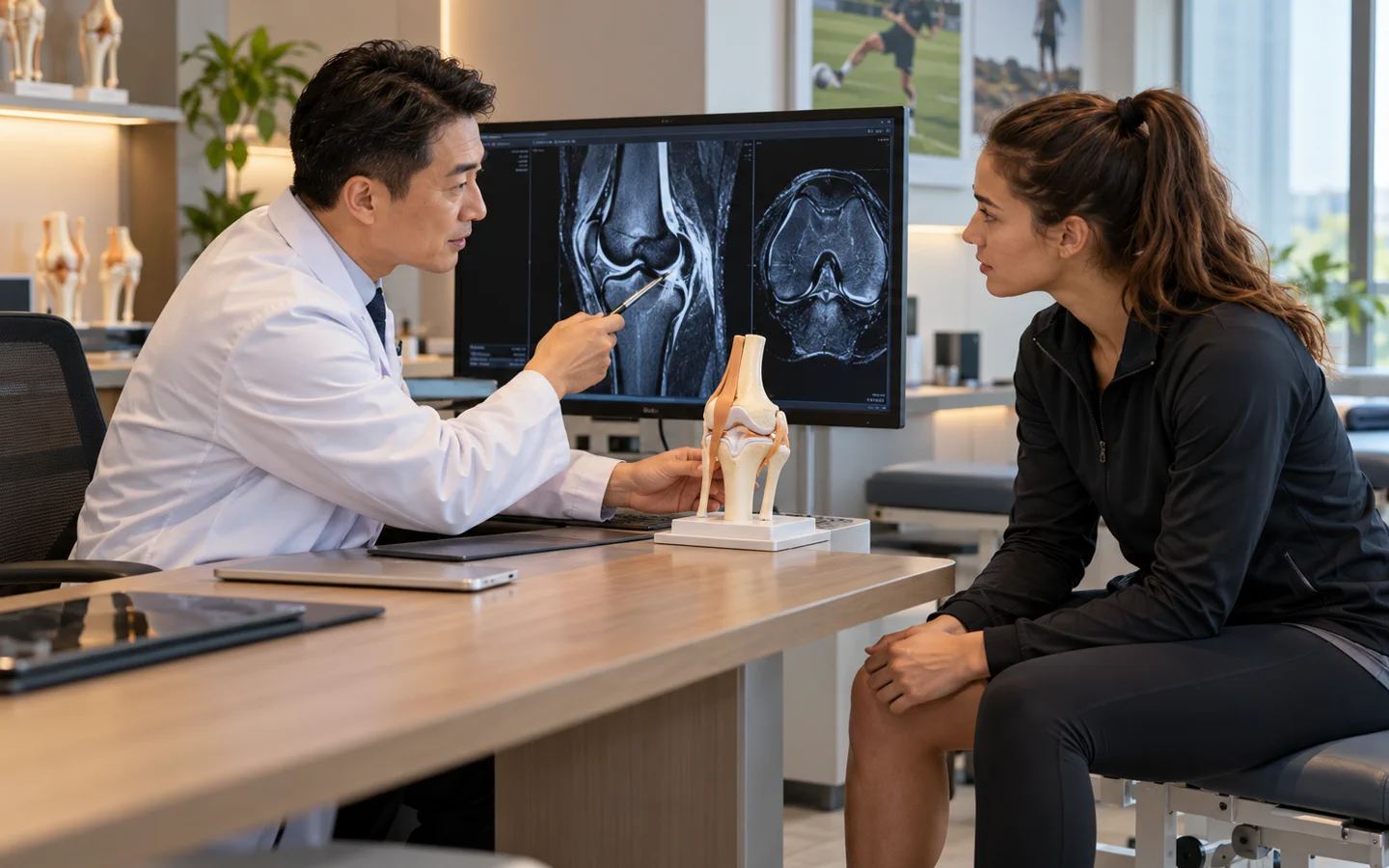
What ACL reconstruction is meant to restore
The anterior cruciate ligament helps control forward translation and rotation of the knee. A complete tear may cause giving way during cutting, pivoting or uneven-ground activity. Reconstruction replaces the torn ligament with a tendon graft; it does not stitch the old ACL back together in the usual operation.
Not every ACL tear needs surgery. Some people regain stable function through structured rehabilitation and activity modification. Reconstruction is more often discussed for recurrent instability, return to pivoting sport, combined ligament injury or repairable meniscus damage that needs a stable knee.
Symptoms, examination, desired activity, growth status, meniscus and cartilage health, and the response to rehabilitation all influence whether and when surgery is useful.
Who may be considered?
Reconstruction may be considered for patients who have:.
- Repeated giving-way episodes despite appropriate rehabilitation.
- A goal to return to cutting or pivoting sport or physically demanding work.
- A repairable meniscus tear or other injury whose treatment depends on stability.
- Combined knee-ligament injury or clinically important rotational instability.
- A clear plan and ability to complete many months of rehabilitation.
What the hospital needs to assess
Examination tests anterior and rotational stability and compares both knees. MRI reviews the ACL, menisci, cartilage, collateral ligaments and bone bruising; weight-bearing X-rays identify alignment or arthritis. The knee should generally regain motion—especially full extension—and swelling control before planned reconstruction unless another urgent injury changes timing.
Key points for this treatment
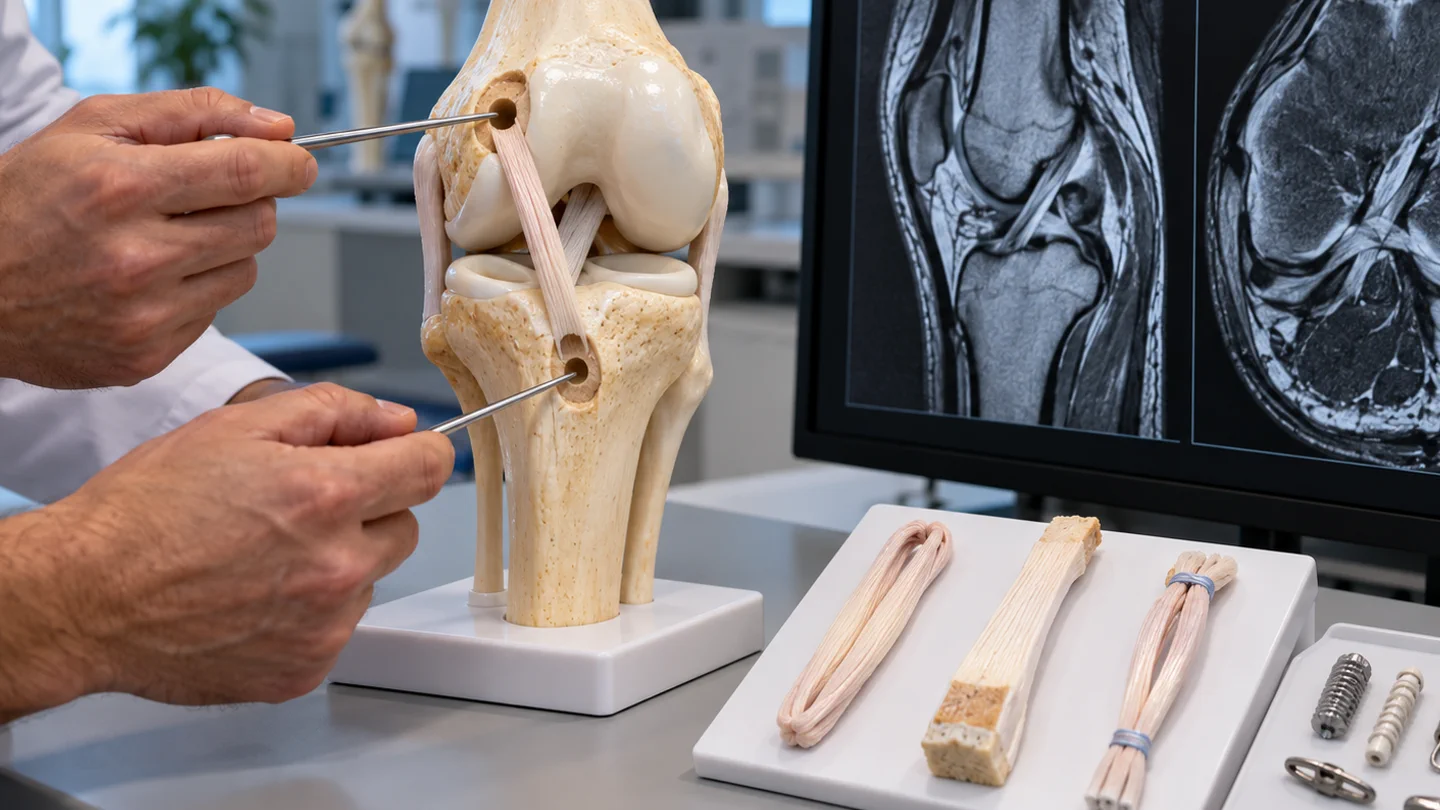
How the ACL is reconstructed
Arthroscopy confirms the injuries and treats selected meniscus or cartilage problems. The surgeon creates bone tunnels at the ACL attachments, passes a tendon graft and secures it while setting appropriate tension. Common autografts include patellar, hamstring and quadriceps tendon; allograft may be considered in selected patients.
Graft choice involves trade-offs in donor-site symptoms, graft size, healing and re-injury risk. In a growing child, tunnel and technique choices must protect growth plates. Additional lateral procedures are used only in selected high-risk or revision cases.
Hospital stay and recovery
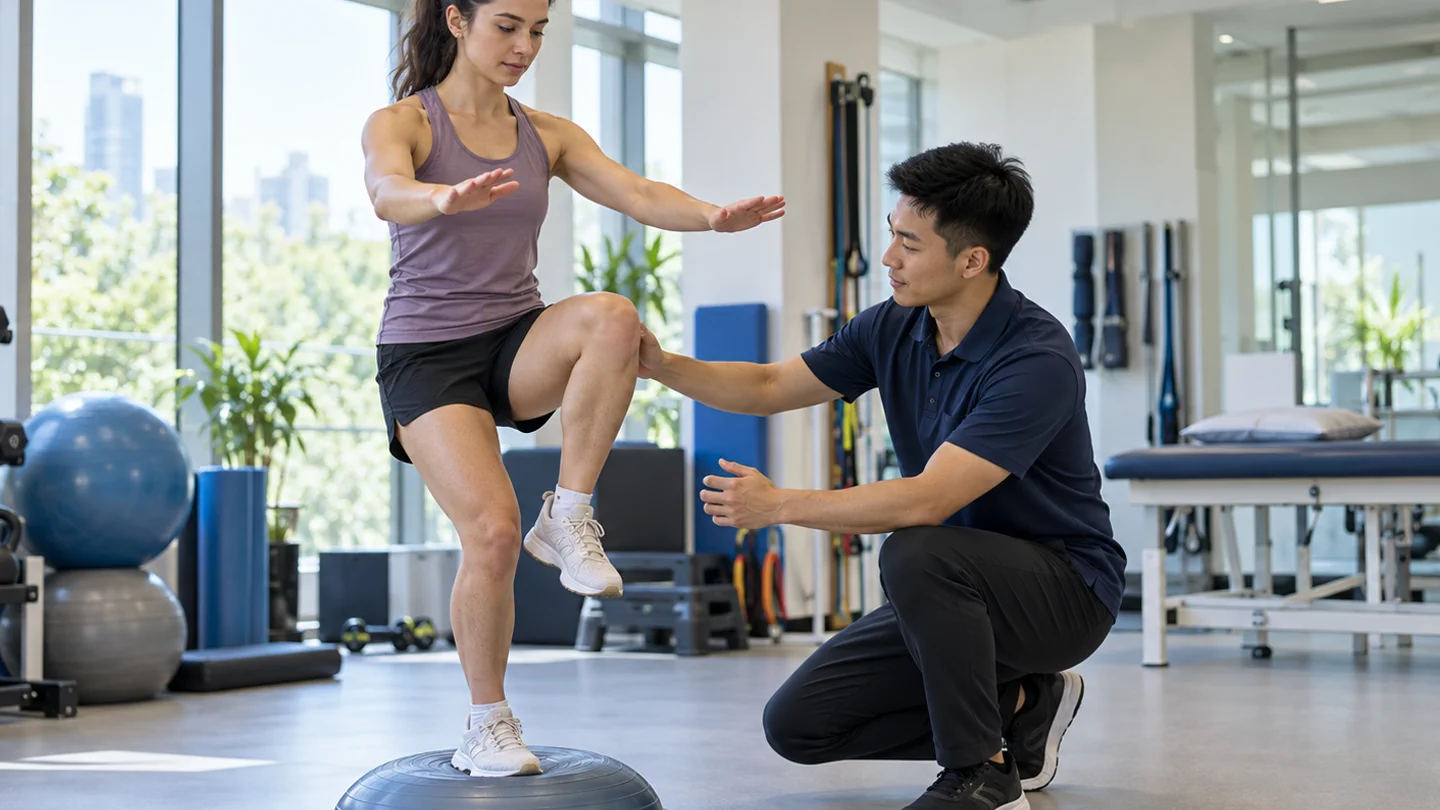
Early priorities are swelling control, full extension, quadriceps activation and safe walking. Weight-bearing and brace rules change when meniscus repair, cartilage work or another ligament procedure is added.
Running, agility and sport-specific training are introduced after milestones—not merely after a fixed number of months. Strength symmetry, hop control, movement quality, confidence and medical review all matter. The reconstructed knee remains at risk of graft or opposite-knee injury.
Risks and realistic expectations
Risks include infection, blood clots, stiffness or loss of extension, persistent instability, graft re-tear, donor-site pain or weakness, numbness, tunnel or fixation problems and progression of cartilage damage. Reconstruction lowers instability risk but does not eliminate later osteoarthritis.
A hot swollen knee with fever, wound drainage, calf swelling, chest pain, breathlessness, rapidly increasing pain or new foot weakness requires urgent assessment.