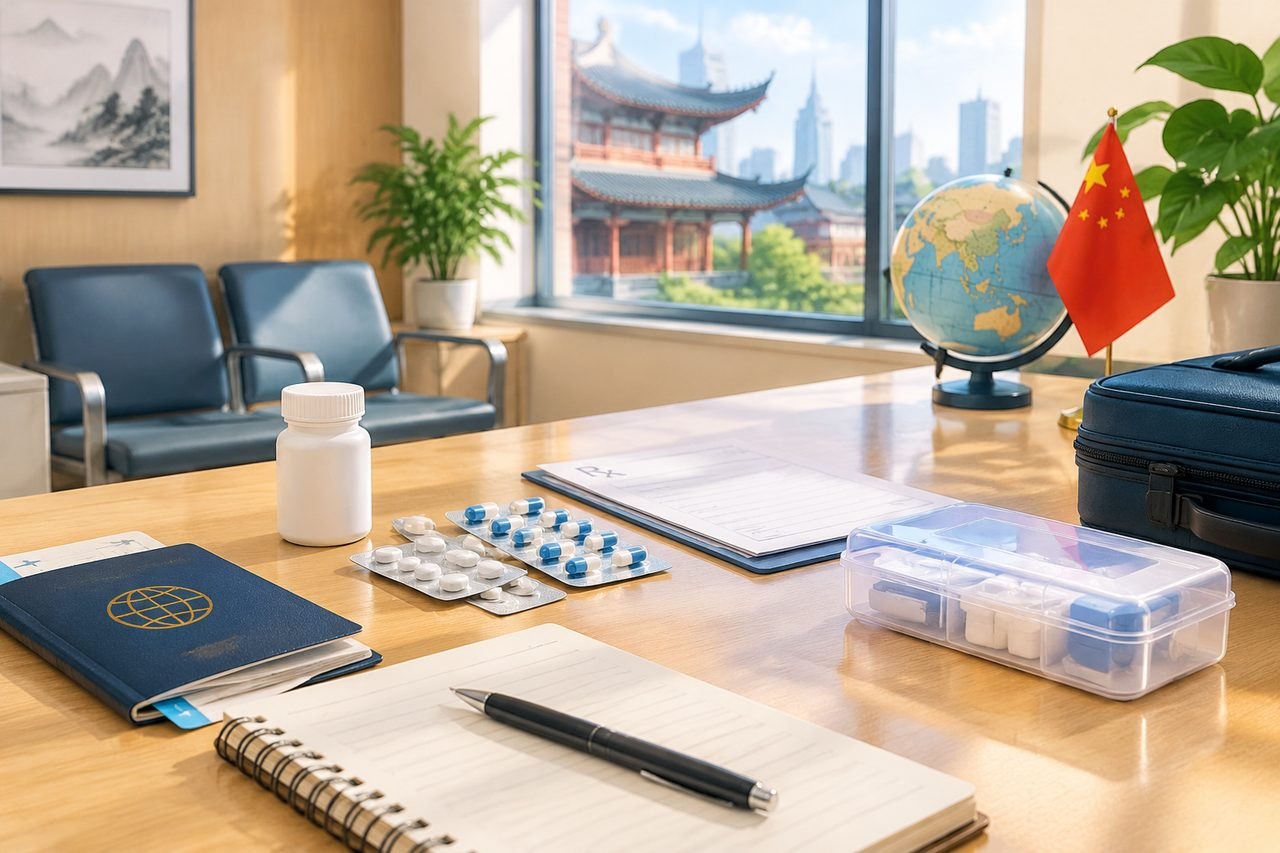
Why the exact ingredient matters more than the brand name
ADHD medicines are not one category. They differ in active ingredient, salt form, release mechanism and sometimes combination with another active substance. Two products that share a familiar brand family, or that a pharmacy treats as interchangeable at home, can sit in different regulatory categories in another country. Chinese customs guidance separates non-controlled medicines from narcotic and psychotropic substances, and the checks for controlled medicines involve diagnosis documentation, identity and the medication category. That is why the practical first step is not packing, but identifying precisely what you take.
A prescription that says only a brand name, a local abbreviation or a handwritten note is weak evidence for a border officer who is comparing your product against a current list. The ingredient name is the stable identifier. Ask your prescriber or pharmacist to write the international non-proprietary name, the salt form if relevant, the strength, the dose form and the total quantity, and to confirm whether the product contains any additional active substance. If your medicine is a combination product, list every active ingredient, not only the one you think of as the ADHD component.
This is also where assumptions about 'all ADHD medicines' break down. A rule, an allowance or a document requirement that applies to one ingredient does not automatically apply to another, and it does not automatically apply to a child's formulation or a different strength. Do not generalise from a friend's experience, a forum post or a previous trip with a different product. The question to answer is narrow: what exactly is in the medicine you will carry, and how is that exact product currently classified for entry into China?
What to put on your own medicine record before you ask anyone
Build a one-page record you can read aloud, email or show. It should state your full name as it appears in your passport, your date of birth, the diagnosis as written by your treating clinician, the exact active ingredient or ingredients, the salt form where applicable, the strength, the dose form, the dose schedule, the total quantity you intend to carry, and the name and contact details of the prescriber. Keep the original prescription and the pharmacy label with the medicine, and keep a copy separate from the medicine itself.
The record is not a permission and it does not guarantee clearance. Its purpose is to make the conversation specific. When you contact an authority or a receiving clinician, you can ask about a named ingredient and a named formulation rather than describing 'my ADHD tablets'. That reduces the chance of receiving an answer about a different product.
If any part of the record is unclear, resolve it before travel rather than at the border. A missing salt form, an ambiguous strength or a prescription that lists only a brand can all turn a simple question into an unresolved one. Ask the prescriber to correct the document rather than editing it yourself.
- Exact active ingredient or ingredients, including any second active substance in a combination product
- Salt form and release mechanism if your prescriber considers them relevant to identification
- Strength, dose form and the dose schedule you actually follow
- Total quantity you intend to carry, counted before you pack
- Prescriber name, contact details and the original prescription
- Your name and date of birth exactly as shown in your passport
The customs question to ask, and what not to assume
The supplied official guidance distinguishes non-controlled medicines from narcotic and psychotropic substances, and indicates that diagnosis documentation, identity and medication category affect the checks for controlled medicines. It does not provide a numeric allowance you can rely on, and it does not let you infer the current category of a named medicine from a different example. So the useful action is to ask the competent Chinese authority about your exact product, in writing where possible, and to keep the reply with your travel documents.
Frame the question around the facts you have established. State the active ingredient, the formulation, the strength, the total quantity, the purpose, the duration of your stay and the documents you hold. Ask whether that specific product is currently treated as an ordinary personal-use medicine or as a controlled substance, what documentation is required, whether the quantity you plan to carry is acceptable, and whether any prior approval or declaration step applies. Ask also what happens if the answer changes before you travel, since categories and requirements can be updated.
Do not treat a translated foreign prescription as automatic authority to bring in or obtain the medicine. Do not assume that a product available at home is available in China, that a local pharmacy can dispense it against your foreign prescription, or that a hospital will replace it. Those are separate questions for the relevant Chinese authority, the dispensing pharmacy and the treating clinician. Never conceal a medicine, relabel it, or split a quantity between travellers to avoid a check. If you cannot establish the position for your exact product, that uncertainty is itself a reason to seek qualified advice before booking around the medicine.
Where the treating clinician's role begins and ends
Your prescriber at home can confirm the ingredient, the formulation, the dose and the clinical reason for the medicine. That is clinical information you need. Your prescriber cannot decide Chinese customs classification, and should not be asked to guarantee entry. Keep those roles separate in your own planning, because mixing them leads to false confidence.
If you are planning care in China that may interact with your ADHD treatment, the receiving clinician needs the same exact-ingredient record plus your recent clinical notes, the reason for the current medicine, any previous medicines and the response, and any relevant monitoring results. Ask the receiving clinician what they need in order to assess your situation, and ask them directly whether any part of your current treatment should be reviewed before or during travel. Do not change a dose, stop a medicine or start a substitute in order to simplify border questions. If your symptoms are worsening or you become unwell, local urgent care takes priority over an overseas planning enquiry.
For a child or adolescent, the same ingredient-level record applies, but the questions about formulation, dose form and documentation should be asked specifically for that patient. Do not assume an adult's answer covers a child's product.
Practical preparation that does not depend on a guessed rule
Carry the medicine in its original labelled packaging with the pharmacy label intact, alongside the original prescription and your one-page record. Keep the quantity consistent with the documented dose and the length of your trip, and be ready to explain any difference. Keep a copy of the customs reply, if you receive one, with the documents rather than only on your phone.
Check the parts of the journey that the customs source does not cover. Airline carriage rules, transit-country rules, storage conditions and any manufacturer instructions for your specific product are separate questions for the airline, the relevant transit authority and the manufacturer or pharmacist. Do not infer them from the Chinese customs guidance, and do not assume that a route which worked previously will work on a different itinerary.
Plan a contingency that does not involve concealment. If the answer for your exact product is unclear, or if the quantity you need exceeds what is permitted, ask the authority and your prescriber what lawful options exist. Do not arrange for someone else to carry your medicine, and do not post it ahead without confirming the applicable rules. If you need help with appointment coordination, interpretation or practical arrangements in China, that is a non-clinical coordination question and can be discussed separately from customs classification; it does not include customs clearance, dispensing, importing or prescribing.
What to confirm before you book, and the next step
Before you commit to travel around this medicine, you should be able to state the exact active ingredient and formulation, hold a prescription that matches it, have a written answer or a clear unresolved question about the current Chinese category and documents, and know what you will do if the answer is not what you expected. If any of those is missing, the decision is not yet ready.
You can start with a short summary through the enquiry form, email or WhatsApp, describing the exact ingredient and what you are trying to arrange. An initial enquiry is free and does not require buying a proxy consultation. The team can explain what information is missing and suggest the relevant next step; it cannot decide customs classification, guarantee clearance or replace advice from the competent authority. Hospital suitability and any clinical decisions remain with the treating hospital and licensed clinicians.
Sources & scope of this guide
References and official service information relevant to this guide.
This is general planning information and has not been individually reviewed by a doctor. Medical decisions and personal treatment advice come from your treating clinicians.