
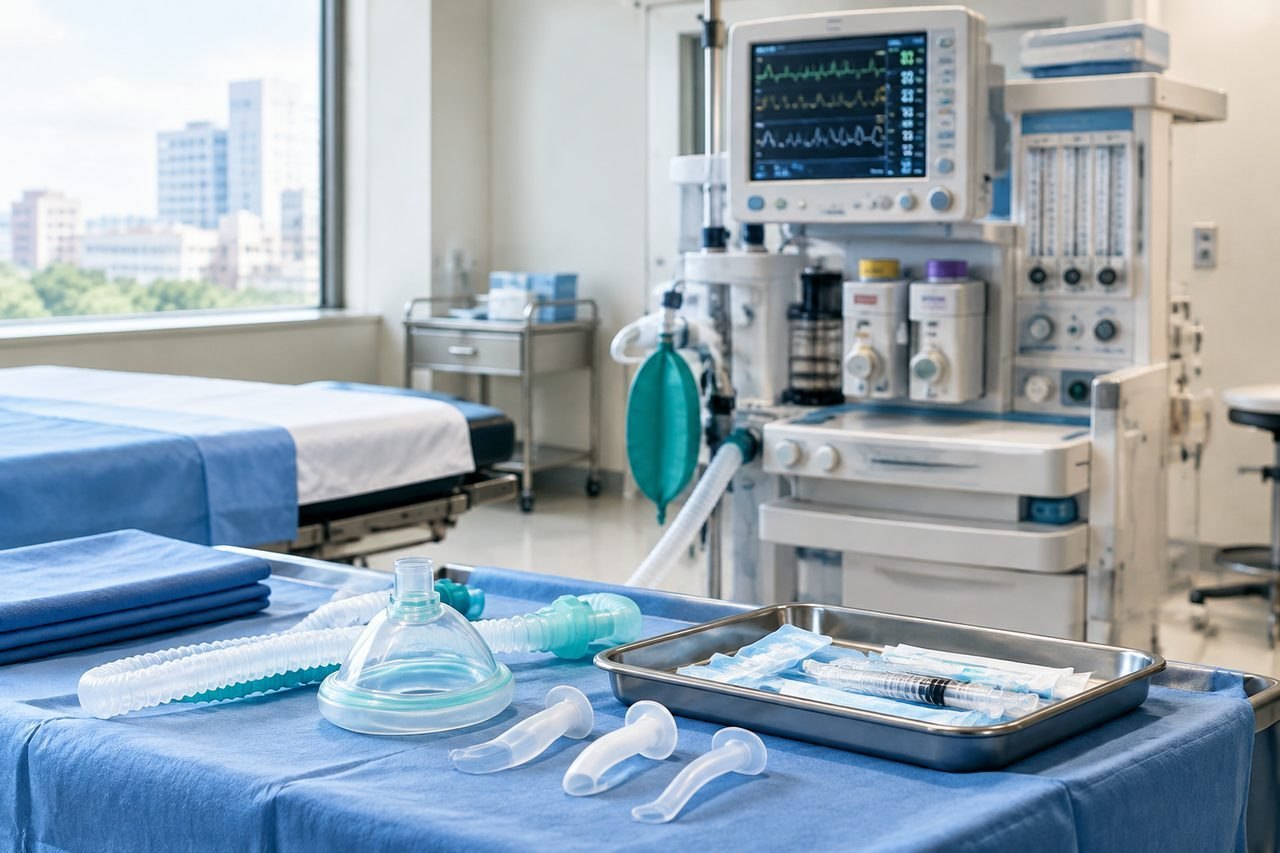
What the anesthesia department actually decides
Anesthesia is not a single product you can book. It is a clinical plan built around the operation, your health history, your airway and breathing, your heart and circulation, allergies, medicines and previous reactions to anesthesia. The anesthesia team decides which approach is appropriate, what monitoring is needed and how you will be cared for during and after the procedure. That judgement belongs to licensed clinicians at the hospital where the surgery takes place.
For an international patient, the practical gap is usually information, not the existence of an anesthesia service. A large tertiary hospital such as 301 Hospital (the First Medical Center of the Chinese PLA General Hospital in Beijing) has an anesthesia department supporting its surgical specialties. What you cannot assume from that is how your particular case will be handled, which anesthetist will be involved, whether English-language discussion is available on the day, or what the hospital's own pre-operative process requires from a foreign patient.
So treat 'anesthesiology at 301 Hospital' as a set of questions to put to the treating surgical team and the hospital's international or foreign-patient office. Ask who performs the pre-anesthetic assessment, when it happens relative to admission, and what happens if your records are incomplete. Those are administrative and clinical questions the hospital can answer for its own service; no outside coordinator can answer them on the hospital's behalf.
The records that make an anesthesia review possible
An anesthesia assessment is only as good as the history behind it. Before any discussion of suitability, gather the documents that describe your past anesthesia and your current health. You do not need to send a complete archive at first contact, but you should know what exists and be ready to share it when the hospital asks.
Useful items typically include: a list of current medicines with doses, including blood thinners, blood-pressure drugs, diabetes medicines and any supplements; known allergies and what reaction they caused; previous operations and how you tolerated anesthesia, including any difficult airway, nausea, shivering or delayed recovery; recent heart, lung, kidney and liver results if you have them; and any diagnosis that affects breathing or circulation, such as sleep apnea, asthma, heart failure or a clotting disorder.
Two cautions matter here. First, do not stop or change any medicine on your own before travel; that decision belongs to the prescribing clinician and the anesthesia team. Second, if your records are in another language, ask the hospital whether it needs certified translation or whether an interpreter can support the review. The hospital sets its own document rules, so confirm them rather than assuming a format will be accepted.
Language, consent and the conversation before sedation
Consent for anesthesia is a clinical conversation, not a signature on arrival. You should understand the proposed approach, the alternatives, the main risks that apply to you and what will happen if something unexpected occurs. If your Chinese is limited, the key question is how that conversation will be conducted and interpreted, and whether the person interpreting is clinically trained or a general interpreter.
Ask specifically: will an English-speaking anesthetist or a trained medical interpreter be present for the pre-anesthetic discussion; will consent documents be available in English or explained line by line; and who can you ask questions to after the assessment but before the operation. These are reasonable requests, but availability is hospital-specific and should be confirmed in writing where possible.
Plan important discussions before any sedation, when you are fully alert and able to ask questions. If a family member will be involved in decisions, clarify in advance what the hospital permits and how they will be contacted. Do not treat post-sedation instructions about escort, supervision or transport as logistics to sort out later; follow the treating team's safety instructions for your own protection.
Questions that belong to the treating anesthesia team
Some questions should go directly to the anesthesia team rather than to a coordinator or a general enquiry service. Write them down before your appointment so the discussion is efficient.
Ask which anesthetic approach is planned for your operation and why; what pre-operative tests the team requires and whether recent results from home are acceptable; how your specific conditions affect the plan; what monitoring and post-anesthesia care you should expect; and what the plan is for pain control afterwards. If you have had a previous anesthesia problem, describe it precisely and ask how it changes the approach.
Also ask who will actually provide anesthesia on the day and how the team hands over your information. For a foreign patient, it is fair to ask how the team will contact you if a question arises before admission. None of these questions obligate the hospital to accept your case or guarantee a particular technique; they simply establish what the team needs and how it works.
What a coordinator can and cannot do
A non-clinical coordination service can help with practical steps: gathering and organising records, requesting an appointment with the relevant surgical specialty, arranging interpretation during hospital visits, and helping you understand what the hospital has asked for. ChinaSpecialistCare's specialist matching and appointment coordination covers expert matching and appointment-registration requests, with hospital consultation fees paid separately to the hospital. A free initial case review checks the available diagnosis, records and your main question and identifies missing information; it is not a diagnosis or a promise of acceptance.
What coordination cannot do is decide your anesthesia plan, confirm that a particular technique will be used, or speak for 301 Hospital's anesthesia department. Those decisions rest with the treating clinicians after they review your case. If you want a records-based opinion before travelling, a proxy consultation is an optional route in which a doctor takes your records to a relevant specialist while you remain at home; it is not a prerequisite for an appointment or operation, and it does not replace the hospital's own pre-anesthetic assessment.
Be cautious with anyone who promises a named anesthetist, a guaranteed technique or a fixed clinical outcome. Those commitments are not ours to make, and a responsible hospital will assess your individual situation before committing to a plan.
Practical preparation and a sensible next step
Before you travel, assemble a concise summary: your main diagnosis and planned operation, current medicines and doses, allergies, previous anesthesia history and relevant recent test results. Keep originals and translations together. Ask the hospital's international office what it needs and in what form, and confirm how the pre-anesthetic assessment will be scheduled around your admission.
If you are comparing hospitals or deciding whether to travel at all, the honest answer is that anesthesia suitability and the final plan require the treating team's review of your records and, where needed, an in-person assessment. No article can substitute for that. Start with a short summary through the enquiry form, email or WhatsApp; the initial review is free and does not require buying a proxy consultation. From there, the relevant next step is usually a specialist appointment request or a records-based opinion, depending on what your case needs.
For surgery-specific context, the relevant procedure or specialty reference on this site can help you frame questions, but the anesthesia discussion itself belongs to the hospital team caring for you.
Sources & scope of this guide
References and official service information relevant to this guide.
This is general planning information and has not been individually reviewed by a doctor. Medical decisions and personal treatment advice come from your treating clinicians.