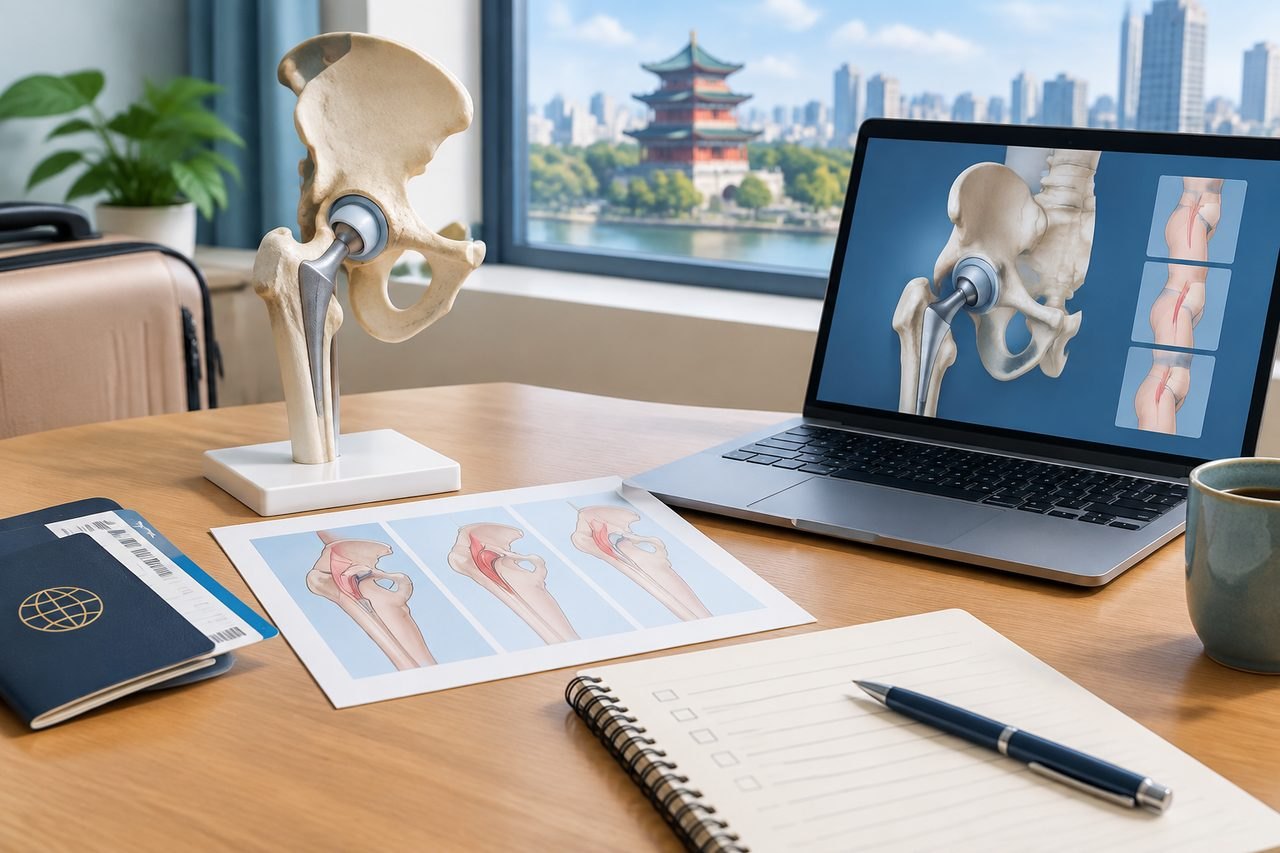
What the anterior approach actually changes
Total hip replacement removes the damaged joint surfaces and replaces them with a stem, a cup and a bearing. The operation can be performed through several surgical approaches, and the anterior approach is one of them. It reaches the hip from the front of the thigh rather than through the side or the buttock. That is a route to the joint, not a different joint replacement.
The distinction matters because patients often treat the approach as the whole decision. It is not. The approach and the implant are separate choices. A surgeon may favour the anterior route and still select a particular stem, cup, bearing material or fixation method based on your bone and your activity goals. Two patients having the same approach can receive quite different components.
The American Academy of Orthopaedic Surgeons notes that minimally invasive hip replacement, including the anterior approach, is one option among several and that not every patient is a candidate. Suitability depends on the individual. That is the honest starting point: the approach is a technique a surgeon chooses for a specific hip, not a product you order.
- Approach = how the surgeon reaches the joint.
- Implant = which components are fixed into the bone.
- Both are decided by the operating surgeon after assessment.
The information that actually clarifies suitability
A surgeon assessing you for an anterior approach wants to see your hip, not just read about your pain. The single most useful item is a recent standing anteroposterior pelvis radiograph, plus a lateral view of the affected hip. These show the shape of your acetabulum, the position of the femoral head, the quality of the bone and any deformity that would make the front route awkward.
If you have had previous hip or pelvic surgery, the old operation notes and any prior implants matter enormously. Scar tissue and altered anatomy from a previous procedure change what a surgeon can safely reach from the front. If you have had a hip fracture fixed with screws or a plate, the surgeon needs to know exactly where that metal sits.
Your general health is part of the same question. Body habitus affects how much soft tissue the surgeon must work through. Bone quality affects fixation. A history of infection in the joint, or of conditions that affect wound healing, changes the risk calculation. None of this is a reason to self-exclude; it is the raw material a surgeon uses to decide.
- Recent standing AP pelvis and lateral hip radiographs.
- Prior operative notes and implant details, if any.
- A clear list of your current medicines and allergies.
- Relevant history: previous joint infection, bleeding disorders, diabetes, smoking.
What cannot be settled from records alone
A records-based opinion can tell you whether the anterior approach is plausible for your hip and what the surgeon would want to examine. It cannot tell you with certainty that you are a candidate. That is because the final decision often depends on findings at the time of surgery: the actual soft-tissue quality, the true bone stock, the behaviour of the hip when the surgeon tests it under anaesthesia.
This is not a reason to distrust remote review. It is a reason to understand its scope. A specialist reviewing your radiographs and history can flag concerns, suggest additional imaging if the images are inadequate, and explain what the operation would involve. What they cannot do is promise that the approach will be used until they have assessed you in person and, in some cases, until they are in the operating room.
So the useful question is not 'am I definitely suitable?' but 'what does this surgeon need to see before they can tell me?' That reframing turns a vague anxiety into a list of documents and a clear next appointment.
Organising the gaps without ordering tests yourself
If your radiographs are old, or were taken lying down rather than standing, a surgeon may ask for new ones. If your bone quality is uncertain, they may request a CT scan. If infection is a concern, they may want blood markers or a joint aspiration. These are clinical decisions, and the right person to make them is the treating orthopaedic surgeon, not a patient searching online.
What you can do is gather what already exists and present it clearly. A short summary of your hip history, the date and type of any previous surgery, your current medications and your main functional complaint is more useful than a thick folder of unrelated records. If a document is missing, say so rather than guessing at its contents.
It also helps to separate questions you can answer from questions only the surgeon can answer. You can describe your pain, your walking distance and what you want to return to. You cannot determine your own bone stock or predict your wound healing. Keeping that boundary clear prevents a lot of wasted correspondence.
- Do not book imaging on your own initiative; ask the surgeon what they need.
- Bring the actual images, not just the written report.
- Note the date and place of every previous hip procedure.
- Write down your three most important functional goals.
Questions that change the next step
When you speak with a surgeon in China, the answers to a few specific questions will tell you whether to proceed. Ask whether the anterior approach is one they use regularly, and in what proportion of their hip replacements. Ask what would make them choose a different approach for your hip. Ask whether the implant choice is influenced by the approach, and whether they would use the same components either way.
Ask what they still need before they can give you a plan: further imaging, a medical review, dental clearance, or a cardiology opinion if you have heart disease. Ask who will be responsible for your follow-up and how the rehabilitation plan is set. Ask what the written surgical plan and quotation will include, and what is paid separately to the hospital.
These questions are not a test of the surgeon. They are how you find out whether the anterior approach is a genuine option for your case or simply a term you have read about. A surgeon who can explain their reasoning is more useful to you than one who promises a specific technique before seeing your hip.
- How often do you use the anterior approach?
- What would make you choose a different approach for me?
- What information do you still need before deciding?
- What will the written plan and quotation cover?
What the treating team must decide
The decision about surgical approach belongs to the operating surgeon, working with you. They will weigh your anatomy, your history, their own experience and the equipment available. They will also consider whether a different approach offers a safer or more predictable result for your specific hip. That is a clinical judgement, and it should be made by someone who has examined you and reviewed your imaging.
If you are considering care in China, the practical path is to have your records reviewed, ask the questions above, and let the surgeon tell you what they recommend and why. An initial enquiry through ChinaSpecialistCare is free and non-clinical; it helps identify what information is missing and which specialist to approach. It does not establish suitability, and it is not a substitute for the surgeon's assessment.
You do not need to buy a proxy consultation to start. A brief summary of your situation and your main question is enough for the first contact. From there, the team can explain what records to send and how to arrange a specialist appointment. The hospital and the surgeon decide whether the anterior approach is right for you.
Sources & scope of this guide
References and official service information relevant to this guide.
This is general planning information and has not been individually reviewed by a doctor. Medical decisions and personal treatment advice come from your treating clinicians.