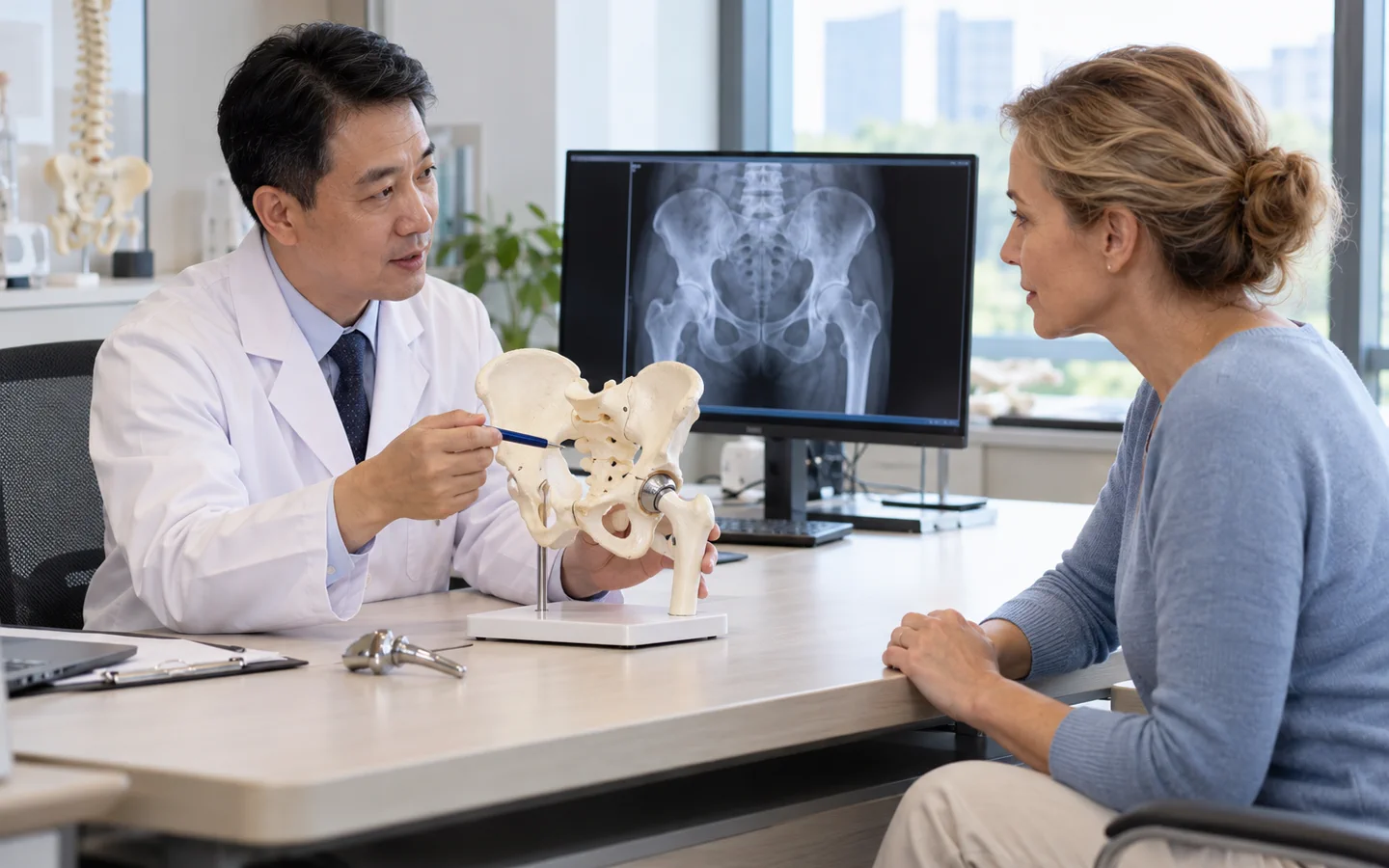
What does “anterior approach” mean?
The direct anterior approach is one route used to perform total hip replacement. The incision is made toward the front of the hip, and the surgeon works through an interval between muscles to reach the joint. The damaged ball and socket are still replaced with the same basic types of components used in other approaches.
Posterior and lateral approaches reach the joint through different soft-tissue planes. Each route has technical strengths, limitations and approach-specific risks. The most important question is not which label sounds newer, but which approach the surgeon can perform safely for the patient’s anatomy and reconstruction.
The approach may avoid cutting through some muscles, but soft tissues are still retracted and the operation remains major joint replacement. Recovery depends on the whole procedure and the patient—not the incision alone.
Who may be considered?
Many primary total hip replacements can be performed through an anterior route, but selection is individual. The surgeon considers body shape, muscle mass, hip deformity, previous scars or hardware, bone quality, fracture pattern, the need for complex reconstruction and their own experience with the approach.
When another approach may be preferred
Major deformity, revision surgery, extensive bone loss, some previous operations or the need for broader access may favour another route. An anterior approach should not be promised before the surgeon reviews the images and operative history.
What to ask about experience
Ask how often the surgeon uses the proposed approach for cases like yours, what could require a change of plan, how component position and leg length are checked, and which precautions apply afterwards. A short incision is not a substitute for sound reconstruction.
Key points for this treatment
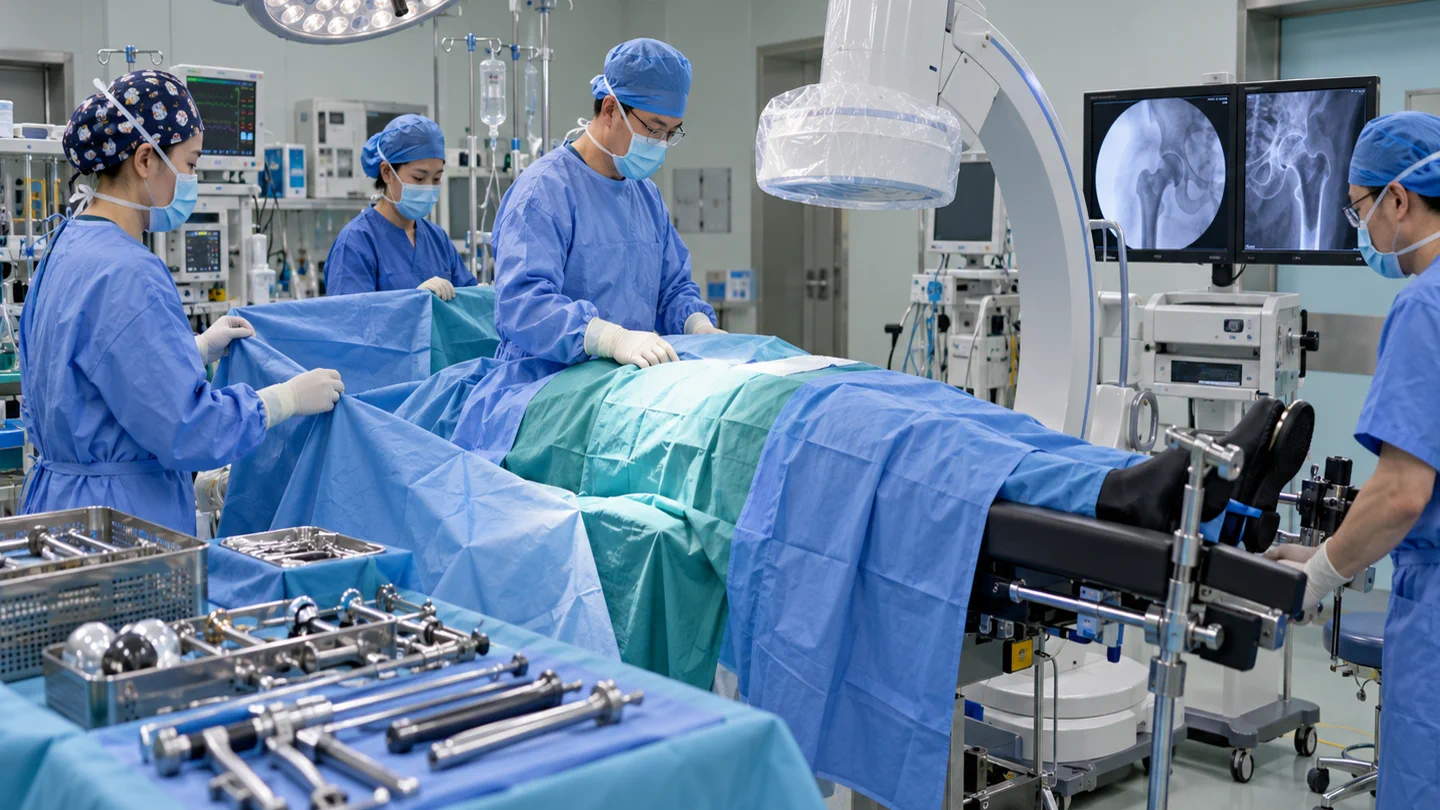
How the operation works
The patient is commonly positioned supine. After reaching the joint from the front, the surgeon removes the damaged femoral head, prepares the socket and femur, places trial components and checks stability, movement, component position and leg length. Fluoroscopy or navigation may be used, but neither is compulsory for a well-performed procedure.
The final ball, stem, cup and liner are secured with press-fit or cemented fixation as clinically appropriate. The wound is then closed, and recovery proceeds according to the implant, tissue condition and hospital pathway.
Does the approach guarantee faster recovery?
Some studies report earlier short-term milestones in selected patients, but differences often narrow with time and results depend heavily on patient selection and surgeon experience. AAOS guidance for older-adult hip fractures reports no difference in patient-reported outcomes among anterior, posterior and lateral approaches in that fracture population. Claims of guaranteed less pain, no precautions or same-day discharge should be treated cautiously.
Recovery and precautions
Mobilisation, wound care, clot prevention and strengthening follow the same broad principles as other total hip replacements. Some patients leave hospital quickly; others need more time because of health, balance, pain control or home support.

Risks and limitations
The general risks are those of total hip replacement: infection, blood clots, bleeding, fracture, dislocation, leg-length difference, nerve or blood-vessel injury, persistent pain, implant wear and loosening. The anterior route can also cause numbness or altered sensation near the front or side of the thigh and may be technically difficult in some anatomy.
Every approach can produce an excellent result or a complication. A balanced decision weighs diagnosis, reconstruction needs and team experience instead of selecting a hospital only because it advertises one route.
Chest pain, breathlessness, increasing calf swelling, fever, wound drainage, sudden severe hip pain or a fall with inability to bear weight requires urgent assessment.