
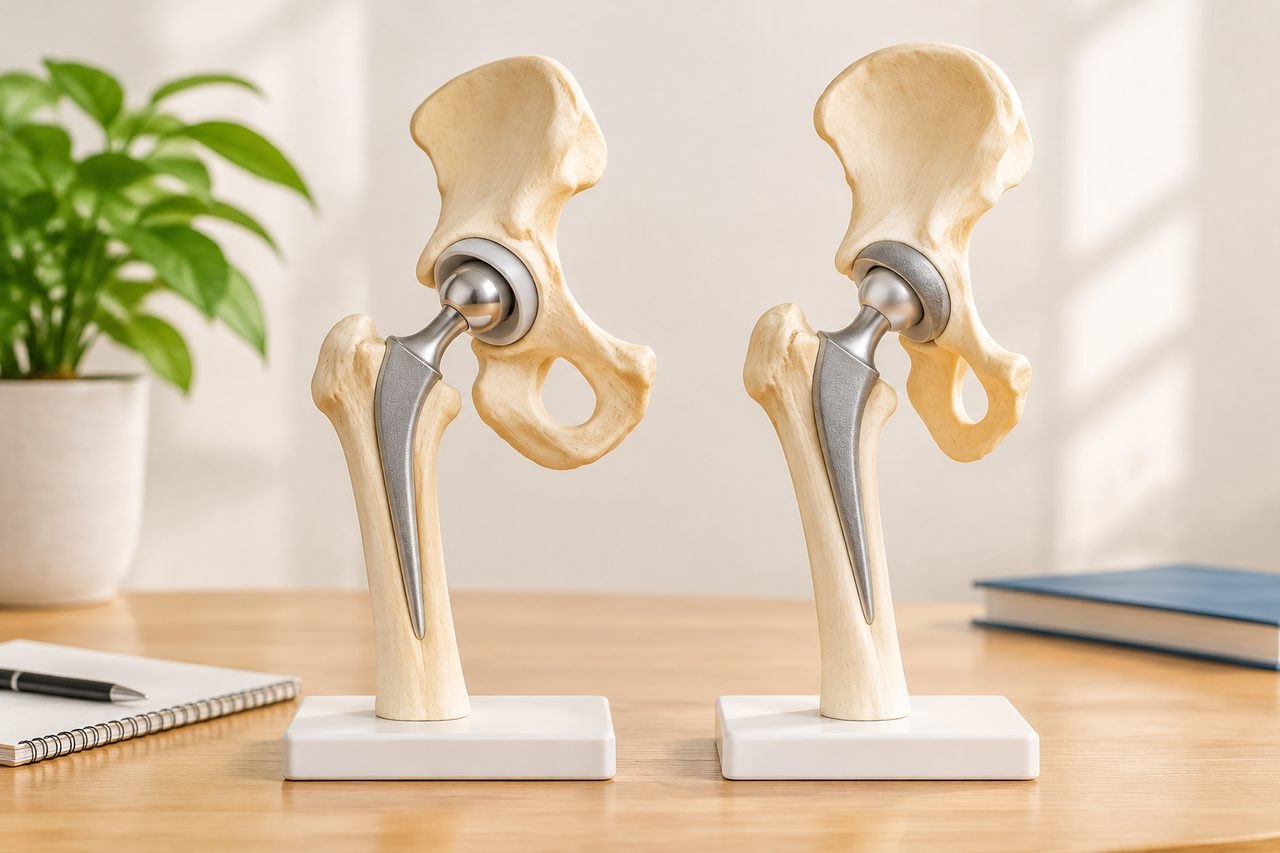
The approach is a route to the same operation
Total hip replacement removes the worn joint surfaces and replaces them with a cup and a stem with a head. The anterior (front) approach reaches the hip between muscles at the front of the thigh. The posterior (back) approach comes through the buttock area and involves the short external rotator muscles, which are repaired afterwards. A lateral approach, from the side, is a third option you may hear about.
Because the destination is the same, the implant, the anaesthetic assessment and the rehabilitation goals are broadly similar. What differs is the tissue the surgeon passes through or moves, the direction of the incision, and the mechanical precautions that follow. Those differences are real, but they are not a simple good-versus-bad choice.
Be careful with marketing language. A surgeon may describe a minimally invasive posterior or lateral approach, or an anterior approach done through a smaller incision. The label alone tells you little about the quality of the plan. Ask what will actually be done in your case and why.
What the evidence does and does not show
Randomised trials and systematic reviews comparing anterior and posterior approaches have generally found similar results for implant positioning, function scores and complication rates at follow-up, with some early differences in pain or measured muscle recovery that do not clearly persist. The American Academy of Orthopaedic Surgeons and NHS patient information describe both as accepted routes without declaring one superior for all patients.
That does not mean the choice is irrelevant. Anterior surgery is often associated with a shorter restriction on bending the hip past 90 degrees, because the posterior tissues are not divided. Posterior surgery involves repair of the rotator muscles and a period of movement precautions to reduce the risk of dislocation. These are general tendencies, not guarantees, and your surgeon's own protocol governs.
Nerve irritation on the outer thigh has been reported after the anterior approach, related to retraction near a sensory nerve. Posterior surgery carries a recognised dislocation risk that precautions and muscle repair are designed to reduce. Both approaches carry risks common to any hip replacement, including infection, blood clots, leg-length difference and loosening over time. Ask your surgeon to explain the risks relevant to your anatomy rather than quoting a single figure.
Why your own anatomy and history matter more than the label
Body habitus, previous hip surgery, hip deformity, bone quality and leg-length discrepancy can all push a surgeon toward one route. A patient with a healed fracture or a very stiff hip may not be a candidate for the anterior approach at all. Someone with a prior posterior incision may need a different plan.
Surgeon experience is the other decisive factor. An approach a surgeon performs regularly, with a team that knows the positioning and instruments, is generally preferable to an unfamiliar technique chosen because a patient read about it. Ask how many of each approach the surgeon performs and what their own revision and complication experience has been, understanding that they may not share figures in a first conversation.
If you have had a previous hip operation, bring the old records and any implant details. Revision surgery is a separate planning problem and the original approach may limit the options.
Recovery precautions differ, so plan around the actual instructions
The practical difference most patients notice is the set of movement rules after surgery. After a posterior approach, many surgeons ask patients to avoid bending the hip beyond a right angle, crossing the legs or turning the operated leg inward for a period. After an anterior approach, those particular restrictions are often lighter, but others may apply, and the surgeon may still limit certain movements.
Do not treat either list as universal. The number of weeks, the use of a cushion or raised seat, sleeping position and when you can drive are decisions for your treating team, based on the implant, the repair and your recovery. Ask for the written precautions before you leave hospital and confirm who to contact if you are unsure at home.
Rehabilitation is not approach-specific in its goals. You will work on walking, hip strength and balance. A physiotherapist assesses you and sets the programme; the receiving physiotherapist's judgement matters as much as the surgeon's preference. If you plan to continue rehabilitation after returning home, ask for a written summary of what has been done and what remains.
Questions to settle before choosing care in China
If you are considering hip replacement in China, the useful conversation is with the operating surgeon, not with a comparison table. Ask which approach they recommend for your hip and why, what imaging they need, and whether any finding would change the plan. Ask what precautions you will be given and for how long, and what the plan is if a complication occurs.
Records help that conversation. Gather recent hip X-rays, any MRI or CT reports, your medication list, allergy history, previous operations and relevant heart, lung or diabetes information. A records-based opinion can clarify whether you are a candidate and what the surgeon would need to decide, but it does not replace an in-person assessment or guarantee acceptance. The hospital makes the final decision on suitability.
Ask the hospital what its written treatment plan and fee quote cover, since scope varies between providers and is not something to assume. Our team can help you organise records and request appointments; clinical decisions stay with the treating clinicians.
- Which approach do you recommend for my hip, and what in my imaging or history drives that?
- What movement precautions will I have, for how long, and who reviews them?
- What are the specific risks for my anatomy, and how would they be managed?
- What does your written plan and quote include, and what is arranged separately?
A realistic next step
Start with your main question and a short summary: your age, the hip problem, what treatment you have already had and whether you have had previous hip surgery. You do not need to send a complete medical archive or payment details at first contact. An initial enquiry is free and is not a diagnosis or a promise of acceptance.
From there, the relevant next step is usually a specialist appointment or a records-based opinion, depending on whether you can travel and what the surgeon needs to see. A proxy consultation is optional and not a prerequisite for an appointment or an operation. If you want to read more about the operation itself, the total hip replacement reference explains the procedure and recovery in general terms.
Sources & scope of this guide
References and official service information relevant to this guide.
- Related treatment reference
- American Academy of Orthopaedic Surgeons: Total Hip Replacement
- NHS: Hip replacement
- National Institute for Health and Care Excellence: Hip replacement and resurfacing arthroplasty
This is general planning information and has not been individually reviewed by a doctor. Medical decisions and personal treatment advice come from your treating clinicians.