
Home / Orthopedics / Total Hip Replacement
Orthopedic procedure guide · 全髋关节置换术

Total Hip Replacement in China

Considering hip replacement in China? Learn what affects a hospital estimate, which hip images and treatment records to prepare, and what to ask about rehabilitation and the timing of your visit.

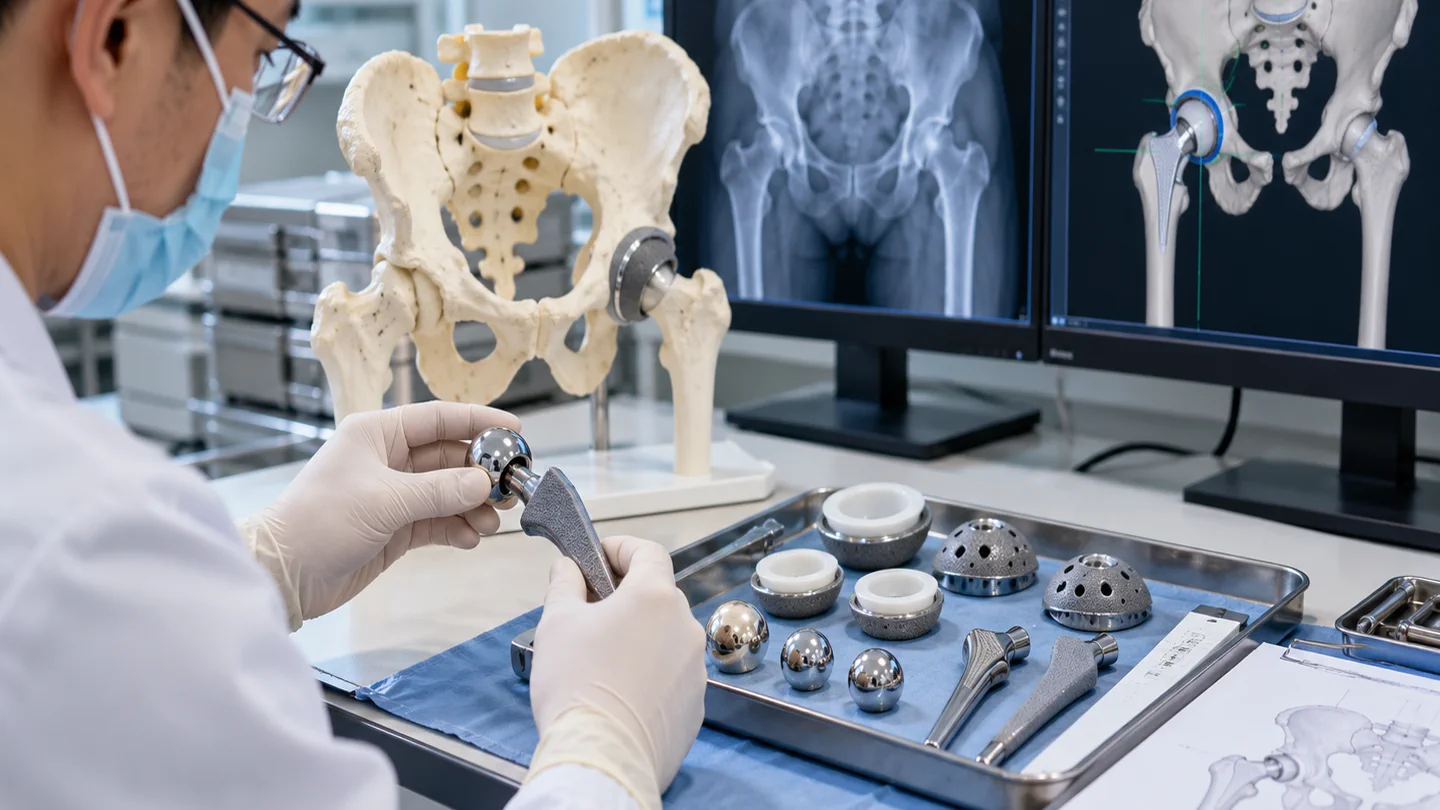
Chinese orthopedic surgeon explaining a total hip implant and pelvis X-ray to an international patient

Medical records & cost enquiry

What affects your hip replacement cost estimate?

For Total Hip Replacement, the budget depends on the proposed care and the hospital. A useful estimate needs to distinguish:

  • Implant and fixation choices
  • One hip or both hips and previous treatment
  • Admission, rehabilitation and follow-up

Hospital medical fees, travel and our coordination services are separate. Any paid specialist review or coordination service is explained and agreed before you proceed.

Your next step

Start with your question

Tell us your diagnosis and what you need. Our free initial review checks the information and helps identify a suitable next step; it is not a specialist opinion or a hospital quotation.

Request a case-based estimate

Not ready to send records? Ask us first. Where hospital review is appropriate, we can help request an estimate. No travel commitment or mandatory proxy consultation.

Planning a hip replacement visit to ChinaHospital review · individual costs · visit and follow-up

Your hospital estimate and travel arrangements should follow an individual review, not a generic package.

Explain the type of hip problem

Tell us the diagnosis, previous hip operations and which imaging reports are available. The team needs to distinguish a first replacement from revision care and other hip procedures.

Confirm the scope of the estimate

Ask which implant and fixation are proposed, whether one or both hips are being assessed and what admission, rehabilitation and follow-up costs are included. No single national price applies to every case.

Prepare for care after discharge

Discuss mobility support, review appointments and readiness for return travel with the treating team. Confirm what written information can be shared with your home clinician or rehabilitation provider.

What is total hip replacement?

Total hip replacement—also called total hip arthroplasty—replaces both sides of the ball-and-socket joint. The damaged femoral head is removed and replaced by a ball on a stem inside the thigh bone. The worn socket is prepared for a cup and liner. The components may be metal, ceramic and highly durable plastic in different combinations.

The main aim is to reduce pain and improve ordinary function when the natural joint is badly damaged. It does not create a normal young hip, and the implant still needs long-term protection and follow-up.

The decision is based on symptoms as well as imaging

An X-ray can show arthritis, deformity or collapse, but surgery is normally considered only when the findings fit the pain, stiffness and loss of function and reasonable non-surgical options are no longer adequate.

Who may be considered?

A hip surgeon may discuss replacement for severe osteoarthritis, inflammatory arthritis, post-traumatic damage, osteonecrosis or selected fractures and childhood hip disorders that have led to joint destruction. Common features include:.

  • Groin, thigh or buttock pain that substantially limits walking, sleep or daily activities.
  • Stiffness that makes dressing, stairs, transfers or getting into a vehicle difficult.
  • Imaging that shows advanced damage matching the symptoms.
  • Insufficient relief from medication, activity changes, walking aids, injections or physiotherapy where appropriate.
  • Medical fitness for anaesthesia, clot prevention and rehabilitation.

What the hospital usually reviews

Recent standing pelvis and hip X-rays are the usual starting point. CT or MRI may be requested for complex anatomy, bone loss, previous surgery, suspected osteonecrosis or another diagnosis. The team also reviews heart and lung health, diabetes control, medication, skin and dental infections, anaesthetic history and the support available after discharge.

Key points for this treatment
Ball + socketboth joint surfaces replaced
1–2 hcommon operation-time range
1–3 dgeneral hospital-stay range
Monthsstrength and function continue improving
Total hip replacement components, pelvis model and medical imaging used during surgical planning
Implant planning is individualThe surgeon considers bone quality, anatomy, fixation, bearing surfaces, stability and leg length—not simply a brand or technology label.

How the operation works

Under spinal or general anaesthesia, the surgeon reaches the joint through an anterior, lateral or posterior route. Damaged bone and cartilage are removed, the socket is prepared for a cup and liner, and a stem with a new ball is placed in the femur. Trial components help the surgeon check stability, movement and leg length before the final implants are secured and the wound is closed.

Cemented or press-fit fixation

A stem or cup may be fixed with bone cement or designed for bone to grow onto a porous surface. Bone quality, age, anatomy and surgeon judgement guide the choice. A hybrid combination may also be used. The best option is the one appropriate to the individual—not automatically the newest or most expensive implant.

Surgical approach and technology

The approach describes the route through the soft tissues; it is not a different replacement. Some hospitals also use navigation or robotic assistance for planning and component positioning. These tools do not replace the surgeon, and their availability alone should not determine where or whether to have surgery.

Hospital stay and recovery

Pain control, wound care, clot prevention and mobilisation begin in hospital. Many patients start walking with a frame or crutches soon after surgery. NHS guidance gives a general discharge range of about one to three days for a straightforward replacement, but age, medical conditions, home support and complications can change this.

International patient practising supported walking with a physiotherapist after total hip replacement
Early, supervised mobilisationWalking begins with an appropriate aid, then progresses according to pain control, balance, muscle strength and the surgical team’s instructions.
Early hospital phaseWalking aid, wound care and clot prevention
First 3–6 weeksDaily activity and strength gradually increase
6–12 weeksCommon follow-up period; goals are reassessed
Several monthsEndurance and confidence may continue improving

Precautions for bending, sleeping and sitting vary with the approach and patient. Long-haul flying adds immobility and clot considerations, so international travel should be cleared by the surgeon before tickets are booked. Confirm who will remove sutures, manage medication and provide follow-up after returning home.

Risks and later considerations

Important risks include infection, blood clots, bleeding, anaesthetic or medical complications, dislocation, fracture, nerve or blood-vessel injury, leg-length difference, persistent pain, implant wear and loosening. A fall in the early recovery period can damage the new joint.

Modern hip replacements can function for many years, but no implant lasts forever. High-impact activity, infection, fracture or wear can lead to later revision. Regular low-impact exercise and follow-up should be discussed with the treating team.

Seek urgent medical help

Sudden chest pain or breathlessness, increasing calf swelling, fever, wound drainage, rapidly worsening hip pain or inability to bear weight requires urgent assessment.

Before hospital review

Medical records checklist

A concise file helps the hip team confirm the diagnosis, assess bone quality and plan medical optimisation.

Diagnosis and symptom summary
Recent standing pelvis and hip X-rays
CT or MRI images and reports, if available
Previous hip procedures and operative notes
Medication list and known allergies
Major medical history and anaesthetic issues
Recent blood tests and cardiac tests, if available
Walking level, home support and treatment goals
Send original imaging when possible

Radiology reports are helpful, but DICOM files or clear original image exports let the orthopedic team review alignment, bone quality and implants directly.

Tell us what you need

Ask about your care,
your hospital and your budget.

You can ask about suitability, an expert opinion, an appointment or the likely medical cost. If you are unsure, choose “Not sure — please advise”.

This enquiry is aboutTotal Hip ReplacementNot sure — please advise

How a personal estimate is prepared

  1. Tell us about your case.Describe your diagnosis, main question and preferred city, if any.
  2. Share the relevant records.We explain what is needed and how to send it by WhatsApp or email.
  3. Request a hospital estimate.Where appropriate, we help request hospital review and a cost estimate. Any paid review is agreed first.

This is an enquiry, not an order or payment. Proxy consultation is not mandatory. Any service scope is agreed separately before you proceed.

Ask about Total Hip Replacement

A first enquiry is free. Email and permission to respond are required; the other details are optional. Any paid clinical review or coordination is discussed separately.

Included automatically so we know which procedure you are asking about.
A preference, not a confirmed appointment.
Please do not send passport numbers, card details or full medical files in this first enquiry. We will explain which records are needed next.

Send a short summary first. This is an enquiry, not an order, payment or confirmed appointment.

No booking or payment is made by sending this enquiry.
Editorial transparency

Medical sources

Patient information is based on established orthopedic guidance. Content updated 5 October 2026. This is patient information, not an individual clinical assessment.