
Why repeat-care planning matters before you travel
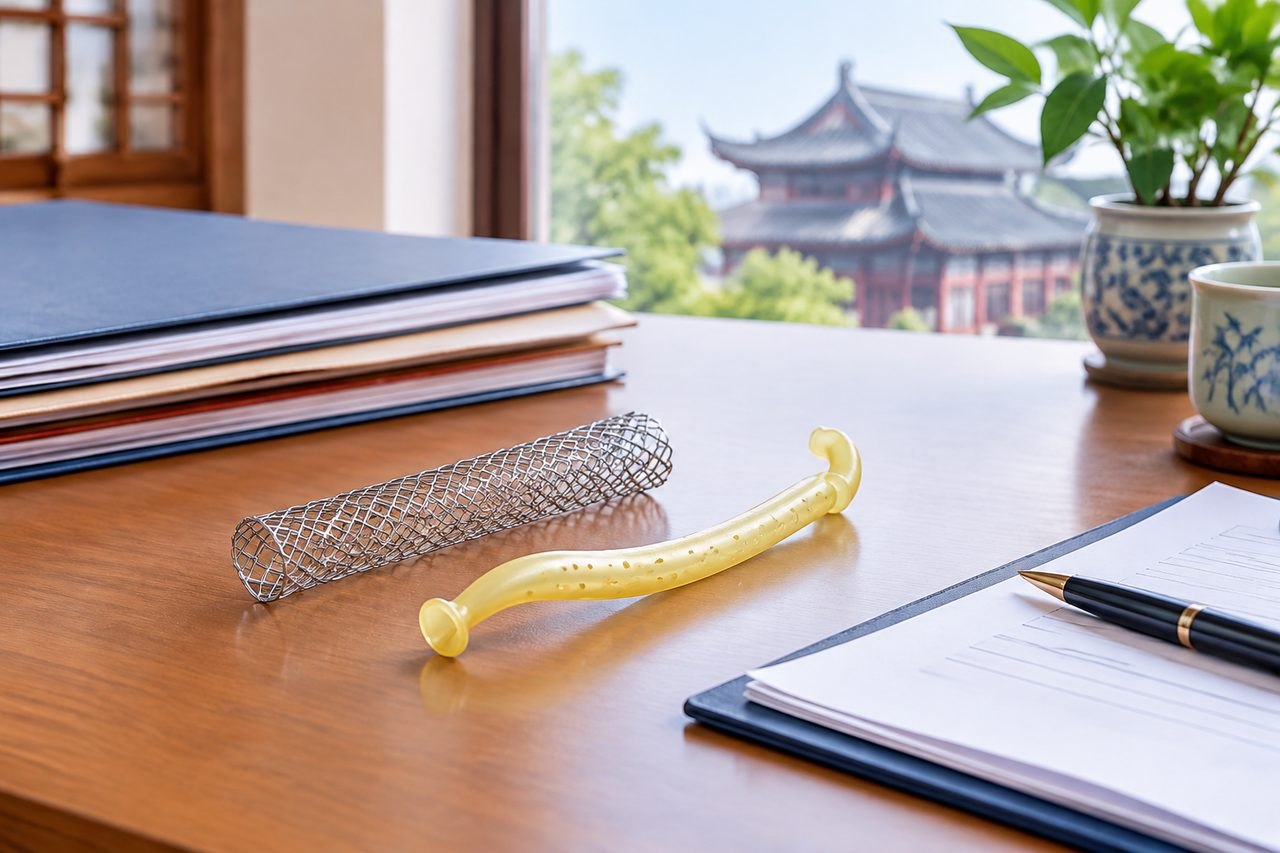
A bile duct stent is placed to help drainage when a duct is blocked. The approach and follow-up depend on assessment, and the stent itself is not automatically permanent. Some stents are designed to be exchanged or removed; others may stay longer. The decision belongs to the treating clinician who reviews the imaging, the cause of the obstruction and the patient's overall condition.
For an overseas patient, the practical risk is not only the procedure. It is what happens after discharge. If a stent needs exchange, who will do it? If it needs review, where will that happen? If the patient returns home, will the local clinician have the records needed to continue care? These questions are easier to answer before travel than after.
This guide does not promise that stenting is suitable, available or bookable in China. It focuses on one decision: how to plan repeat care when a bile duct stent is part of the picture.
Distinguish a proposed stent from an existing stent
The first step is to be clear about what is actually planned or already in place. A patient who has not yet had stenting is asking a different question from a patient who already has a stent and needs follow-up.
If stenting is proposed, ask the treating team what type of stent is being considered and why. Ask whether the plan is for a temporary stent, a longer-term stent, or a decision that will be made during the procedure. Ask what would trigger an exchange or removal. These are clinical questions, and the answers depend on the individual case.
If a stent is already in place, gather the details: when it was placed, what type it is, why it was placed, and what follow-up was recommended. If the original team is not available, the receiving clinician can still assess the patient, but they will need the records to understand the context.
Do not assume that all stents are permanent, and do not assume that a fixed exchange date applies to everyone. The treating clinician must confirm the plan.
Records that help a repeat-care discussion
A repeat-care discussion is only as good as the information available. For bile duct stenting, the relevant records often include imaging of the biliary system, procedure reports, discharge summaries, and any pathology or laboratory results related to the obstruction.
The exact list depends on the case. A patient can ask the current treating team what documents would help another clinician understand the situation. Useful items may include: the most recent imaging report and images if available, the ERCP or stenting procedure report, the discharge summary, current medication list, and any recent blood tests.
This is not a universal checklist. The receiving clinician should confirm what they need. The point is to avoid arriving for a repeat-care discussion with no records at all.
If some records are missing, that does not necessarily mean care must be delayed. It means the limits of the available information should be clear, and the clinician may request specific documents or tests.
Questions to ask about exchange, review and responsibility
The core of repeat-care planning is a set of practical questions. Who will manage the stent after the initial procedure? What follow-up is expected? If exchange is needed, where and when? What symptoms would require urgent local assessment?
These questions should be directed to the treating clinician, not answered by a coordinator. A non-clinical coordinator can help arrange appointments and interpret logistics, but cannot decide whether a stent needs exchange or when.
For an overseas patient, it is worth asking early whether the planned care in China includes a defined follow-up plan, and whether that plan can be handed over to a clinician at home. If the patient plans to return home soon after the procedure, the handover needs to be discussed before discharge.
Ask for the plan in writing if possible. A written summary of the stent type, the procedure, and the recommended follow-up can help the local clinician continue care.
What a China care enquiry can and cannot do
ChinaSpecialistCare provides information and non-clinical coordination. An initial enquiry is free and can help identify missing information and suggest a relevant next step. It is not a diagnosis, and it does not confirm hospital acceptance or treatment suitability.
A proxy consultation or multidisciplinary review may be available for complex cases, but these are optional and not prerequisites for every appointment. The hospital and licensed clinicians decide suitability, treatment and follow-up.
For bile duct stenting specifically, the relevant CSC reference page is Bile Duct Stenting. That page describes the procedure context. This article focuses only on repeat-care planning.
If a patient is currently unwell with symptoms such as fever, worsening pain, jaundice or confusion, local urgent assessment takes priority over overseas travel planning.
Practical next step for repeat-care planning
Start by clarifying the current situation: is a stent proposed, or already in place? Gather the records that describe the obstruction, the procedure and the follow-up recommendation. Then ask the treating clinician the specific questions: does this stent need exchange or later review, and who will manage that care at home?
If a stent is already in place, the handover is the part most likely to be left unfinished. A discharge summary that names the stent type, the date of placement and the reason for it gives a receiving clinician something concrete to work from. Ask the treating team whether the follow-up plan can be written down before you leave, and whether they are willing to speak with a clinician at home if questions come up later.
If stenting is still only proposed, the repeat-care question belongs in the first conversation, not the last. Ask what would make the team choose one stent type over another, and what that choice would mean for later review or exchange. A patient who understands the likely follow-up before the procedure is in a better position to plan travel, work and family arrangements around it.
It also helps to agree who is responsible for what. The team in China may manage the procedure and the immediate recovery; a clinician at home may take over later review. That split should be stated clearly rather than assumed. If no local clinician has been identified yet, that is worth resolving before discharge rather than after.
One practical step: write down the three or four questions that matter most to you, and bring them to the appointment in that form. Questions about exchange timing, review intervals and responsibility for follow-up are easier to answer when they are specific.
If you are considering care in China and want help organising the non-clinical side, you can send a brief summary through the enquiry form. The initial enquiry is free. The hospital will decide whether the case is suitable for assessment or treatment.
Do not delay necessary local care for an overseas enquiry. Urgent symptoms need local assessment first.
Sources & scope of this guide
References and official service information relevant to this guide.
This is general planning information and has not been individually reviewed by a doctor. Medical decisions and personal treatment advice come from your treating clinicians.