
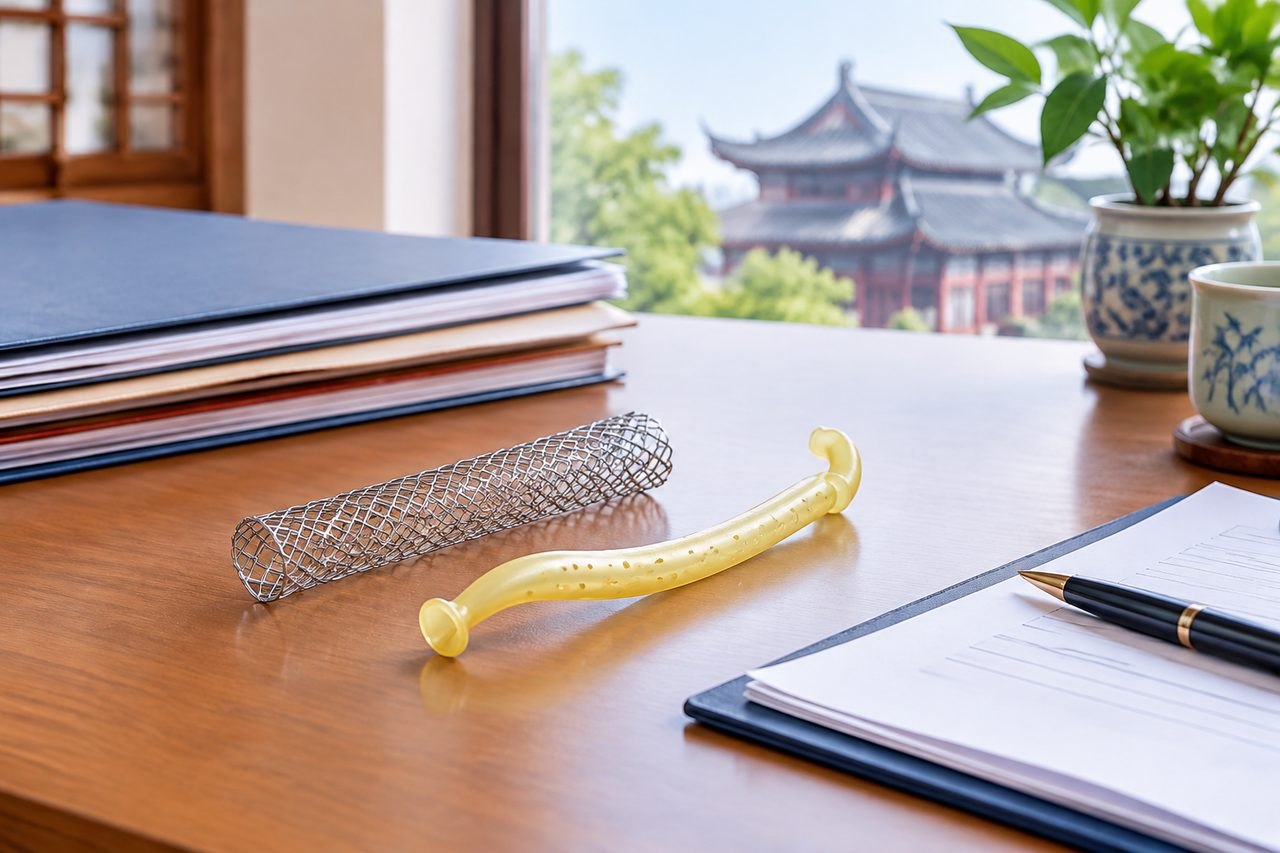
What a bile duct stent is actually intended to do
The practical goal of stenting is drainage. When a bile duct narrows or is blocked, bile cannot flow normally from the liver toward the intestine. That backup can produce jaundice, dark urine, pale stools, itching, and in some cases cholangitis, an infection of the bile ducts. A stent is a small tube placed across the narrowed segment to keep bile moving. The procedure is usually performed during ERCP, an endoscopic procedure that reaches the bile duct through the digestive tract.
This is why stenting is often described as a bridge or a palliative measure rather than a cure. It addresses the consequence of the blockage, not the blockage's cause. If a stone is the cause, removing the stone may resolve the problem and the stent may be temporary. If a tumour is compressing the duct, the stent can relieve jaundice and allow other treatment, such as chemotherapy, to proceed, but it does not shrink the tumour. If the duct is narrowed by a benign scar, stenting may keep it open, but the scar itself may persist or recur.
For an overseas patient, the important distinction is between what the stent can achieve in the short term and what it cannot change about the underlying disease. A stent can improve symptoms and liver blood tests related to obstruction. It cannot reverse liver damage that has already occurred, treat the cancer itself, or guarantee that the duct will stay open indefinitely.
The records that determine whether stenting is the right option
Before any recommendation, the treating team needs to understand the anatomy and the cause of the obstruction. The most useful records usually include recent imaging of the bile ducts, such as MRCP, CT, or ultrasound, and any previous ERCP or cholangiogram reports. Blood tests showing bilirubin, liver enzymes, and markers of infection help show how severe the obstruction is and whether urgent drainage is needed. If a tumour is suspected, pathology or cytology reports and any staging scans matter because they influence whether stenting is part of curative or palliative planning.
A common gap is a report that describes the blockage but not its exact location or length. The choice between a plastic stent and a metal stent, and the decision about how long it should stay in place, depends on whether the narrowing is benign or malignant, how long drainage is expected to be needed, and whether the patient is likely to undergo surgery. A plastic stent is often used when the problem may be temporary or when surgery is planned. A metal stent may be considered when longer-term drainage is needed, but it is not automatically permanent and it can become blocked over time.
If you are sending records from abroad, include the actual images when possible, not only the written report. Ask the hospital whether it wants the imaging on disc or through a secure upload. If a previous stent is already in place, say so clearly and include the date and type if known, because a proposed new placement is a different decision from managing an existing stent.
What stenting cannot solve, and why that matters for planning
A stent does not treat the cause of the blockage. If the cause is a cancer of the pancreas, bile duct, or nearby structures, stenting can relieve jaundice but does not remove or control the tumour. That distinction changes the treatment plan: stenting may be done to allow chemotherapy or surgery to proceed safely, but it is not a substitute for oncological treatment. If the cause is a stone, the stone still needs to be removed, usually during the same ERCP or a later procedure. If the cause is a benign stricture, the narrowing may need repeated dilation or long-term stenting, and even then it can recur.
A stent also cannot guarantee that drainage will be complete or permanent. Stents can become blocked by sludge, tumour ingrowth, or migration. When that happens, symptoms such as fever, worsening jaundice, or abdominal pain can return, and the stent may need to be exchanged or replaced. This is why follow-up matters even after a successful placement. The treating team should explain what symptoms would suggest a blocked stent and how to get urgent help.
Finally, stenting cannot determine whether a patient is fit for other treatments. Fitness for surgery, chemotherapy, or travel depends on the whole clinical picture, including infection, nutrition, liver function, and other medical conditions. Those decisions belong to the treating clinicians, not to the stent itself.
Stent choice and repeat-care planning: questions to ask before you travel
If stenting is being considered in China, ask the clinical team to explain the proposed plan in plain terms. Which type of stent is recommended, and why? Is it intended to be temporary or long-term? If it is temporary, what would trigger removal or exchange, and who would manage that? If it is long-term, what surveillance is advised, and what symptoms should prompt urgent review? These questions are not administrative details; they determine whether you can safely return home and what care you need to arrange there.
Repeat-care planning is especially important for patients who live outside China. A stent placed in China may need follow-up ERCP, imaging, or blood tests after you return home. Before travelling, ask the treating team to provide a written summary that includes the date of placement, the type and size of the stent if known, the indication, and any recommended follow-up. Ask whether the stent is expected to require exchange and, if so, what the general timeframe would be. Do not assume a fixed schedule; the timing depends on the stent type, the underlying cause, and your clinical course.
You should also ask who would manage stent-related care at home. Would it be a local gastroenterologist, an interventional endoscopist, or your primary team? What records would they need? If a problem occurs after you return, can the Chinese team provide remote advice, or should you seek local emergency care? These are practical questions that reduce the risk of a gap in care. They do not replace the treating clinician's judgement about your individual situation.
Individual differences that change the decision
Not every blocked bile duct is managed the same way. The location and length of the narrowing, whether it is benign or malignant, whether infection is present, and whether the patient is likely to need surgery all influence the choice of stent and the timing of the procedure. A patient with cholangitis may need urgent drainage, while a patient with painless jaundice from a known tumour may have stenting planned alongside other treatment. A patient with a benign stricture may need a different approach from a patient with a malignant obstruction.
Previous treatments also matter. If you have had a Whipple operation, a gastric bypass, or another surgery that changes the anatomy, ERCP may be more complex or may not be possible, and alternative drainage methods may be considered. If you have a bleeding disorder or take blood-thinning medication, the team needs to know so that the procedure can be planned safely. These are not reasons to avoid stenting; they are reasons to give the treating team a complete picture.
Because suitability is individual, no article can tell you whether stenting is right for you. The treating hospital decides whether to offer the procedure after reviewing your records and, often, after seeing you in person. A remote review can help clarify whether stenting is a reasonable option and what information is missing, but it does not replace the in-person assessment that confirms the final plan.
Practical next steps for an overseas patient
Start by gathering your key records: recent imaging of the bile ducts, any ERCP or cholangiogram reports, blood tests showing bilirubin and liver enzymes, and pathology or staging reports if a tumour is known. Include a short summary of your main question, such as whether stenting is likely to be temporary or long-term and what follow-up would be needed at home. You do not need to send a complete medical archive at first contact; a brief summary is enough to identify the relevant next step.
If you are considering care in China, you can ask for an initial review of your records. This is a non-clinical intake step that helps identify missing information and the appropriate specialist route. It is not a diagnosis, a promise of acceptance, or a substitute for the treating hospital's assessment. If you already have a stent and are seeking a second opinion, say so clearly and include the placement date and any follow-up reports.
Urgent symptoms such as fever with jaundice, severe abdominal pain, or confusion need local emergency assessment, not travel planning. Once your condition is stable, you can pursue an overseas opinion with the records above. The next practical step is to send a brief summary and ask what additional records the hospital would need to assess whether stenting is suitable for your situation.
Sources & scope of this guide
References and official service information relevant to this guide.
This is general planning information and has not been individually reviewed by a doctor. Medical decisions and personal treatment advice come from your treating clinicians.