
What Your Existing Tests Already Answer
Before any discussion of bladder removal, you likely already hold a set of records: pathology from a biopsy or resection, imaging of the urinary tract and pelvis, and notes from the procedures you have had. These documents answer a specific set of questions. They identify the tumour type, its grade, and whether muscle or surrounding tissue is involved. They show what was visible at the time of the examination. They record what treatment, if any, has already been given.
These are the foundation of any surgical conversation, and they do not become irrelevant because you are considering care in China. A receiving hospital needs them to understand your starting point. Without them, a clinician cannot judge whether the operation you are asking about is the right one for your situation, or whether another approach should be discussed first.
It helps to separate two ideas that patients often merge. One is the factual record of what has been found. The other is the clinical judgement about what should happen next. Your existing tests supply the first. They do not, by themselves, supply the second, because that judgement depends on a full picture and on the treating team's own review.
What a New Assessment Is Actually For
A new assessment is not a repeat of your diagnosis for its own sake. It is a structured review that asks whether bladder removal is the appropriate operation for you, and if so, how it should be planned. That includes confirming the stage of the disease as far as the available records allow, reviewing whether the cancer is confined to the bladder or has spread, and considering your general health and any other conditions that affect surgical risk.
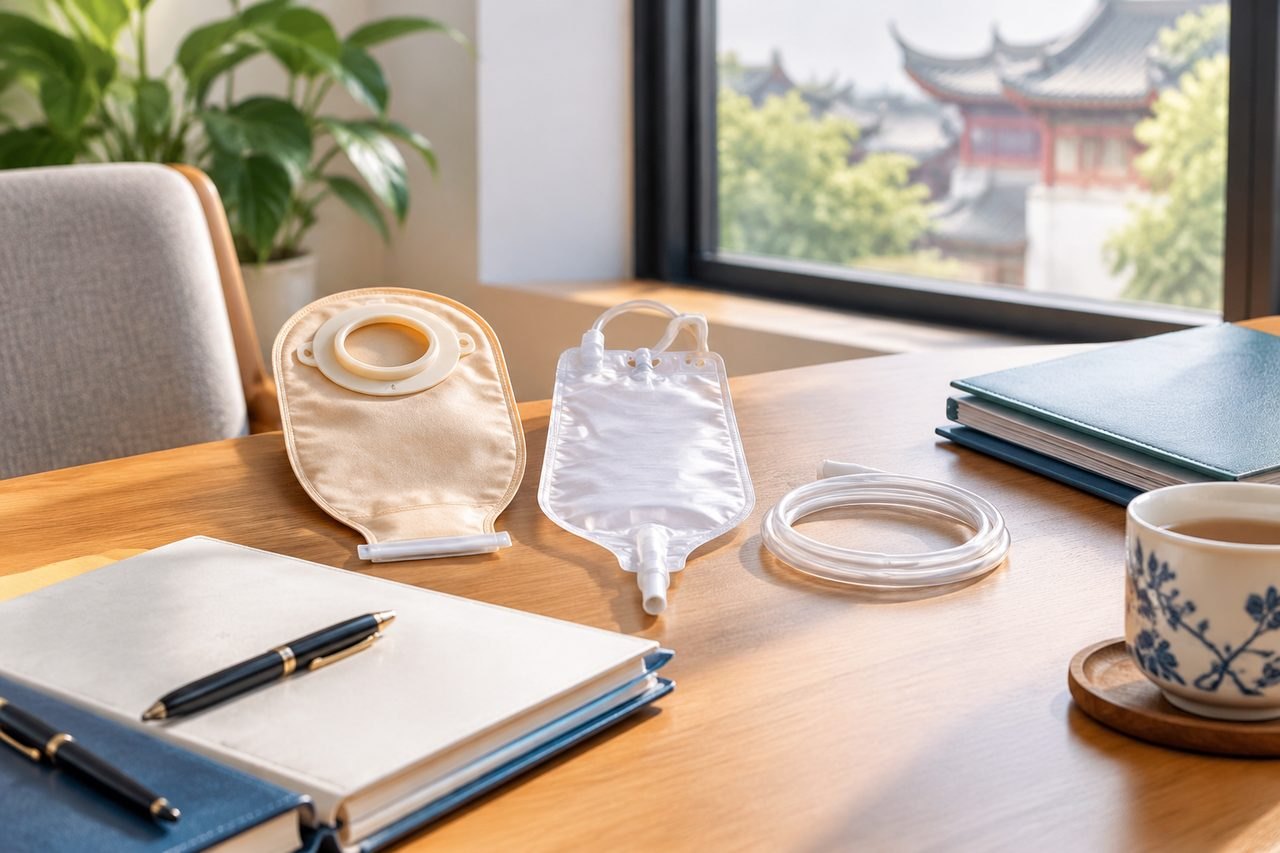
The assessment also addresses the part of the operation that sits outside the cancer question itself: how urine will leave the body afterwards. Bladder removal means the bladder is no longer there to store urine, so a separate arrangement must be created. The options differ in how they are constructed, what they require of you, and what follow-up they involve. Which option is suitable is an individual surgical decision, not a menu you can select in advance.
A further purpose is to identify what is missing. If a scan is old, if a pathology report lacks detail, or if a question about your general health has not been documented, the assessment should make that clear. The point is not to collect every possible document, but to know which gaps actually change the decision.
Why the Two Sets of Information Are Not Interchangeable
It is tempting to assume that a complete file of old tests means the surgical question is already answered. It does not. Old tests describe a moment in time. The clinical question — should this operation be done, and how — depends on that history plus current findings, your fitness for surgery, and the judgement of the team that would carry it out. A pathology report from six months ago and a scan from last year tell a reviewer what was true then; they do not tell the treating surgeon what is true now, or how your body would tolerate a major operation today.
The reverse assumption is also worth avoiding. A new assessment does not automatically override or discard your previous records. A responsible review uses them. If a clinician proposes repeating a test, the useful question is what specific decision that repeat would change, and whether the earlier result is still adequate for that purpose. A repeat scan that would not alter the surgical plan is different from one that would confirm whether the disease has spread beyond the bladder — and only the treating team can tell you which category a proposed repeat falls into.
This distinction matters practically. If you send only a summary, the review may be limited to general guidance. If you send the relevant reports, the discussion can be more specific. Neither route guarantees acceptance for surgery, and neither replaces an in-person clinical evaluation where that is required. The gap between the two is not a bureaucratic formality; it is the difference between a conversation about your actual situation and one about bladder removal in the abstract.
There is a third assumption worth naming, because it shapes how patients prepare. Some read that a new assessment is needed and conclude that their existing records are therefore suspect or that earlier care was inadequate. That is not what the distinction means. The earlier tests did their job: they established what was found at the time. The new assessment does a different job, using that foundation to answer whether surgery is appropriate and how it should be planned. Treating the two as competing versions of the same information leads to the wrong questions — asking which result is 'right' rather than asking what each one is for.
The practical consequence is that you do not need to resolve this yourself before making contact. You need to know which documents you hold, what question each one answers, and what remains open. That framing lets a receiving clinician tell you quickly whether your file is sufficient for a meaningful discussion or whether something specific is missing — and it keeps the conversation focused on the decision rather than on collecting paper.
The Surgical Discussion About Urinary Reconstruction
Bladder cancer can be treated with different approaches, and bladder removal with a reconstruction of the urinary tract is one of them. The arrangement for passing urine after removal requires an individual surgical discussion, because the suitable option depends on the disease, your anatomy, your previous treatments, and your own circumstances and preferences.
That discussion should cover how the reconstruction is expected to function, what day-to-day management involves, what can go wrong, and what follow-up is needed. It should also cover what is not guaranteed. Questions about continence, sexual function, fertility and long-term monitoring are legitimate parts of this conversation, and the answers are specific to you rather than general.
Because this is a decision made with a surgical team, it is reasonable to ask how the cancer operation and the urinary reconstruction fit together in one plan. Are they performed together? What determines the timing? Who manages the reconstruction afterwards? These are the questions that turn a general description into a plan you can actually evaluate.
Aftercare and Follow-Up After Discharge
Discharge is not the end of the episode. After bladder removal and urinary reconstruction, care continues: wound and stoma or diversion care where relevant, monitoring for complications, and a follow-up schedule to watch for recurrence and to manage the reconstruction over time. The details depend on the operation performed and on your recovery.
For an overseas patient, the practical question is how that follow-up will be delivered. Will it take place in China, at home, or split between the two? Who will be responsible for each part? What records will you need to carry with you? These are administrative questions with real clinical consequences, and they are better settled before travel than after.
It is also worth asking what would prompt urgent contact, and where that contact should be made once you have left the treating hospital. The answer will differ depending on where you are. The treating team should provide written instructions covering this, and you should confirm that you understand them before discharge.
Preparing Records and Questions Before You Enquire
If you are considering bladder removal surgery in China, the most useful first step is to assemble a focused set of records rather than a complete archive. Pathology reports, recent imaging reports and a short summary of treatments to date give a reviewer enough to understand your situation and identify what else is needed. An initial enquiry asks only for a brief summary, not your full medical history.
Alongside the records, write down the questions that matter to you. What does the assessment need to confirm before surgery can be considered? How would the urinary reconstruction be planned in your case? What aftercare and follow-up would be expected, and where? What would the treating hospital need from you, and what would you need from it?
You can also ask how the hospital's written plan and quote are structured, what they include, and what remains undecided until after clinical review. The hospital decides suitability; a records review does not establish that surgery will go ahead. If your symptoms worsen or you develop new problems, seek local medical care rather than waiting on an overseas enquiry.
A brief next step: share a short summary of your diagnosis and main question through the enquiry form, and ask which records the hospital would need to review before discussing bladder removal and urinary reconstruction with you.
Sources & scope of this guide
References and official service information relevant to this guide.
This is general planning information and has not been individually reviewed by a doctor. Medical decisions and personal treatment advice come from your treating clinicians.