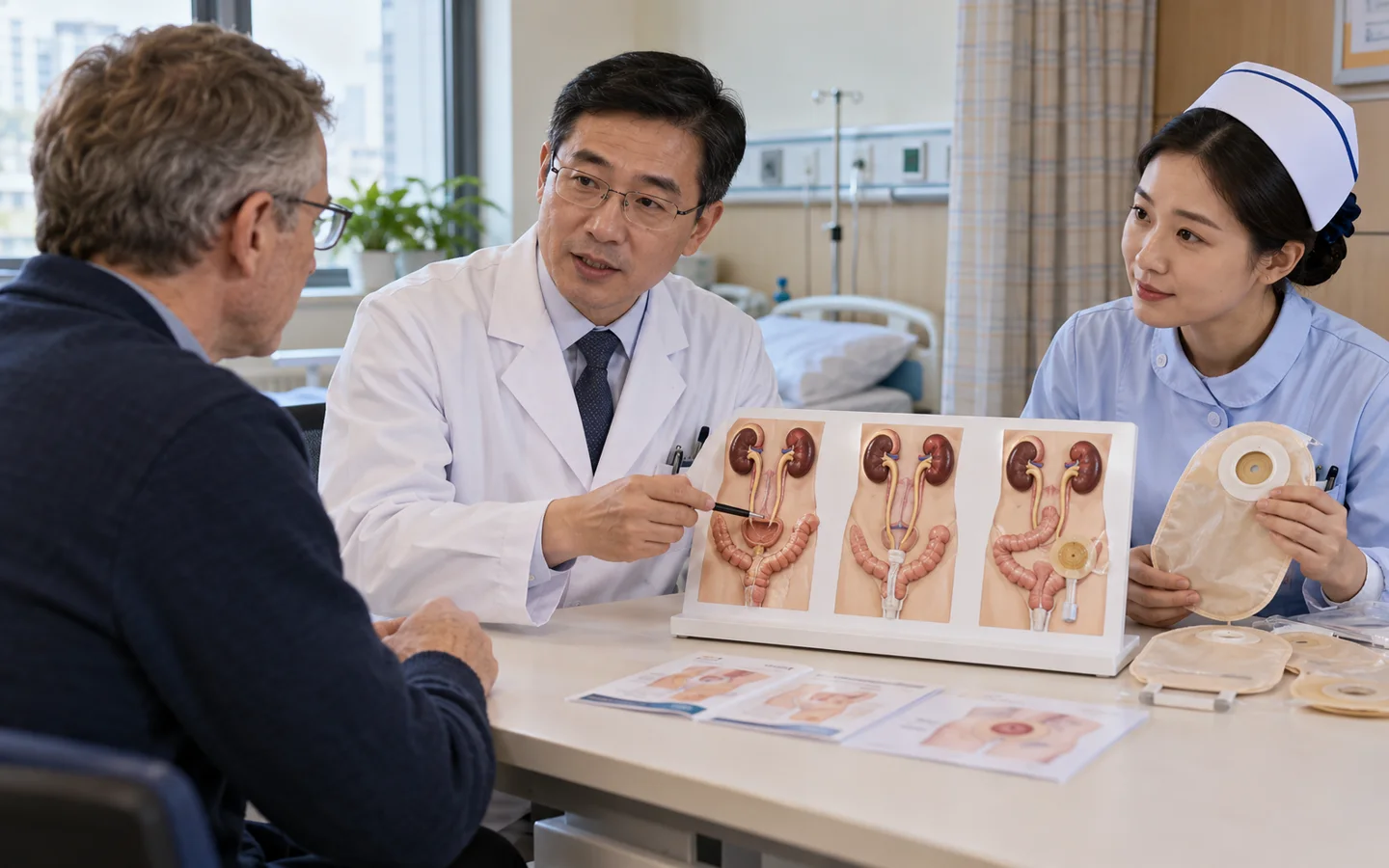
Radical cystectomy removes the bladder and creates a new urinary route
The operation includes pelvic lymph-node dissection and removal of nearby organs according to anatomy and disease. Urine is redirected through an ileal conduit, continent reservoir or selected neobladder.
Cancer stage, kidney function, bowel health, prior radiation, manual ability and patient preference influence both treatment sequence and diversion choice.
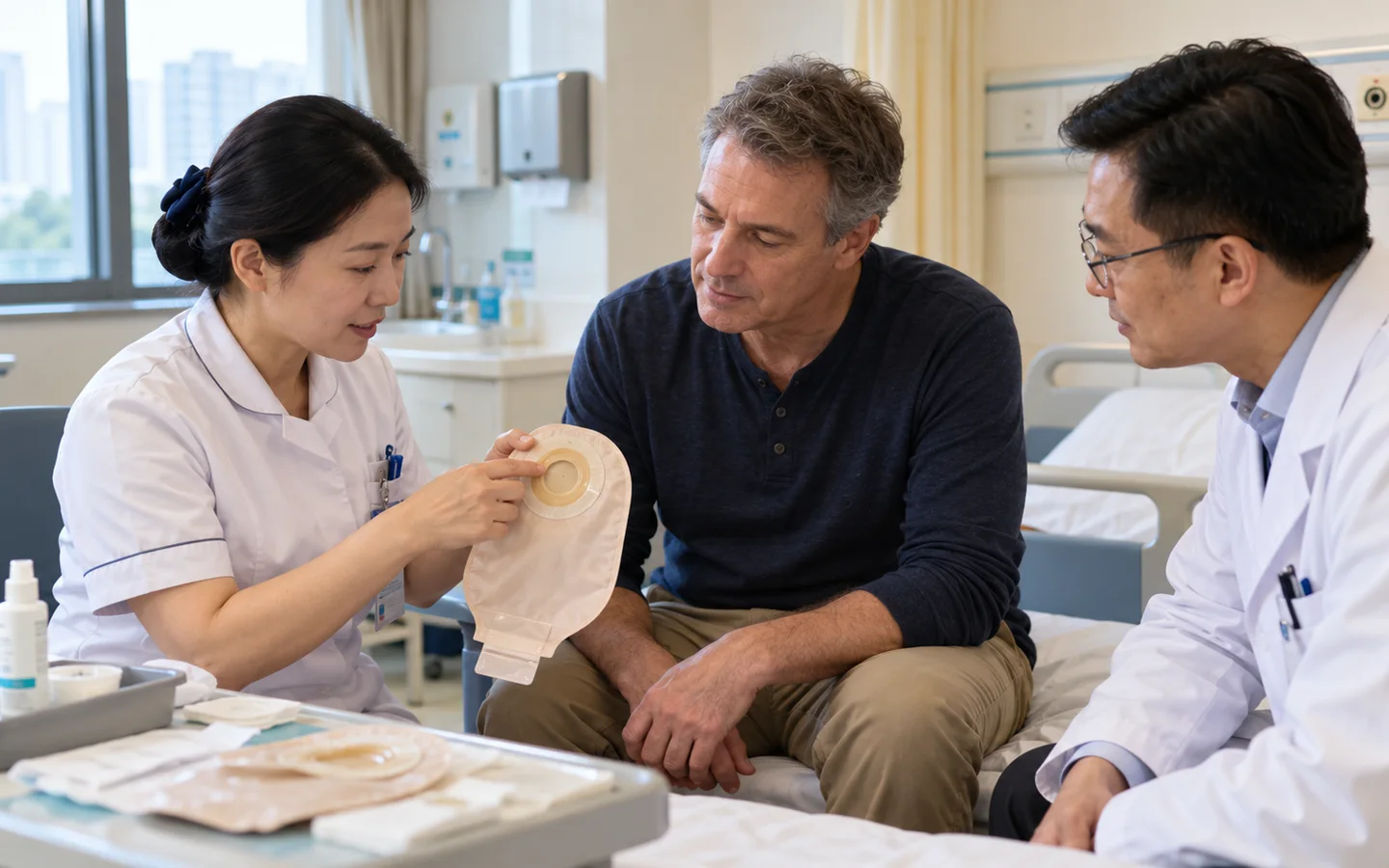
Patients should understand stoma care, catheterization or neobladder training before selecting a reconstruction.
Who may be considered?
Specialist review may help when the diagnosis, symptoms and previous treatment create a focused question about radical cystectomy.
- Muscle-invasive bladder cancer suitable for curative surgery.
- Selected high-risk non-muscle-invasive cancer not controlled with bladder-preserving treatment.
- A severely damaged bladder requiring removal in exceptional non-cancer cases.
- A patient fit for major pelvic and bowel surgery.
What the specialist team must confirm
Review cystoscopy and TURBT pathology, variant histology, CT or MRI staging, chest imaging, kidney function, chemotherapy history, bowel and vascular health, nutrition, frailty and diversion capability.
Key points for this treatment
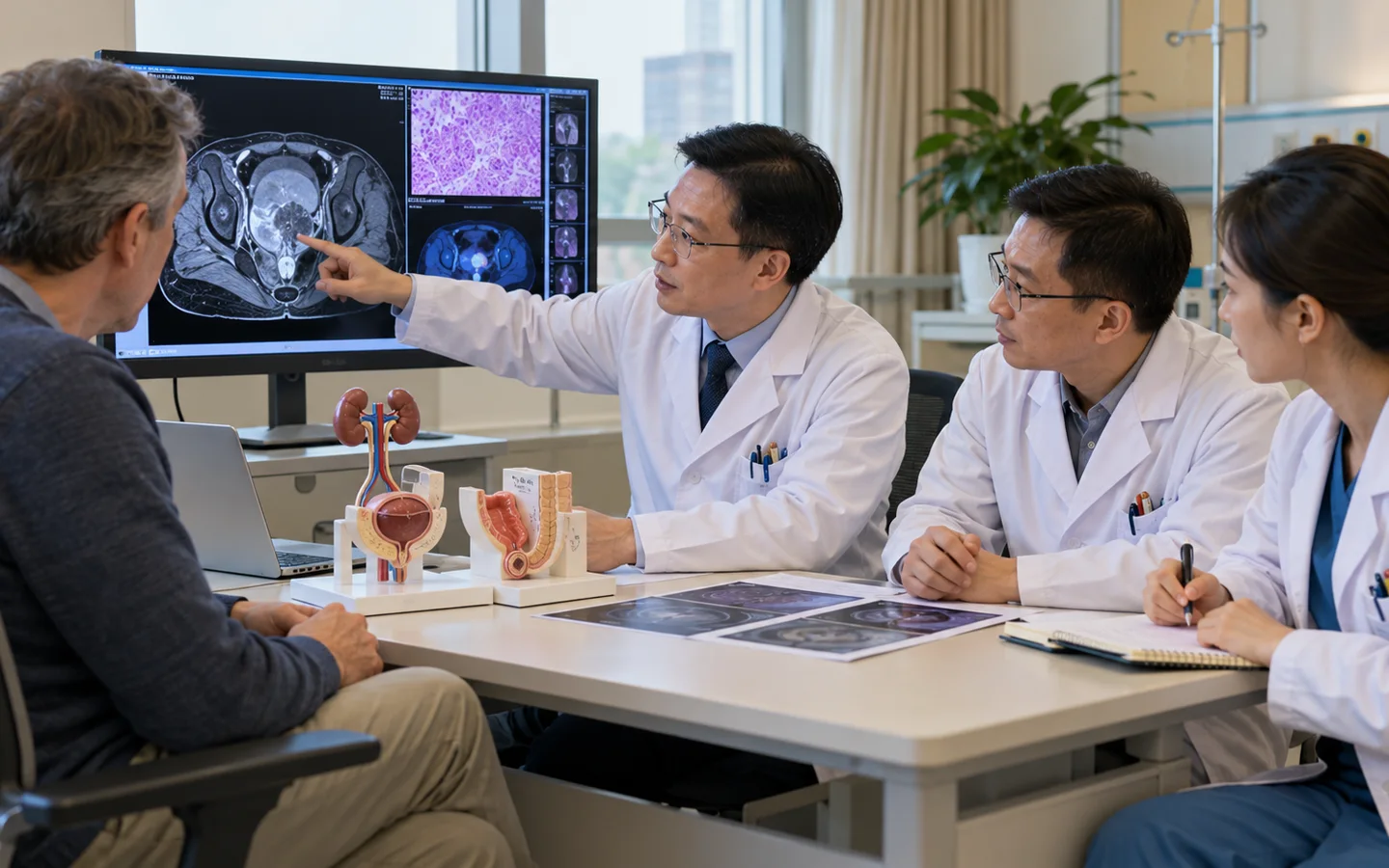
From multidisciplinary staging to life with a new urinary system
Prehabilitation, nutrition and stoma teaching help patients prepare for a major operation and permanent functional change.
Recovery tracks bowel, infection, kidneys and cancer
Early care monitors ileus, leaks, infection, clots, kidney function, electrolytes and stoma or catheter function.
Long-term follow-up includes pathology-led cancer surveillance, renal imaging, metabolic tests, vitamin status where relevant and practical diversion support.
Risks, limits and realistic expectations
Risks include bleeding, infection, bowel leak or obstruction, urinary leak, ureteric stricture, clots, kidney decline, sexual dysfunction, stoma complications, recurrence and death.
Fever, persistent vomiting, absent stoma urine, catheter blockage, rapidly increasing abdominal pain, breathlessness or new leg swelling requires urgent local care.