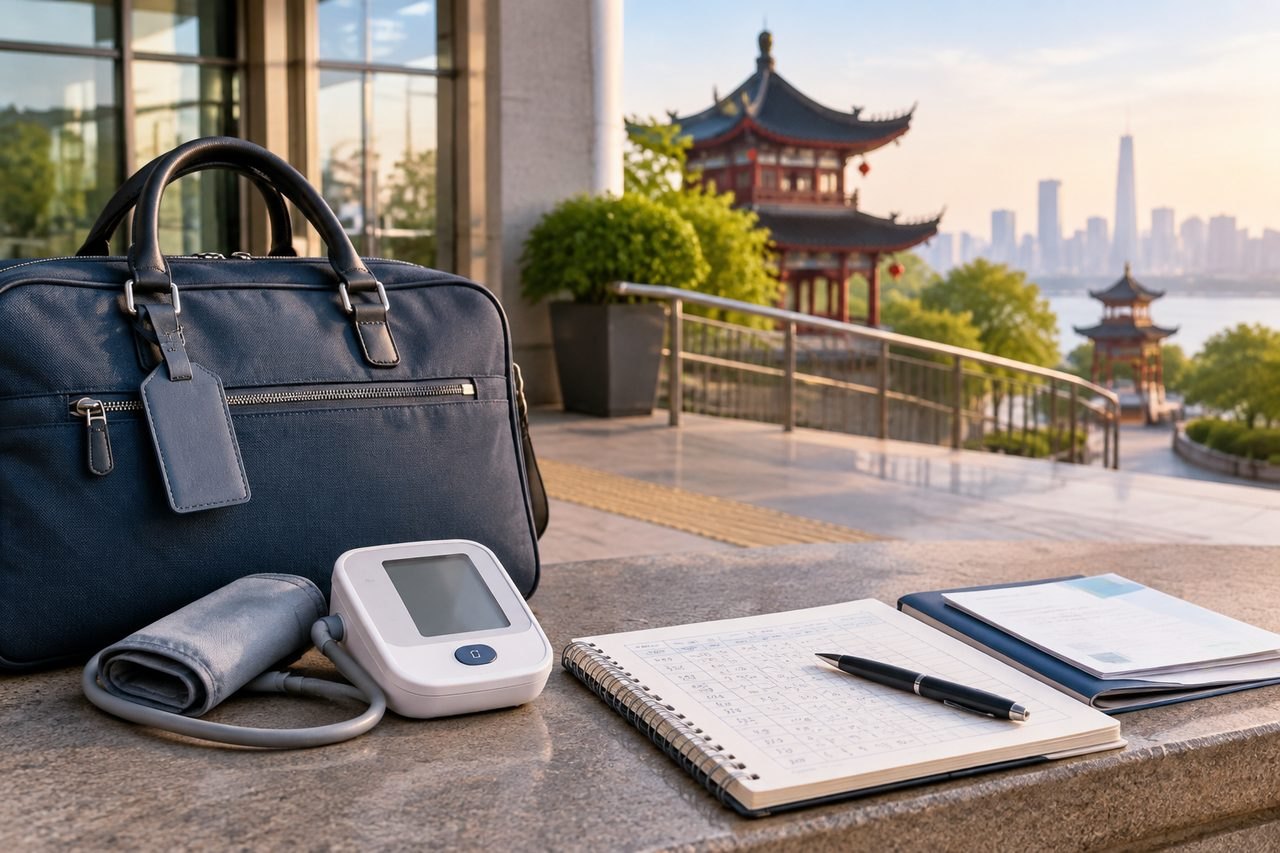
What the receiving team needs from a home record
A home measurement record is only useful to a clinician if it can be traced back to a specific person, a specific device and a specific period. The first practical question is not how many readings you have, but whether the receiving team can tell what was measured, when, with what, and by whom.
Before you compile anything, ask the hospital or provider what it wants to receive. The answer may differ between a routine health checkup, a specialist cardiology appointment and a records-based review. Do not assume that a large file is better than a small, clearly labelled one. A short, well-identified set of readings is easier to work with than a long, undated export.
The receiving clinician decides what the readings mean and whether they are sufficient. Your role is to make the record usable: identify the patient, the device, the measurement conditions and the date range, and state clearly whether the readings were taken at home, in a clinic or in both settings.
Identifiers that make a record usable
A blood pressure log without identifiers is difficult to place in a clinical context. At minimum, the record should show the patient's full name as it appears in the passport or hospital registration, the date of birth, and the period covered. If the patient is already registered with a hospital in China, include the hospital registration number or medical record number if one has been issued.
Device details matter as well. Note the make and model of the home monitor, the cuff size if it is stated on the device or packaging, and whether the device has been validated or calibrated. If you do not know the calibration status, say so rather than leaving the field blank. The receiving team can then decide whether to ask for more information.
Each reading should carry a date and a time. A table with columns for date, time, systolic value, diastolic value and pulse is easier to read than a screenshot from a phone app. If you are exporting from an app, check that the export includes the same fields and that the patient's name appears on the export itself, not only in the email subject line.
If readings were taken by more than one person or with more than one device, label the entries accordingly. A mixed record without labels is harder to interpret than two clearly separated records.
How much history to send, and what to leave out
There is no single correct date range for every assessment. A specialist reviewing blood pressure control may want a longer period than a routine checkup. Ask the receiving team what period it wants and whether it prefers a summary or the raw readings. If the team does not specify, a reasonable starting point is a clearly dated recent period plus a note of how long you have been measuring at home.
Do not send every reading you have ever taken if the receiving team has asked for a defined period. A very large file can obscure the pattern. If you want to include older readings, separate them into a clearly labelled appendix and mention in your covering note that they cover an earlier period.
Leave out unrelated documents unless the receiving team asks for them. A blood pressure assessment enquiry does not require a complete medical archive at the first contact. If you have relevant clinic letters, a list of current medicines or a previous assessment report, mention that they exist and ask whether the team wants them. Do not send passport numbers, card details or a full medical history through an initial article enquiry form.
Format, language and translation questions
Ask the receiving provider what file format it accepts. A spreadsheet, a PDF export, a photograph of a handwritten log and a printed table are not interchangeable. If the team wants a specific format, converting your record before you send it reduces the chance of a follow-up request.
Language is a separate question. If your home record is in a language other than Chinese or English, ask whether the receiving team needs a translation and who is responsible for arranging it. Do not assume that a translation is required or that it is not. Confirm it in writing with the specific provider.
If you are working with a coordination service, clarify which parts of the record handling are included in the agreed scope and which are not. The hospital's clinical team remains responsible for interpreting the readings. A coordinator can help with organisation and communication, but does not decide what the readings mean.
What to confirm in writing before you travel
Before making travel plans around a blood pressure assessment, ask the receiving provider for a written summary of what has been agreed. The summary should state the appointment date if one has been confirmed, the department or clinician group, the records the team has received, and any records still outstanding.
Ask explicitly whether the home measurement record has been reviewed or only received. These are different stages. Receipt of a file does not mean a clinician has assessed it, and a records-based opinion does not establish final eligibility for any procedure or treatment. If the assessment depends on the home readings, ask what happens if the team considers them incomplete.
Also ask what the written quote or estimate covers. Hospital consultation fees, tests, treatment and medicines are paid to the hospital or relevant provider, and coordination fees are separate. Ask the named provider what its quote includes, what is excluded and what remains undecided. Do not rely on a general statement that a particular item is always included or always separate.
If you are comparing more than one hospital route, ask each provider the same questions so that the answers are comparable. A public tertiary hospital and a private international hospital may have different administrative processes. Neither route is automatically better for every patient; the treating team decides suitability.
A practical next step for your enquiry
Start with a short summary rather than a complete archive. State the patient's name, date of birth, the main question about blood pressure assessment, the period covered by the home record, the device used and whether the readings are in a spreadsheet, app export or handwritten log. Mention any relevant clinic letters or medicine lists without attaching everything at once.
You can send this summary through the enquiry form, by email or by WhatsApp. An initial enquiry is free and does not require buying a proxy consultation. The team will check the available information, identify what is missing and suggest the relevant next step. It is not a diagnosis and does not promise hospital acceptance.
If you already know which hospital or specialist group you want to approach, say so. If you do not, the team can discuss possible routes, but the hospital decides whether to accept the case and what records it needs. Keep the home measurement record identifiable and ask the receiving team to confirm in writing what it has received and what it still needs.
For general information about checkup packages and how they are organised, see the health checkup packages page. Use it as background for your questions, not as a substitute for the receiving clinician's assessment of your individual readings.
Sources & scope of this guide
References and official service information relevant to this guide.
This is general planning information and has not been individually reviewed by a doctor. Medical decisions and personal treatment advice come from your treating clinicians.