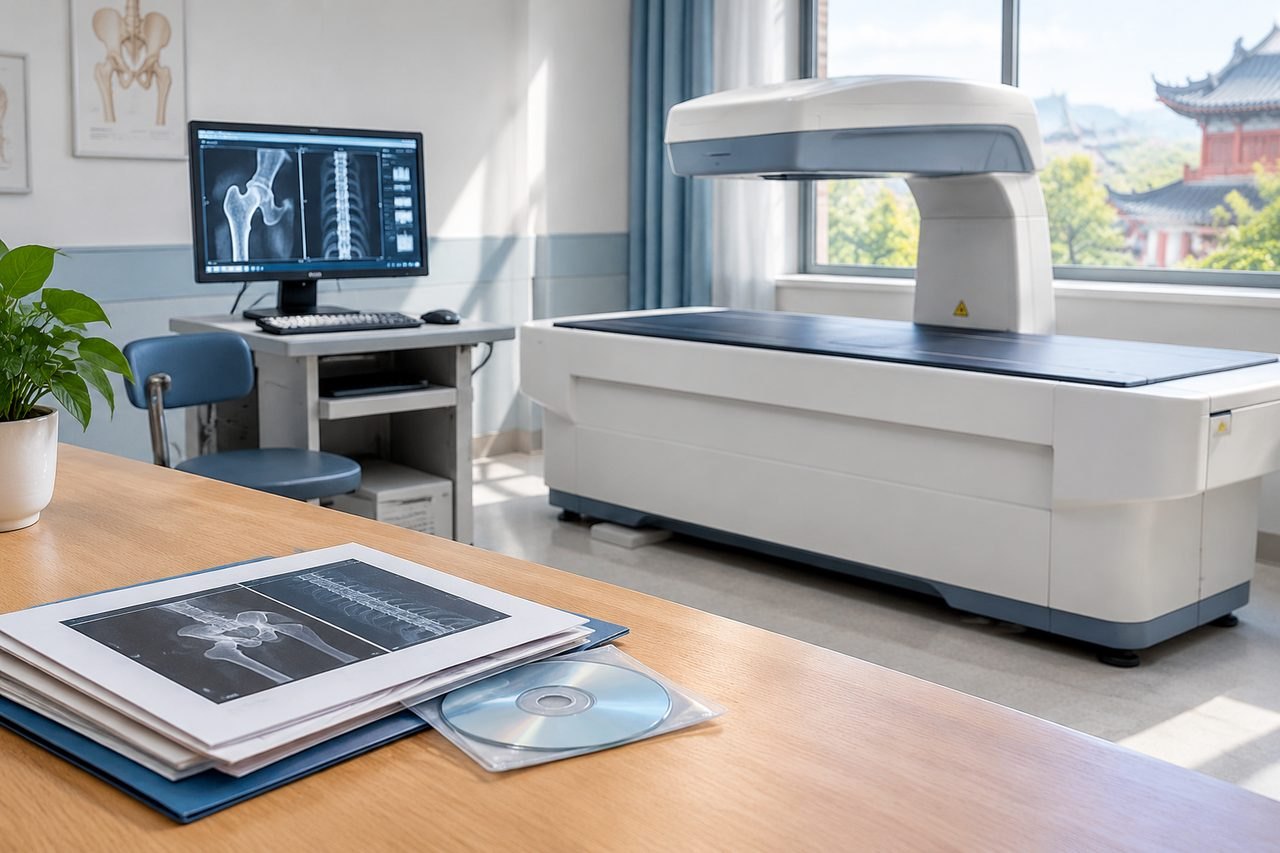
Why previous bone-density results matter for planning
Previous bone-density results are not just background paperwork. They tell the receiving clinician what has already been measured, when it was measured and whether the original images or only a report are available. That information shapes the practical planning question: does this assessment need a new scan, or can the clinician work with what you already have?
For an overseas patient, the answer affects what you pack, what you send ahead and what you ask before booking anything. A report alone may be enough for a preliminary discussion, but a clinician may also want the original image files or the full report with reference values. Whether those are needed is a clinical and technical decision, not something you can settle by email alone.
This guide is about planning a bone health assessment in China. It does not tell you whether you need a scan, what your results mean or how often to repeat testing. Those questions belong to the treating clinician, who can see your history and examine you if needed.
Separate three situations before you enquire
Bone health assessment can mean different things depending on why you are seeking it. The records you prepare and the questions you ask should match your situation.
First, routine or preventive review. You have no current symptoms and are planning a scheduled health check. Previous bone-density results may help the clinician understand your baseline, but a checkup package is not automatically built around them. Ask whether the package can accommodate a review of prior results or whether a separate specialist consultation is more appropriate.
Second, follow-up of a known condition. You already have a diagnosis or an ongoing bone health concern and want a review in China. Here, previous results are central. The clinician will want to know what was measured, when, with what equipment and what has changed since. Bring the original report and, if available, the image files or access details.
Third, assessment of current symptoms. If you have pain, a recent fracture or other symptoms, this is not a screening question. A clinician should assess you, and urgent or worsening symptoms need local care before any overseas planning. Do not delay that assessment to gather records for a China enquiry.
Knowing which situation applies to you changes the first question you ask. It also prevents you from buying a checkup package that does not match your actual need.
What to send, and what to ask before you send it
You do not need to send a complete medical archive at first contact. A short summary is enough to start. After that, the provider can tell you which documents it wants and in what format.
For previous bone-density results, the useful items are usually the written report, the date of the scan, the body sites measured, the equipment type if stated, and the reference values used. If you have the original image files or a link to them, mention that they exist. Do not assume the provider needs them; ask.
A practical first message can be short: your main question, the date of your most recent bone-density result, whether you have the report and images, and whether you are seeking routine review, follow-up of a known condition or assessment of symptoms. That gives the provider enough to suggest a next step without you sending sensitive documents before anyone has asked for them.
Ask these questions before you send anything:
Which records do you need for a bone health assessment, and in what format?
Will the clinician review previous bone-density results, or is a new scan expected?
If a new scan is needed, where is it done and who orders it?
Is this a checkup package, a specialist consultation or both?
What language support is available for the report and the consultation?
How will the provider tell me what is included in the plan and what is not?
These are planning questions. The answers may vary by hospital, department and clinician, so treat any reply as specific to that provider rather than a China-wide rule.
Why the receiving clinician decides whether old results are usable
A previous bone-density result is a measurement taken at a particular time, on particular equipment, for a particular reason. Whether it can be compared with a new measurement, or whether it is enough on its own, depends on clinical and technical factors that the receiving clinician must assess.
This is why you should not assume that bringing an old scan means you can skip a new one, or that a new scan will definitely be arranged. The clinician may want to repeat the measurement to ensure comparability, or may decide that the existing result plus your history is sufficient for the current question. Either way, that decision is theirs.
It also means you should be careful about asking a coordinator to interpret your results. Non-clinical staff can help you gather and transmit records, arrange appointments and explain practical steps. They cannot tell you what your bone density means, whether it has changed significantly or what treatment you need.
If you have questions about your results, write them down and ask the clinician directly. A clear list of your own questions is more useful than a long narrative, and it helps the consultation stay focused on the decisions you actually need to make.
How this fits a checkup package or a specialist visit
ChinaSpecialistCare's health checkup planning page describes routine preventive checkups for people planning a scheduled health review. A clinician should advise the interval and suitable tests. Current pain, discomfort or other symptoms call for a specialist consultation rather than buying a screening package.
That distinction matters for bone health. If you are planning a routine checkup, a base package may be the starting point, with add-ons discussed according to your history and the clinician's advice. If you already have a bone health diagnosis or are seeking review of previous results, a specialist consultation may be the more appropriate route. The provider can help you decide which path fits your situation.
Do not assume that a listed test is automatically included in a package, or that a previous result will be accepted in place of a new one. Ask the provider what the package includes, what is optional and what requires a separate order. Package contents, hospital availability and suitability require confirmation with the particular hospital.
If you are considering a checkup, the health checkup packages page is the relevant reference. It explains the general planning approach and links to the enquiry route. Use it alongside the questions above rather than as a substitute for a clinical discussion.
Practical preparation and a clear next step
Preparation for a bone health assessment in China is mostly about records and questions, not travel logistics. Gather your previous bone-density reports, note the dates and body sites, and check whether you can access the original images. Write down your main question and any symptoms or changes since the last scan.
Then make first contact with a short summary. ChinaSpecialistCare's free initial case review checks the available diagnosis, records and your main question, identifies missing information and suggests the relevant next step. It is not a diagnosis or a promise of acceptance. You do not need to buy a proxy consultation to start; that service is optional and is not a prerequisite for every appointment.
If you decide to proceed, the provider can explain how to share records securely and what the next stage involves. Hospital consultation fees, tests and treatment are paid to the hospital or relevant provider, and coordination fees are separate. Ask for the written scope of any plan before you commit.
For a routine checkup enquiry, use the checkup enquiry route on the health checkup packages page. For a review of previous bone-density results or a known bone health concern, describe that clearly in your first message so the provider can suggest the right type of appointment.
Keep the first step small: one short summary, one clear question and a request for the records the provider actually wants. That is enough to begin.
Sources & scope of this guide
References and official service information relevant to this guide.
This is general planning information and has not been individually reviewed by a doctor. Medical decisions and personal treatment advice come from your treating clinicians.