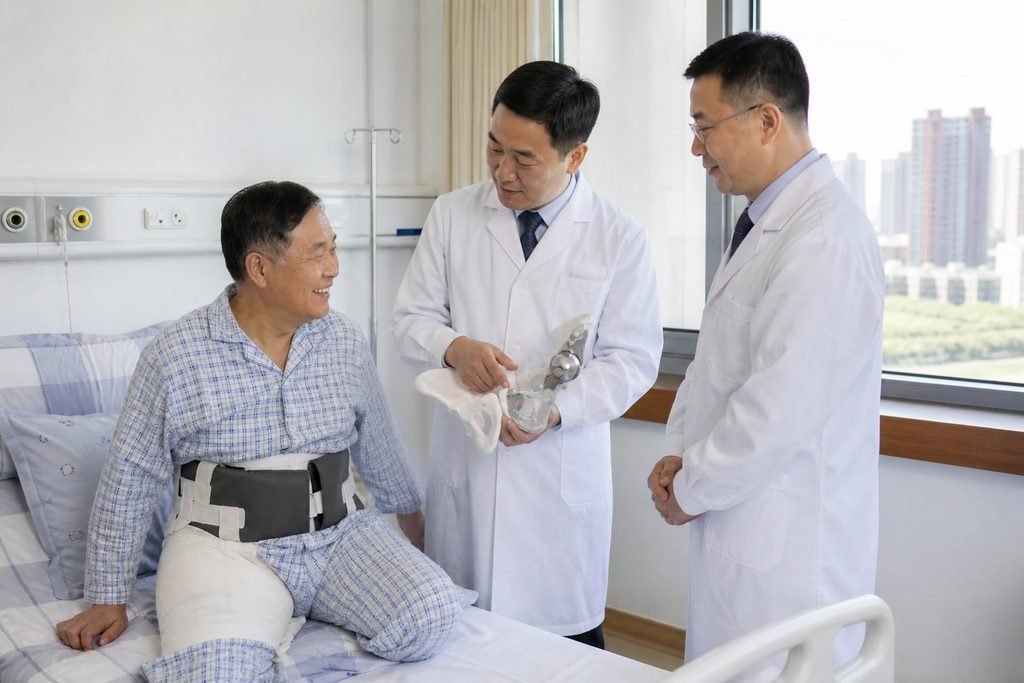
What a real records exchange looks like for bone tumor surgery
A records exchange for bone tumor surgery is not a single email with a folder attached. It is a controlled transfer in which each document is identified, its purpose is stated, and the receiving clinician can tell whether the information is complete enough to answer your question. The Chinese hospital and your home team are separate organisations with separate record systems, so the exchange needs a shared reference point: your name as it appears on the records, your date of birth, and a case reference if one has been issued.
The most useful starting point is a short, written summary from your home team that lists what has already been done, what is being considered, and the specific question you want answered in China. That summary should sit on top of the raw documents, not replace them. Imaging, pathology and operative notes carry detail that a summary cannot reproduce, and the receiving clinician may need to look at the original images rather than a report describing them.
For bone tumor surgery specifically, the records that matter are usually the ones that describe the lesion, its location, how it was sampled and what previous treatment has occurred. But which of these the Chinese team needs, and in what format, is a question for that team. Ask them directly rather than sending everything and hoping the relevant items are found.
Give every document an identifier and a named owner
A file called scan.pdf tells the receiving clinician almost nothing. A file named with your surname, the study type, the body region and the date tells them whether it is the right study before they open it. This sounds administrative, but it is the difference between a records exchange and a records dump. When several imaging studies exist, the receiving team needs to know which is most recent and which corresponds to the current question.
Each item should also have a named owner on your side: the person who can confirm it is the correct version, explain what it shows, and answer follow-up questions. That is often a treating clinician, a nurse specialist or a records officer at your home hospital. The Chinese side should be able to name the person or department that received the file and the person who will review it. Without named owners, documents circulate without anyone being accountable for confirming receipt or completeness.
A simple transfer log helps both sides. It can be a table listing the document, its date, the format, who sent it, who received it and whether it has been confirmed as received. You do not need software for this; a shared list is enough. The point is that both teams can see the same picture of what has actually arrived.
Translate the question, not just the paperwork
Your home team may have a clear question: whether the lesion can be treated with limb salvage, whether a biopsy should be repeated, or whether the current plan should change. That question needs to travel with the records in plain language. A translated discharge summary without the question attached often produces a general reply that does not address what you actually need to decide.
Write the question in one or two sentences, then ask your home clinician to confirm it reflects their view. If the Chinese team replies in Chinese, ask for the reply in writing and have the key clinical statements translated by someone qualified to do so. Do not rely on a family member's summary of a verbal conversation for a decision about bone tumor surgery. The wording of a pathology or imaging conclusion matters, and paraphrase can change it.
It also helps to state what you are not asking. If you are seeking a records-based opinion rather than a commitment to operate, say so. If you want to know whether the Chinese team would recommend a different approach, say that. Clear framing reduces the chance of a reply that answers a different question.
Confirm what the Chinese hospital received and what it still needs
After sending records, ask for a written acknowledgement that lists what arrived and what is missing. This is not a formality. Imaging sent by a link may expire, discs may not open, and pathology slides may not have been requested at all. A written list lets you close the gaps before a clinical decision is expected.
Ask specifically whether the receiving team needs original imaging, pathology slides or blocks, or whether reports and copies are sufficient for their review. The answer depends on the hospital and the case, so treat it as a question to confirm rather than an assumption. If something cannot be sent, ask what alternative the team can work with and what limitation that places on their opinion.
It is also reasonable to ask who will review the file, what type of review it is, and what the output will be. A records-based opinion is not the same as an in-person assessment, and it may not settle every question. Knowing the scope in advance prevents you from treating a preliminary view as a final plan.
Agree the handover of responsibility in writing
The riskiest moment in an overseas records exchange is the gap between what one team assumes the other will do. Your home team may assume the Chinese hospital will request anything it needs. The Chinese hospital may assume your home team has sent everything relevant. Both assumptions can be wrong at the same time.
Close that gap with a short written handover note that states who is responsible for each action: who sends the imaging, who requests the pathology material, who translates the clinical question, who confirms receipt, and who will communicate the reply back to you. This note does not need to be a contract. It needs to be specific enough that a missing step is visible before it delays a decision.
If you are working with a coordination service, be clear about which parts are administrative and which remain clinical. A coordinator can help organise records, arrange interpretation and request an appointment, but the treating hospital and licensed clinicians decide suitability, diagnosis and treatment. Ask for that boundary in writing so your home team knows whom to contact for clinical questions.
Keep your home team informed and plan the next communication
Your home team remains part of your care even while you explore treatment in China. Send them the Chinese hospital's written reply, translated where needed, and ask them to respond to the specific points raised. This keeps the exchange two-way and gives you a clearer basis for deciding whether to travel, continue locally, or seek another opinion.
Before you finish any call or email, agree the next communication: who will send what, to whom, and by when. A short follow-up message confirming those points protects everyone. If a reply is delayed, ask whether the file is incomplete rather than assuming the answer is no.
ChinaSpecialistCare can help with the administrative side of this exchange: organising records, clarifying your question, arranging interpretation and requesting a specialist appointment. An initial enquiry is free and does not require buying a proxy consultation. You can start with a brief summary of your situation and your main question, then share records after first contact. The hospital decides whether it can accept your case and what treatment is suitable.
For confirmed service details and the relevant procedure reference, see the bone tumor surgery page linked below.
Sources & scope of this guide
References and official service information relevant to this guide.
This is general planning information and has not been individually reviewed by a doctor. Medical decisions and personal treatment advice come from your treating clinicians.