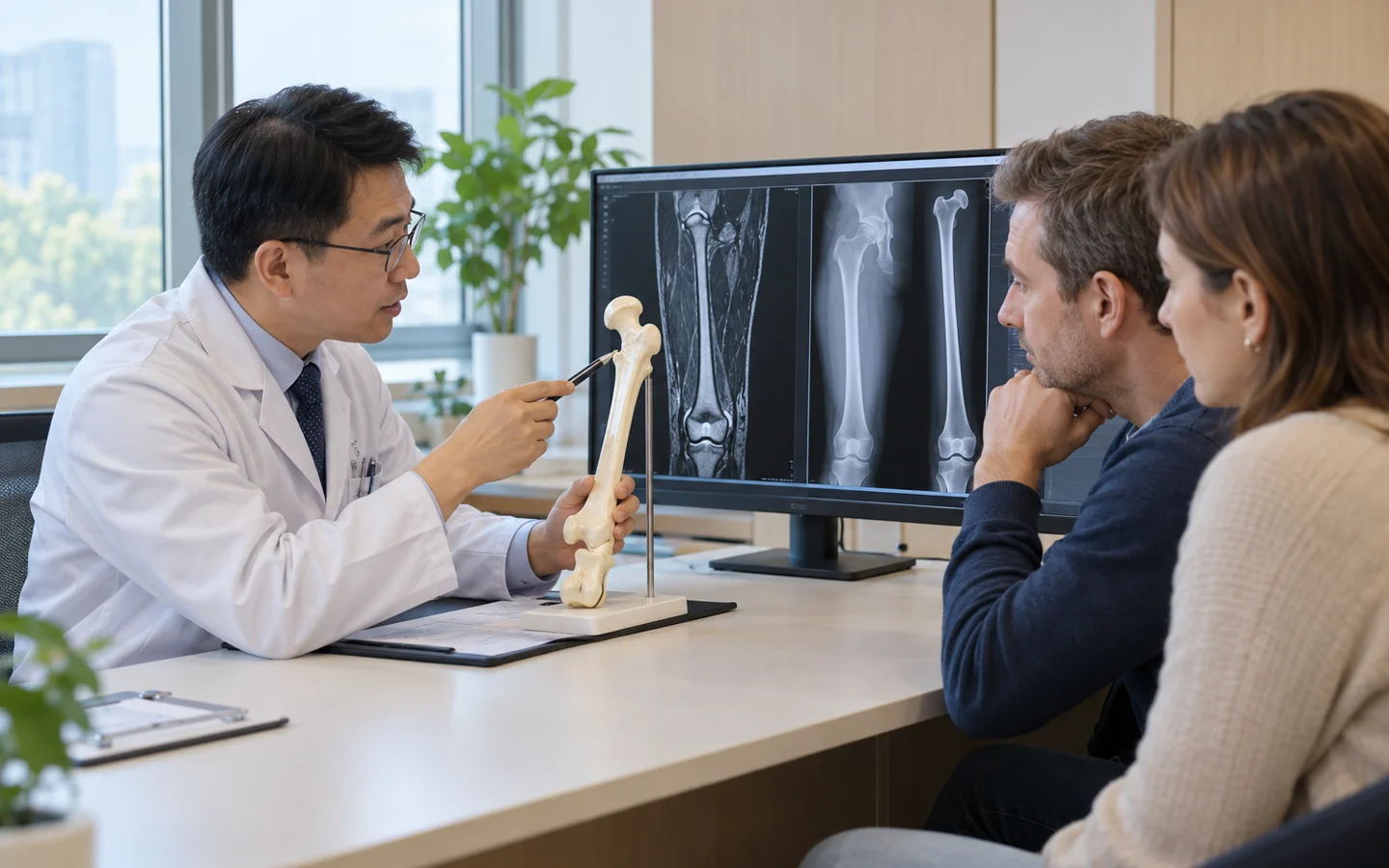
Diagnosis and cancer control come before reconstruction
Bone tumours range from benign lesions to primary cancers such as osteosarcoma, chondrosarcoma and Ewing sarcoma, as well as metastatic disease. Treatment differs completely by tumour type, grade, location, stage and response to systemic therapy.
Biopsy should be planned by the orthopedic oncology team that may perform definitive surgery. The biopsy path can contaminate tissue and must be removable with the tumour. An unplanned biopsy or excision can compromise margins and sometimes limb-sparing options.
Send the original X-rays, MRI and CT to an orthopedic oncology team first. If pain is severe or fracture is suspected, protect the limb and seek urgent local assessment.
Who may be considered?
Surgical recommendations may include observation, curettage, wide resection, limb-sparing reconstruction or amputation depending on:.
- Pathology confirmed by appropriately planned biopsy.
- Local extent in bone, muscle, nerves, vessels and the nearby joint.
- Chest and whole-body staging and presence of metastases.
- Response to chemotherapy when the tumour type uses it.
- Whether a safe margin and a durable, useful limb are realistically achievable.
What the hospital needs to assess
Plain X-rays show the lesion’s bone pattern. MRI maps local extent; CT helps assess cortex and chest; PET or bone scanning may be used for staging depending on diagnosis. Pathology review, laboratory tests and a multidisciplinary conference align biopsy, chemotherapy or radiotherapy and surgery. Impending fracture changes weight-bearing and urgency.
Key points for this treatment
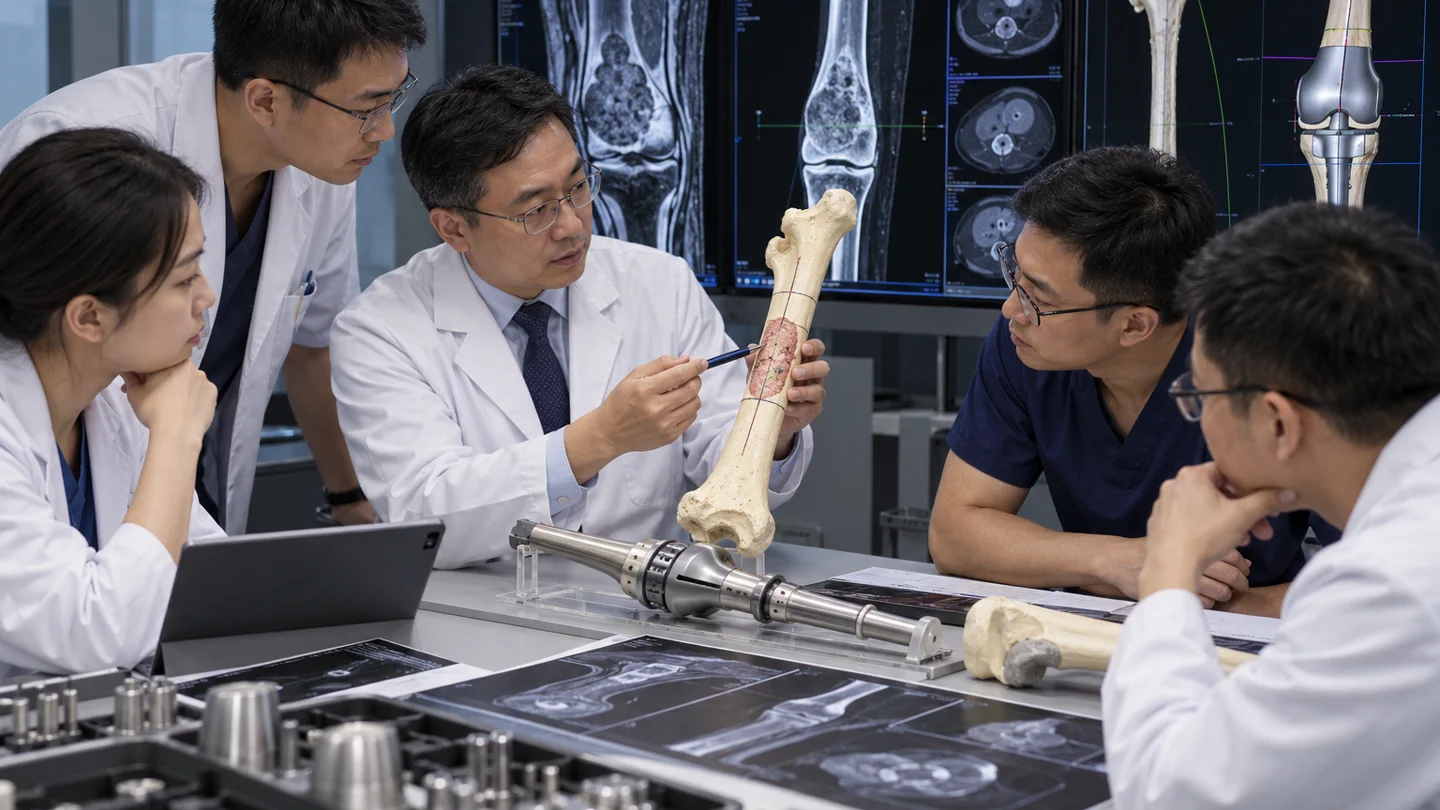
Limb-sparing surgery, reconstruction and amputation
Limb-sparing surgery removes the tumour with a cuff of healthy tissue while preserving major nerves and vessels when possible. The defect may be reconstructed with a modular endoprosthesis, allograft, vascularised bone, joint fusion or another technique. Some benign or low-grade lesions can be treated with curettage and local adjuvants instead.
Amputation may provide the safest cancer margin or more reliable function when the tumour involves critical structures, is infected, has a non-reconstructable fracture or has failed prior treatment. It is not a failure; the decision compares cancer control, complications, rehabilitation and long-term function.
Hospital stay and recovery
Hospital care coordinates wound monitoring, pain control, clot prevention and safe mobility. Weight-bearing depends on reconstruction and soft-tissue healing. Chemotherapy may resume on a diagnosis-specific schedule, so wound problems and blood counts matter.
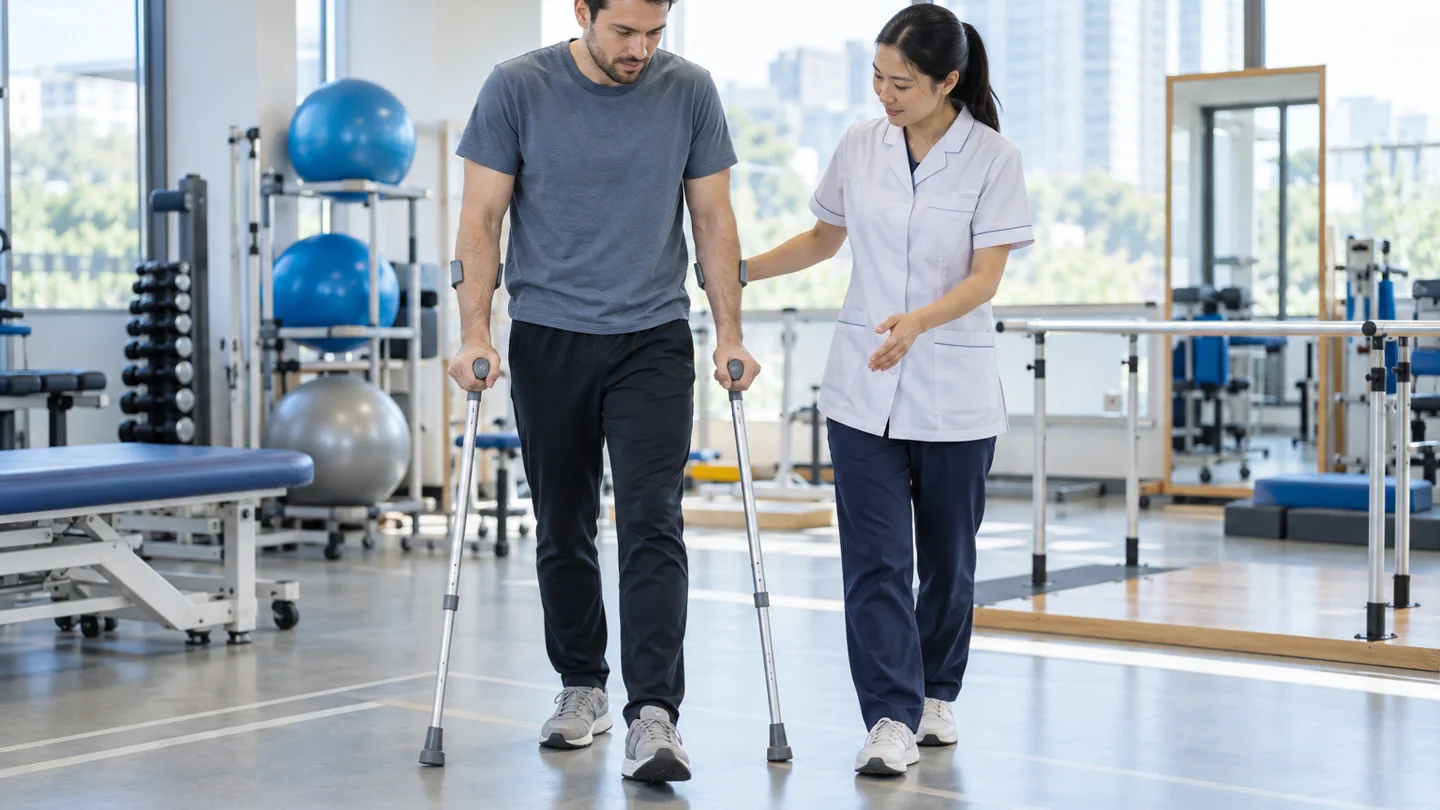
Rehabilitation rebuilds strength and walking while protecting the reconstruction. Surveillance looks for local recurrence, lung metastasis and implant or graft complications. Children may need repeated review as they grow.
Risks and realistic expectations
Risks include infection, wound breakdown, bleeding, clot, nerve or vessel injury, stiffness, fracture, non-union, implant loosening or breakage, graft failure, limb-length difference and further reconstruction or amputation. Cancer may recur locally or spread despite appropriate treatment.
Sudden severe pain or inability to bear weight, fever, wound drainage, rapidly increasing swelling, new foot or hand weakness, chest pain or breathlessness requires urgent assessment.