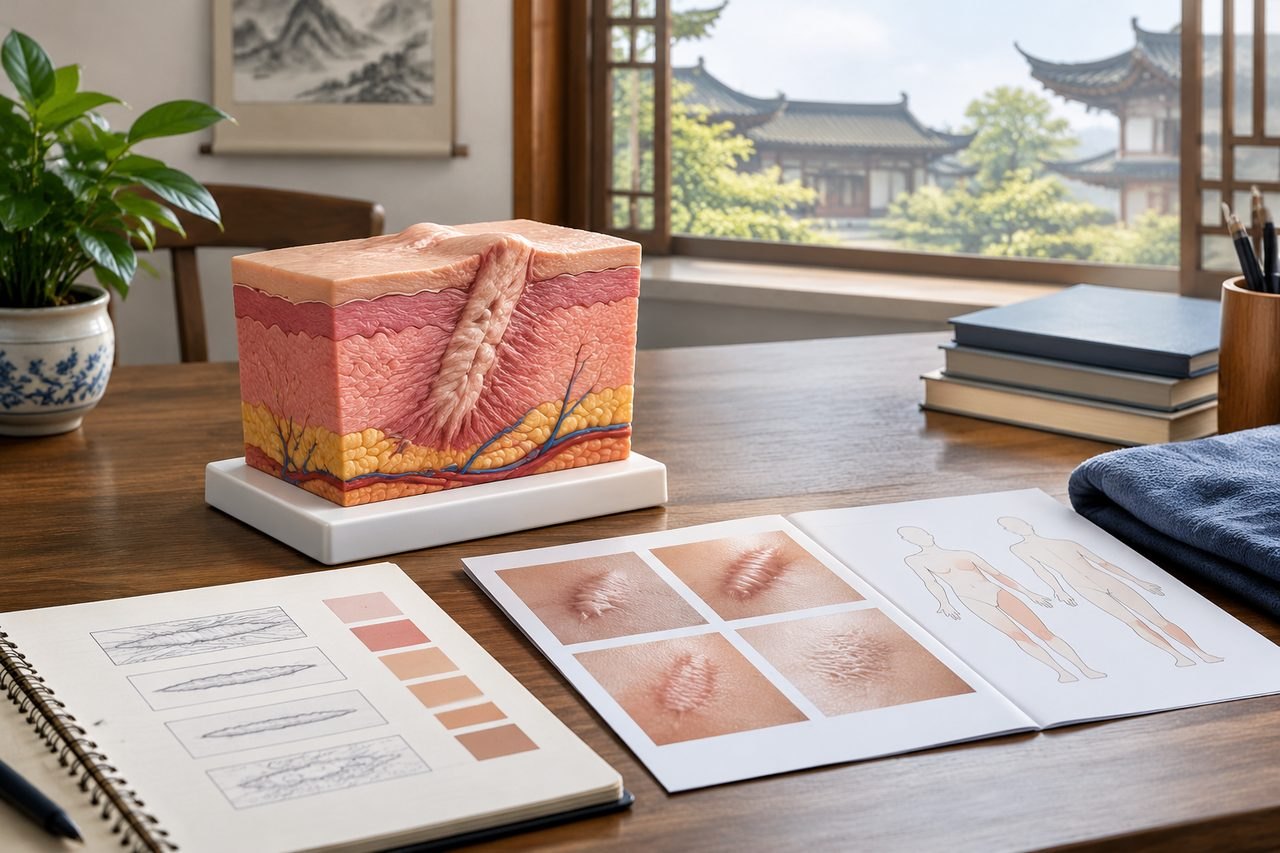
What a China burn reconstruction assessment is actually deciding
Burn reconstruction is elective surgery for healed burns, not emergency care for a fresh injury. The assessment question is narrower than many patients expect: given your scars, contractures, skin quality, and functional limits, is there a reconstruction option that could improve a specific problem, and is it safe for you now?
That decision cannot be made from a single photograph or a short message. A specialist needs to understand the burn history, how the scars have changed over time, which joints or areas are affected, what you can and cannot do, and what non-surgical care you have already tried. The treating hospital decides suitability; a remote review or initial enquiry cannot confirm acceptance in advance.
This guide is about organising the information that makes that assessment possible. It is not a treatment plan, a wound-care protocol, or a promise of a particular result.
Describing scars in words a surgeon can use
Patients often describe scars as tight, thick, or ugly. Those words are a starting point, but a reconstructive surgeon needs more specific observations. You do not need medical training to provide them. You need to describe location, appearance, and behaviour.
Location matters in relation to joints and function. A scar across the front of the elbow is different from one on the forearm. A scar crossing the mouth, eyelid, neck, or hand web space affects different activities. Note whether the scar is flat or raised, pale or red, soft or firm, and whether it is stable or still changing.
Sensation and skin quality also matter. Does the area feel numb, painful, itchy, or hypersensitive? Does the skin break down or blister with friction? Is there any area that has never fully healed, or any wound that has reopened? Those details help the specialist understand whether the problem is mainly cosmetic, mainly functional, or both.
If you have had previous surgery on the scars, describe what was done and what changed afterwards. A graft, a flap, a release, or a scar revision each leaves different tissue. The surgeon will want to know what has already been tried and how the skin responded.
Turning everyday limitations into useful functional detail
The phrase everyday limitations is broad. A specialist can work with it only if you break it into specific activities and specific joints. Instead of writing that your hand is stiff, describe which movements you cannot complete: opening a jar, holding a cup, fastening buttons, typing, or washing your face.
For each limitation, note whether it is caused by tightness, pain, weakness, or loss of range. Those are different problems and may point to different assessments. If a scar across the shoulder limits reaching overhead, say how far you can raise the arm and what stops it. If a neck scar limits looking up or turning the head while driving, describe that situation.
A simple function diary over several days is often more useful than a single summary. Record the activity, what happened, and whether it was tightness, pain, or something else. Bring the diary to the appointment or include it with your records. It gives the clinician a concrete picture rather than a general impression.
Also note what you have already tried: physiotherapy, stretching, splints, silicone products, massage, or medication for itching or pain. The specialist needs to know what has helped, what has not, and what you are still using. Do not stop or change any prescribed treatment on your own; that is a decision for your treating clinician.
What existing records can clarify before you travel
You may already have more useful information than you realise. Old discharge summaries, operation notes, pathology or microbiology reports, and clinic letters can clarify the original injury, the treatment you received, and any complications. If you have had previous reconstruction, the operative notes describe what was done and with what tissue.
Photographs are helpful if they are consistent. Take them in good light, from several angles, and include a scale or a familiar object for size. Show the scar at rest and during the movement that is limited. Avoid filters. A short video of a specific movement can be more informative than a still image, but ask the receiving team whether they accept video and in what format.
Imaging and test results may be relevant, but the specialist will decide which are needed. Do not arrange new scans or tests on your own before an assessment. If you have recent blood tests, X-rays, or other studies, include the reports and the images if available. If something is missing, say so rather than guessing.
A medication list, allergy history, and any relevant medical conditions such as diabetes or vascular disease belong in the summary. These affect surgical planning and anaesthetic safety. The hospital will confirm what it needs; you do not need to send a complete archive at first contact.
What remains uncertain until a specialist examines you
Some things cannot be settled remotely. Scar quality, skin elasticity, contracture severity, joint range, and the condition of underlying tissue are assessed in person. The surgeon also needs to see how the scar behaves when you move, not only how it looks at rest.
The reconstruction options themselves depend on those findings. A release, a graft, a flap, tissue expansion, or a combination may be considered, but the choice belongs to the treating team after examination. It is not possible to select a technique from a photograph alone, and it is not appropriate for a planning guide to recommend one.
Recovery, scar maturation, and the need for further procedures are also individual. The hospital should explain what it expects in your case, what aftercare it provides, and what warning signs require urgent attention. Ask those questions directly rather than relying on general expectations.
If you have symptoms that are worsening, a wound that is not healing, or new pain, seek local medical care first. Elective reconstruction planning should not delay assessment of an active problem.
Preparing your enquiry and the questions that change the next step
A useful first enquiry is short. Summarise the burn, the areas affected, the main functional limitations, and what you want to improve. Attach a few clear photographs and a list of the records you hold. You do not need to buy a proxy consultation to ask whether your case is suitable for review; an initial enquiry is free and does not commit you to treatment.
The next step depends on the answers to a few practical questions. Does the hospital want to see you in person before deciding? What records does it need first? Does it offer a records-based opinion, and what are its limits? What aftercare and follow-up does it provide, and how would that work if you return home? Are there language or interpretation arrangements you should confirm?
You can also ask what the assessment itself involves, how long it takes, and what the hospital's written plan and quote would include. Those are provider-specific questions; the answers vary by hospital and by case. Ask the named provider rather than assuming a standard.
ChinaSpecialistCare can help organise records and coordinate an appointment with a suitable hospital, but clinical decisions remain with the treating team. If you would like to start, send a brief summary through the enquiry form and the team will explain what to prepare next.
Sources & scope of this guide
References and official service information relevant to this guide.
This is general planning information and has not been individually reviewed by a doctor. Medical decisions and personal treatment advice come from your treating clinicians.